Premises Liability Requirements In Florida
Premises liability law in Florida holds property owners and occupiers legally responsible for accidents and injuries that occur on their property due to hazardous conditions, negligence, or insufficient security. Whether you’re a homeowner, business owner, tenant, or visitor, understanding the intricacies of Florida premises liability law is essential. This comprehensive guide provides an in-depth exploration of premises liability requirements, visitor classifications, defenses, and the process of proving negligence in Florida premises liability cases.
What is Premises Liability Law in Florida?
Definition and Purpose
Premises liability law in Florida is a legal doctrine that mandates property owners to maintain safe conditions to prevent accidents and injuries. If someone is injured due to a dangerous condition on a property, the owner or occupier of that property may be held legally liable. This legal obligation extends to commercial businesses, residential homeowners, landlords, and even government entities.
Why is Premises Liability Important?
The primary purpose of premises liability law is to protect the safety and well-being of visitors by ensuring property owners take reasonable steps to maintain safe premises. It also provides legal recourse for injured parties to seek compensation for medical expenses, lost wages, and other damages resulting from accidents.
Legal Basis and Relevant Statutes
Under Florida Statute 768.0755, property owners are legally obligated to maintain safe premises and prevent foreseeable accidents. They must inspect property for potential hazards regularly, warn visitors of known dangers that are not obvious, and address hazardous conditions promptly to minimize risks.
This statute outlines the legal framework for establishing premises liability and the conditions under which property owners can be held responsible for injuries. It also clarifies the requirements for proving negligence and the burden of proof required in premises liability cases.
Premises Liability Requirements in Florida
To establish a successful premises liability claim in Florida, the injured party must prove four critical elements:
- Duty of Care: The property owner owed a duty of care to the injured party.
- Breach of Duty: The property owner failed to maintain safe conditions or failed to warn of known hazards.
- Causation: The hazardous condition directly caused the injury.
- Damages: The injured party suffered damages, such as medical expenses, lost wages, or pain and suffering.
Duty of Care for Florida Property Owners
Florida law requires property owners to exercise reasonable care to maintain safe premises and prevent foreseeable injuries. However, the duty of care varies depending on the legal classification of the visitor, which is categorized into three main groups: Invitees, Licensees, and Trespassers.
Visitor Classifications and Duty of Care
Invitees
Invitees are individuals invited to the property for commercial purposes, such as customers or clients. Property owners owe the highest duty of care to invitees. This includes conducting regular inspections to identify potential hazards, promptly addressing dangerous conditions, and providing adequate warnings for known risks.
Licensees
Licensees are social guests or individuals visiting for non-commercial purposes. Property owners must warn licensees of known dangers that are not obvious and exercise reasonable care to avoid foreseeable harm. However, they are not obligated to inspect for hidden hazards.
Trespassers
Trespassers are individuals who enter the property without permission. Property owners generally owe no duty of care to trespassers, except to refrain from causing intentional harm. They must also warn of known hazards that could cause serious injury or death, such as electrical fences.
How Visitor Status Impacts Liability
Visitor classification plays a critical role in premises liability cases, as it determines the level of duty of care owed by the property owner.
- If a customer (invitee) slips on a wet floor in a grocery store without a warning sign, the store owner may be liable for failing to maintain safe premises.
- If a social guest (licensee) is injured due to a hidden hazard in a homeowner’s backyard, the homeowner may be liable if they knew about the danger but failed to provide a warning.
- If a trespasser is injured while unlawfully entering a construction site, the property owner is typically not liable unless the injury resulted from intentional or reckless conduct.
Types of Premises Liability Cases in Florida
Florida premises liability law encompasses a wide range of scenarios, including Slip and Fall Accidents, Negligent Security, Hazardous Conditions, Liability for Criminal Acts, and Business and Apartment Complex Liability.
Slip and Fall Accidents
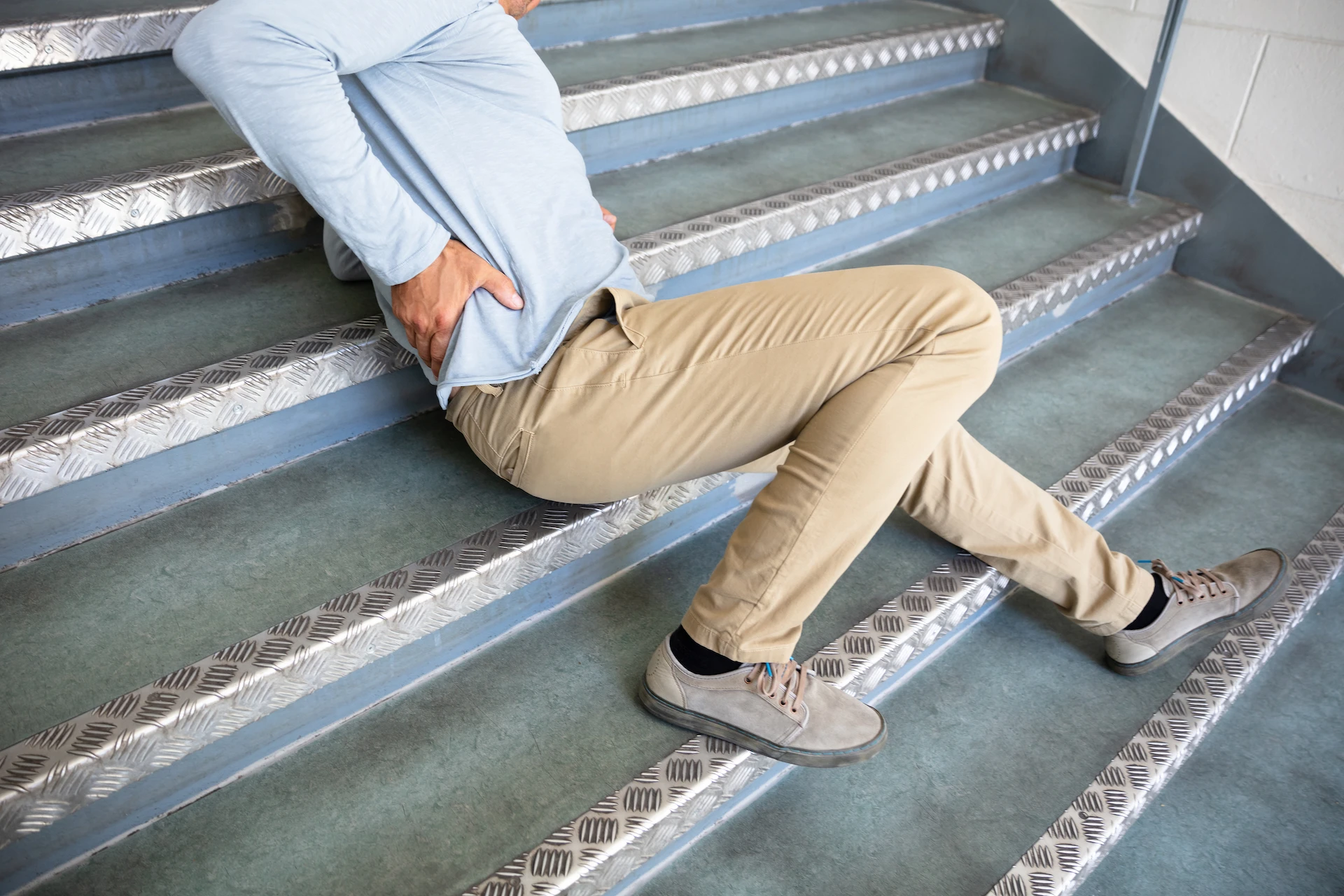
Slip and fall accidents are among the most common premises liability claims in Florida. Under Florida slip and fall laws, property owners are required to maintain clean and dry walking surfaces, promptly clean spills and remove obstacles, place visible warning signs in areas with wet floors or hazardous conditions, and conduct regular inspections to identify potential slip and fall hazards.
Common Causes of Slip and Fall Accidents
- Wet or slippery floors from spills, leaks, or cleaning.
- Uneven flooring or damaged sidewalks.
- Loose rugs, mats, or floor coverings.
- Poor lighting conditions that obscure hazards.
- Cluttered walkways or improperly placed merchandise.
Proving Negligence in Slip and Fall Cases
To prove negligence in a Florida slip and fall case, the injured party must demonstrate that the property owner knew or should have known about the hazardous condition, failed to take reasonable steps to address the hazard, and that the hazardous condition was the direct cause of the injury.
Negligent Security Liability
Property owners are responsible for ensuring adequate security measures to protect visitors from foreseeable criminal acts. Negligent security claims may arise in cases of assaults or robberies due to a lack of security personnel, inadequate lighting in parking lots or building entrances, broken security cameras or alarm systems, and unsecured entrances or exits in residential complexes or commercial properties.
Examples of Negligent Security Cases
- A hotel guest assaulted in a poorly lit parking lot without security cameras.
- A tenant attacked in an apartment complex with faulty security gates.
- A shopper robbed in a retail store with no security personnel or alarm systems.
Proving Negligent Security
To establish a negligent security claim, the plaintiff must prove that a dangerous condition or security risk existed on the property, the property owner knew or should have known about the risk, the owner failed to take reasonable security measures, and that the lack of security directly contributed to the criminal act and injury.
Hazardous Conditions and Attractive Nuisances
Property owners must maintain safe conditions and secure any potentially dangerous features, especially those that may attract children. Under Florida law, attractive nuisances are hazardous conditions or objects that are likely to attract children, such as swimming pools without proper fencing or safety barriers, construction sites without warning signs or security fencing, trampolines, playground equipment, or abandoned vehicles left unsecured, and dangerous equipment or machinery left unattended or accessible to children.
Liability for Criminal Acts on Property
Under Florida premises liability law, property owners may be held liable for injuries caused by criminal acts on their premises if the criminal act was foreseeable, the property owner failed to provide adequate security measures, and the lack of security contributed to the occurrence of the crime.
Business and Apartment Complex Liability
Business owners and apartment complex managers have specific legal obligations, including ensuring safe premises for customers, tenants, and visitors, conducting regular inspections and maintenance of facilities, providing adequate lighting in parking lots and common areas, addressing known hazards promptly to prevent accidents, and maintaining proper security measures to protect visitors from criminal acts.
Frequently Asked Questions (FAQs) on Florida Premises Liability Law
What is premises liability law in Florida?
Premises liability law in Florida holds property owners and occupiers responsible for accidents and injuries that occur on their property due to hazardous conditions, negligence, or inadequate security. It requires property owners to maintain safe conditions and warn visitors of known dangers to prevent foreseeable injuries.
Who can file a premises liability lawsuit in Florida?
Anyone who is injured on someone else’s property due to hazardous conditions, negligence, or inadequate security can file a premises liability lawsuit in Florida. This includes invitees (customers or clients), licensees (social guests), and even trespassers in certain cases, such as when the property owner intentionally caused harm.
What are the requirements for proving negligence in a premises liability case?
To prove negligence in a Florida premises liability case, the injured party must demonstrate four key elements: the property owner owed a duty of care, the property owner breached that duty, the breach directly caused the injury, and the injured party suffered damages as a result.
How does visitor classification affect liability in Florida?
Visitor classification is crucial in Florida premises liability cases because it determines the level of duty of care owed by the property owner. Florida law recognizes three types of visitors: invitees (owed the highest duty of care), licensees (owed a moderate duty of care), and trespassers (owed limited duty of care). The classification impacts the property owner’s liability and the injured party’s ability to recover compensation.
Can a property owner be liable for criminal acts on their property?
Yes, a property owner can be held liable for injuries resulting from criminal acts on their property if it can be proven that the criminal act was foreseeable, the property owner failed to provide adequate security measures, and the lack of security directly contributed to the injury. This is commonly referred to as negligent security liability.
Contact Rafferty Domnick Cunningham & Yaffa Today
If you or a loved one have been injured on someone else’s property, or if you are a property owner seeking to understand your legal obligations, it’s essential to consult with a knowledgeable Florida premises liability attorney. Legal professionals can provide guidance, help gather evidence, and ensure your rights are protected throughout the legal process.
Contact Rafferty Domnick Cunningham & Yaffa today to explore your legal options and safeguard your rights.