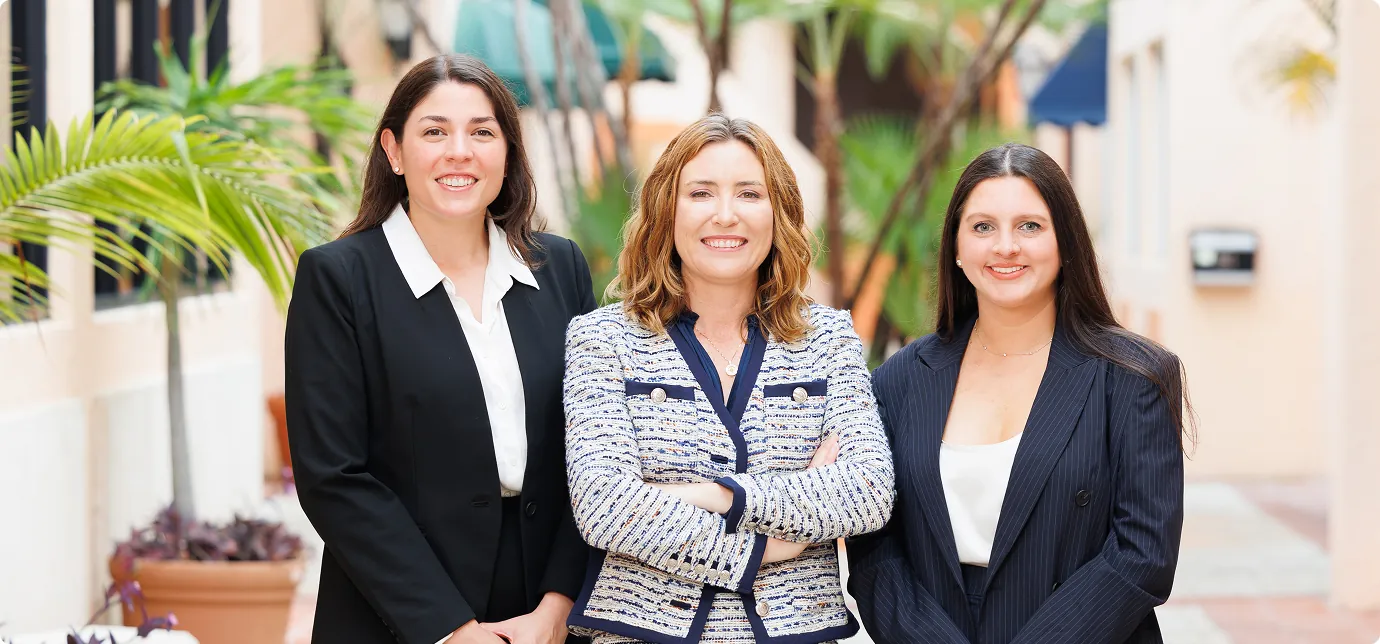
Jacksonville Personal Injury, Medical Malpractice, and Birth Injury Lawyers
An injury investigation should explain the whole course of events, not stop at the first report or the final diagnosis. That is especially important when a person moves between emergency care, hospitalization, specialist treatment and rehabilitation.
Rafferty Domnick Cunningham & Yaffa represents injured people and families through its Jacksonville FL office. Its practice includes personal injury, medical malpractice and birth injury matters. The firm can assess how the evidence, the medical issues and the available legal claims fit together.
You may be contacting us about a collision, a dangerous condition or unexpected harm during care. Begin with what occurred, where it occurred and what changed afterward. Those facts provide a useful starting point even when you do not yet know which documents or expert opinions will be needed.
Rafferty Domnick Cunningham & Yaffa
Personal Injury and Medical Malpractice legal help
Call now
What to Do Now
- Seek appropriate medical attention and tell the treating professional about new or worsening concerns.
- Preserve original photographs, reports, discharge instructions and messages; note when and where each event occurred.
- Keep a list of treating providers and facilities, including later care.
- Save insurance letters and proposed releases, and flag anything requiring a response.
- Ask about the legal deadlines early, rather than waiting for a complete file.
For continuing care, AHRQ’s discussion guide can help you organize questions about diagnosis, treatment options and follow-up. It is a patient communication resource, not a test for legal negligence.
Injury Matters RDCY Can Evaluate
Different claims require different evidence. The firm’s practice resources explain the issues in more detail:
- Medical Malpractice. Diagnosis, treatment and hospital-care concerns require medical analysis as well as an investigation of responsibility.
- Birth Injuries. Records from pregnancy, delivery and later care may be relevant; the legal and medical issues must be assessed for the particular child and family.
- Personal Injury. Accident and property-condition claims require evidence of the event, the responsible parties and the resulting losses.
- Truck Accidents. Driver conduct, company relationships and vehicle records can raise questions beyond the initial crash report.
- Nursing Home Abuse. Care plans, records of changes in condition and the resident’s rights help distinguish residential-care concerns from other injury claims.
You can describe the problem without choosing one of these labels. An initial assessment should identify which legal framework fits, what remains uncertain and which evidence could answer the next question.
Medical Malpractice and Serious Hospital Injuries in Jacksonville
When harm occurs during hospitalization, it can be difficult to distinguish the underlying illness from a medication problem, a procedure-related injury or a failure to respond to a change in condition. The investigation must make that distinction using the patient’s records and qualified medical analysis.
Relevant concerns can include diagnosis, surgery, monitoring, medications or discharge. A serious injury after treatment does not itself create a presumption that a provider was negligent. The evidence must show a breach of the applicable care standard and a causal connection to the harm. Florida Statutes § 766.102.
Organize the record around decisions: why the patient was admitted, what treatment was planned, when the condition changed and what response followed. Later records can help explain the need for additional care and the consequences for work, mobility and family life.
A 2023 New England Journal of Medicine study examined adverse events in adult admissions at Massachusetts hospitals. Its review distinguishes types and preventability of harm rather than treating every adverse event as negligence. It provides research context, not a Jacksonville hospital score or a conclusion about your treatment. Original inpatient-safety study.
When a Birth Injury or Long-Term Disability Changes the Investigation
An injury affecting a child or a person who will need prolonged assistance requires careful attention to the future as well as the event. The legal review should be coordinated with medical evidence about the injury and the support actually needed; a diagnosis alone is not a complete care plan.
For a birth-related concern, preserve the available prenatal, labor, delivery and newborn records, along with later evaluations. Identify which documents concern the parent and which concern the child. Different providers may hold different parts of that record.
For an adult with lasting limitations, it is critically important to keep rehabilitation records, work restrictions and a practical account of assistance with daily activities. Those materials can help distinguish temporary disruption from continuing needs. Future losses must be supported rather than extrapolated from another family’s settlement or an online estimate.
Rafferty Domnick Cunningham & Yaffa
Personal Injury and Medical Malpractice legal help
Call now
Protecting a Claim While Treatment Continues
Treatment, evidence gathering and legal deadlines can run on different schedules. Florida’s limitations statute and medical-malpractice presuit requirements need to be reviewed against the facts. Continuing to negotiate or receive care does not automatically satisfy those requirements.
Compensation must be tied to supported losses. Keep bills, income records, work restrictions and information about help with daily activities. When future care is an issue, the assessment needs evidence of that need rather than a guessed lifetime figure. Earlier case results do not set the value of a new claim.
Be clear about what you personally know and what another person reported. If a document or statement appears inconsistent with your recollection, preserve both and explain the difference. An investigation is more useful when it identifies uncertainty rather than smoothing it over.
Jacksonville Records and Duval County Court Resources
- Baptist Health Jacksonville medical records. The system describes portal access and authorization forms, including how to request radiology images. Select the correct service and follow its instructions for patient representatives. This is a neutral records-access resource.
- Duval County Clerk circuit civil information. The clerk provides information about circuit civil matters and court records. Use it to identify procedural resources for an existing case; it is not a malpractice screening service.
- Official Duval courthouse locations. The downtown courthouse is listed at 501 West Adams Street. Confirm the actual hearing or service location before traveling, especially if a notice refers to a different department or remote proceeding.
Do not confuse Baptist Health in Jacksonville with similarly named systems elsewhere in Florida. A request should identify the actual provider, service location and dates, rather than relying on a shared brand name.
Reporting Care Concerns and Getting Practical Help
For a concern about a licensed healthcare practitioner, use the Florida Department of Health complaint process. Its routing questions can help identify the appropriate agency. The department also distinguishes practitioner complaints from hospital or other facility complaints, which may fall under the Agency for Health Care Administration. Official agency guidance.
Prepare the provider or facility name, treatment dates, a factual description and copies of supporting documents. A complaint is different from a civil claim for compensation and does not automatically preserve its deadlines. If a patient has an immediate medical need, address that need through appropriate clinical or emergency care.
For the legal conversation, organize a short checklist: what happened, when you first noticed the change, who treated it afterward, what documents you have and what remains unanswered. Family members can contribute observations, but access to another adult’s records or authority to act may require consent or legal documentation.
A Firm Practice Prepared for Medical and Evidence Disputes
Complex injury cases often require explaining both the medicine and the documents. RDCY’s medical malpractice practice includes Sean C. Domnick, a Florida Bar Board-Certified Civil Trial Lawyer and AAJ president in 2023–2024. Professional biography; AAJ leadership record.
His Best Lawyers profile lists Medical Malpractice Law–Plaintiffs and recognition beginning in 2005. A dated, practice-specific profile is something prospective clients can check, rather than relying on an unsupported claim that a lawyer is the best choice for every case. Recognition profile.
RDCY’s account of hospital litigation handled by Sean Domnick and Nicole Kruegel also describes disputed evidence and a confidential settlement. It illustrates the work that may be required to obtain and explain a treatment history. Outcomes depend on the individual facts; the account is not a promise about another case. Published litigation account.
RDCY’s Florida Offices
- Palm Beach Gardens
- West Palm Beach
- Pensacola
- Jacksonville
Rafferty Domnick Cunningham & Yaffa
Personal Injury and Medical Malpractice legal help
Call now
Visit or Contact the Jacksonville Office
Rafferty Domnick Cunningham & Yaffa
200 W Forsyth Street, Suite 1130, Jacksonville, FL 32202
(904) 337-4719
This office accepts meetings by appointment. Call before traveling to confirm the consultation arrangements. The firm offers a free consultation. Explain the issue and any time-sensitive document when you contact us. Ask how to provide available records securely rather than sending private medical material through an unfamiliar channel.
If you are helping a loved one, tell us your relationship and whether you have authority to request records or act on their behalf. Contacting the firm is the beginning of a discussion; representation and the scope of any work must be established separately.
Jacksonville FL Injury and Medical Malpractice FAQs
These answers provide general information. The facts, dates, records and applicable law can change the analysis of an individual matter.
Does a bad medical outcome automatically mean malpractice?
No. A difficult recovery or unexpected complication does not by itself establish medical negligence. Florida law requires proof that the applicable professional standard was breached and that the breach caused injury. The assessment must examine the circumstances of the treatment, not simply compare the result with what the patient hoped would happen.
Describe the specific concern: a test result that was not explained, a medication discrepancy, a change after surgery, or a problem during discharge. Keep the relevant dates and documents. A medical review can distinguish an underlying illness, an unavoidable complication and potentially preventable additional harm. Population research and online symptom comparisons cannot resolve that distinction for an individual patient.
Sources: Florida Statutes § 766.102: medical negligence and expert testimony; AHRQ: preparing questions and discussing a diagnosis.
How long do I have to bring an injury or malpractice claim?
The deadline depends on the claim, when it arose and any applicable exceptions. Florida’s general negligence and medical-malpractice provisions must be considered separately, and malpractice also has presuit requirements. Do not assume that a complaint, an insurance discussion or continued treatment preserves the right to file a lawsuit.
Give counsel the incident date, the first indication that something was wrong and any later discovery of relevant facts. Identify whether a child, a death or a government provider is involved. Those details may change the analysis. A useful early consultation establishes which dates need investigation; it should not postpone the deadline calculation until every medical record has arrived.
Sources: Florida Statutes § 95.11: limitations periods; Florida Statutes § 766.106: presuit notice and screening.
Can I request medical records before deciding whether to sue?
Yes. A patient can generally request access to covered medical and billing records without first filing a lawsuit. A representative may need authorization or proof of legal authority. The applicable rules and exceptions depend on the records and their custodian; Florida’s practitioner-record statute does not apply to every kind of facility.
List the treating locations, providers and dates so requests reach the correct offices. Keep your request, the response and the files in their original form. Specify imaging or other material that a brief portal summary may not include. Gathering records is useful for continuing care as well as legal review, and it does not require you to conclude that anyone acted negligently.
Sources: HHS: the right to access medical and billing records; Florida Statutes § 456.057: practitioner records and confidentiality.
Will reporting a doctor or hospital obtain compensation for me?
A regulatory complaint and a claim for compensation serve different purposes. Florida’s complaint process helps direct a concern to the agency with the appropriate responsibility. It does not automatically establish civil liability, determine the value of an injury or replace the steps required for a malpractice claim.
Provide an accurate chronology, the provider or facility name and the documents supporting your concern. Keep copies of what you submit. Complaints about licensed practitioners and complaints about facilities may go to different agencies. If you also want a legal assessment of compensation, address that separately and identify the applicable deadlines. Do not wait for an agency investigation to finish before asking how those deadlines affect your options.
Sources: Florida Department of Health: health care complaint forms; Florida Department of Health: where to direct complaints.
Do I need an expert opinion before filing a malpractice lawsuit?
Florida’s malpractice process generally requires presuit investigation and medical support meeting the applicable legal requirements. A patient’s concern starts the inquiry, but it is not a substitute for that investigation. Expert qualifications and the supporting opinion must fit the issues being evaluated.
You do not have to commission an expert yourself before speaking with RDCY. Bring the information you already have and explain the treatment concern. Counsel can evaluate which records and medical disciplines are relevant and whether further review is justified. The purpose is to assess both the care and its connection to the injury; obtaining a critical opinion about one part of treatment does not automatically prove the entire case.
Sources: Florida Statutes § 766.203: presuit investigation; Florida Statutes § 766.102: medical negligence and expert testimony.
What should I bring to a free consultation?
Bring the information available now: dates, provider or accident details, photographs, reports, insurance letters, treatment records and questions. RDCY offers a free consultation. A short chronology often makes the initial conversation more useful than a large folder with no explanation of what happened or what concerns you.
Tell the firm about any deadline, request for a statement, proposed release or upcoming hearing. If you are helping another adult, explain your relationship and whether you have authorization to obtain records or act for that person. Missing documents can be identified during the discussion. Contacting the firm does not by itself establish representation or guarantee that it can accept a matter.
Sources: RDCY: consultation and office contact information; HHS: the right to access medical and billing records.
Is every injury during a Jacksonville hospital stay preventable?
No. Hospitalization can involve risks associated with illness and treatment, and an adverse event is not automatically proof of a preventable error or legal negligence. A case assessment must examine the particular care and whether a departure from the applicable standard caused additional injury.
Research on inpatient safety distinguishes the types and preventability of events in the hospitals studied. Those findings are useful context, but a study conducted in Massachusetts cannot identify what happened to a patient in Jacksonville. Keep the treatment timeline and ask about the specific decision or response that concerns you. Legal evaluation requires the actual records and qualified analysis, rather than importing a population estimate into an individual claim.
Sources: Florida Statutes § 766.102: medical negligence and expert testimony; NEJM: The Safety of Inpatient Health Care, 2023.
Can I use My Baptist Chart to obtain all the records for my case?
The portal can be a useful starting point, but confirm whether it includes everything you need. Baptist Health Jacksonville’s records instructions describe portal access as well as electronic and other authorization options. The system specifically directs requests for radiology disks or images to an authorization route.
Identify the facility, dates and documents sought, and ask about material that is not available in the portal. Preserve downloaded files in their original form. A representative may need proof of authority, and access rights have limits. Do not assume that a short visit summary is the complete hospital record or that a single request reaches every independent provider involved in treatment.
Sources: Baptist Health Jacksonville: medical-record requests; HHS: the right to access medical and billing records.
What should parents preserve when they are concerned about a birth injury?
Preserve the records available to you and identify the pregnancy, delivery and newborn providers. A useful assessment may involve records concerning both the parent and the child, as well as later medical evaluations. A concerning diagnosis does not by itself establish that the birth care was negligent.
Keep dates, discharge papers, instructions and information about subsequent treatment. Ask clinicians about current care needs; do not use a legal inquiry to delay appropriate treatment. The right person must request records or authorize their release, and the deadlines require individualized review. Florida law contains provisions affecting claims brought for children, so a general adult deadline should not be treated as the complete answer.
Sources: HHS: the right to access medical and billing records; Florida Statutes § 95.11: limitations periods.
Does RDCY have an office in downtown Jacksonville?
Yes. The firm lists its Jacksonville office at 200 W Forsyth Street, Suite 1130, Jacksonville, FL 32202, with local telephone (904) 337-4719. Meetings are by appointment. Contact the firm to confirm arrangements before traveling, particularly if an injury or mobility limitation affects your visit.
Explain the general nature of the concern and any approaching deadline when you call. A short chronology and available records can make the consultation more useful, but you do not need to complete the investigation yourself first. The office address does not determine where a lawsuit belongs or establish that representation has begun; those matters require separate discussion and assessment. Do not postpone asking about Florida’s legal deadlines while arranging a visit; the applicable limitations period depends on the claim and its facts.
Sources: RDCY: Jacksonville office information; RDCY: consultation and office contact information; Florida Statutes § 95.11: limitations periods.
Sources
- AHRQ: preparing questions and discussing a diagnosis
- RDCY practice information
- RDCY practice information
- RDCY practice information
- RDCY practice information
- RDCY practice information
- Florida Statutes § 766.102: medical negligence and expert testimony
- NEJM: The Safety of Inpatient Health Care, 2023
- Florida Statutes § 95.11: limitations periods
- Florida Statutes § 766.106: presuit notice and screening
- Baptist Health Jacksonville: medical-record requests
- Duval County Clerk: circuit civil services
- Duval County Clerk: official office locations
- Florida Department of Health: health care complaint forms
- Florida Department of Health: where to direct complaints
- Sean C. Domnick: professional biography
- AAJ: Sean Domnick, president in 2023–2024
- Best Lawyers: Sean C. Domnick profile
- RDCY: published account of the Ava D’Andrea hospital litigation
- RDCY practice information
- RDCY practice information
- RDCY practice information
- RDCY: consultation and office contact information
- HHS: the right to access medical and billing records
- Florida Statutes § 456.057: practitioner records and confidentiality
- Florida Statutes § 766.203: presuit investigation
- RDCY: Jacksonville office information