
Palm Beach County Nursing Home Fall Injury Lawyer
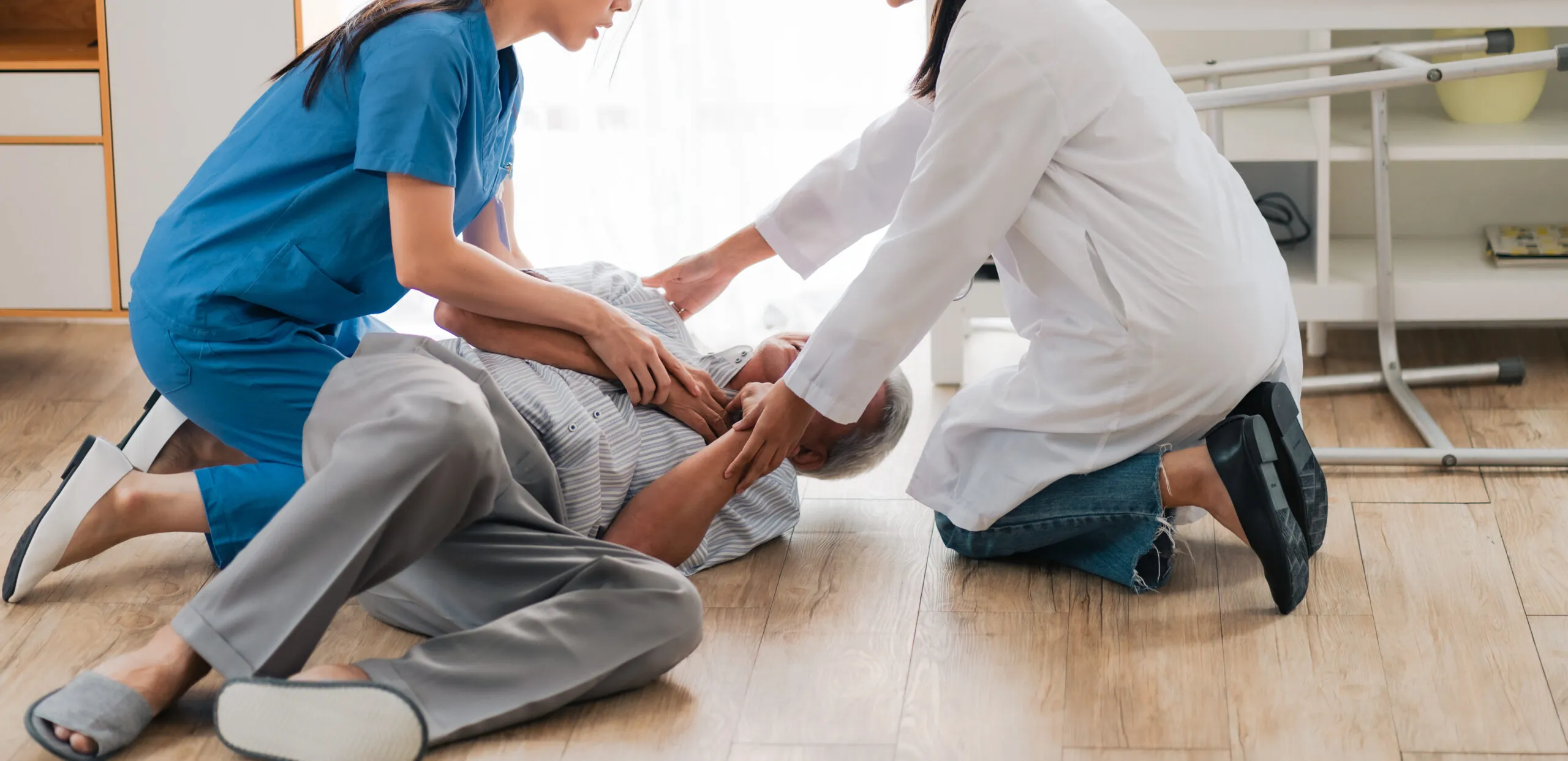
For a frail older person, a fall is not a minor event. It is a fractured hip, a head injury, a surgery survived and a recovery never quite completed — the start, too often, of a final decline. Palm Beach County families place parents and spouses in nursing homes precisely because falling at home had become too dangerous. When the fall happens anyway, in the place that was supposed to prevent it, the family deserves to know whether the facility did its job.
Rafferty Domnick Cunningham & Yaffa (RDCY) represents residents and families in nursing-home fall claims across Palm Beach County — in facilities from Boca Raton and Delray Beach to Wellington, West Palm Beach, and the Glades. These cases are won on the facility’s own paper: the risk assessments it performed, the care plan it wrote, and the gap between that plan and the staffing and supervision the resident actually received.
This page explains how fall prevention is supposed to work, what Florida law requires of nursing homes, and how a fall claim is proven. It is part of our Florida nursing home abuse and neglect practice; for the county-wide picture, see our Palm Beach County nursing home abuse page — and expect the answers to come from the facility’s own records.
Have Questions About a Nursing Home Fall in Palm Beach County?
Call us or request a case review by our experts.

How Fall Prevention Is Supposed to Work
A nursing home’s fall-prevention duty begins at admission. The resident is assessed for fall risk using established factors: history of falls, gait and balance, lower-body weakness, vitamin D and medication effects — particularly sedatives, blood-pressure drugs, and anything causing dizziness — cognitive status, vision, footwear, and toileting patterns. Federal patient-safety guidance from AHRQ describes exactly this assessment-driven model, and Florida’s residents’-rights statute requires care consistent with it.
Assessment alone prevents nothing. Its output must be an individualized care plan with interventions matched to the resident’s actual risks: assisted transfers for a resident who cannot bear weight safely; scheduled rounding and toileting for the resident whose falls happen on the way to the bathroom at night; a low bed and floor mats for the resident who rolls or climbs out; bed and chair alarms for the resident who forgets she cannot walk alone; medication review for the resident whose new prescription causes orthostatic dizziness. Each intervention is labor, and each must be reassessed after any fall, any new medication, and any change in condition.
The post-fall protocol is part of prevention too, because the first fall is the loudest warning of the second. A proper response evaluates the cause — Was she unattended? Was the alarm on? Was the call light answered? Was a new drug started? — and changes the plan accordingly. Facilities that chart ‘resident educated about fall risk’ after each fall, changing nothing, are documenting the opposite of prevention.
Where Facilities Fail: Patterns We See in Palm Beach County
The most common failure is the paper plan: a thorough care plan that the staffing on the floor could never execute. Rounds documented as completed at intervals no aide with fourteen residents could perform; alarms assigned but sounding unattended down a hallway; a two-person transfer performed by one. Comparing the plan against staffing assignments, alarm logs, and the timeline of the fall is where these cases are proven.
Under-assessment is a second pattern: a resident admitted after a fall at home charted as low risk; a post-surgical resident whose new limitations never made it into the plan; a resident whose escalating dementia — and escalating attempts to walk unassisted — were noted in nursing narratives and never converted into interventions. The duty is not just to assess once, but to keep the assessment honest as the resident changes.
Medication failures form a third. New sedatives, antipsychotics, and blood-pressure medications are classic fall precipitants, and a facility that does not connect a new prescription to new supervision — or does not question a drug regimen that leaves a resident dizzy — has missed an intervention entirely within its control. Finally, there are environmental failures: wet floors, poor lighting, cluttered pathways, broken bed brakes and wheelchair footrests, and bathrooms without grab bars or with call cords out of reach.
How Could a Preventable Nursing Home Fall Affect Your Legal Options?
Call us or request a case review by our experts.
The Injuries Falls Cause — and Why They Are Compensable
The CDC’s falls data for older adults frames the stakes: falls are the leading cause of injury and injury death in this age group, and hip fractures are their most feared consequence. In a nursing home population — older, frailer, often anticoagulated — the injury list extends to subdural hematomas from head strikes that may bleed slowly and present days later, spinal compression fractures, and the cascade that follows any major injury: delirium, pneumonia, pressure injuries, deconditioning, and death at rates that remain elevated long after the fracture heals.
Florida law treats these harms as what they are. Chapter 400’s civil remedy allows the resident (or, after a death, the estate and survivors under the Wrongful Death Act) to recover for the losses a facility’s negligence or rights violations caused: the medical costs and escalated care needs, the pain and suffering, the disability, and the loss of the resident’s remaining quality of life. The value of these claims reflects that a fall at eighty-five does not cost what a fall at forty costs — it costs more, in every currency that matters.
Causation disputes in fall cases usually concern foreseeability and preventability, not the fall itself. The defense position — ‘residents fall; no one can watch everyone’ — answers a duty the law does not impose. The actual duty is the reasonable one: assess honestly, plan individually, staff the plan, and respond to warnings. Facilities are judged against their own assessments, which is why the chart is so often the strongest witness for the resident.
How Florida Law Handles a Nursing Home Fall Claim
Residents’ rights under section 400.022 include the right to receive adequate and appropriate health care consistent with professional standards, and section 400.023 creates the civil action for violations and for negligence, with recovery of damages and, in appropriate cases, attorney’s fees. Chapter 400 also imposes a presuit notice procedure specific to nursing home claims, which must be completed before suit is filed; suit for Palm Beach County facilities is brought in the Fifteenth Judicial Circuit.
The limitations period is generally two years, and wrongful-death claims carry their own rules and representative requirements. Evidence issues argue for urgency on top of the legal ones: facilities’ records can be amended late (with audit trails that show it), staff turn over rapidly, and survey cycles move on. Early preservation letters and record requests fix the evidence as it existed when the fall happened.
Defenses are familiar — comparative fault arguments under section 768.81 occasionally appear, though a facility’s attempt to blame a demented resident for the facility’s own supervision failure rarely lands well — and the damages presentation centers the resident: who she was before the fall, what the fall took, and what the facility knew and failed to do. Medicare Care Compare’s published staffing and inspection data for the facility provides context jurors understand immediately.
A regulatory track runs in parallel, and families should know about it. Florida’s Agency for Health Care Administration surveys nursing homes and investigates complaints; a complaint about a fall can trigger an inspection whose findings become part of the public record and, frequently, part of the civil case. Reporting does not replace a claim or compensate the resident, but it creates an independent account of the facility’s practices while events are fresh — and facilities take documented complaints seriously in a way they do not always take family phone calls.
What Families Should Do After a Nursing Home Fall
See to the resident first: insist on a full post-fall evaluation, including head imaging where any head strike is possible, and make sure the physician — not only facility staff — examines the resident. If the injuries are serious or your confidence in the facility is broken, a hospital evaluation creates an independent record.
Then document and ask, in writing: What time did the fall occur, where, and who found the resident? Was the care plan followed — was the alarm on, when was the last round? What injuries were found, what did the post-fall assessment conclude, and what has changed in the plan? Request the records you are entitled to, photograph visible injuries and the room as you find it on visits, and note staffing and alarm observations with dates. Families are often the only witnesses whose notes are contemporaneous.
Finally, have the chart reviewed promptly and for free. A fall claim stands or falls on the facility’s documentation measured against its duties; the review will tell you whether this fall was an accident despite good care or the predictable result of care that existed only on paper — and what can be done about it, while the deadlines and evidence are still on your side.
Why Palm Beach County Families Choose RDCY
RDCY litigates nursing-home negligence across Palm Beach County, including a published $1,760,000 nursing-home arbitration award among the firm’s results. We know the facilities, the survey system, and the documentation practices that decide these cases, and we build fall claims the way they are proven: the resident’s assessments and care plan on one side of the ledger, the facility’s staffing and conduct on the other.
Families come to us after the worst phone call a nursing home can make. They get straight answers about what the records show, a plan for protecting the resident and the claim, and lawyers who treat a fall at eighty-five with the seriousness the law — and the resident — demands.
Related Nursing Home Abuse Pages in Palm Beach County
- Palm Beach County
- West Palm Beach
- Boca Raton
- Boynton Beach
- Delray Beach
- Jupiter
- Wellington
- Palm Beach Gardens
- Lantana
- Royal Palm Beach
- Riviera Beach
Professional Recognition


Recognition applies to the named attorneys and selection years. See the linked profiles for details.
NOTABLE RESULTS
Published RDCY outcomes, with broader practice results identified separately:
$31,000,000 catastrophic-injury result · $1,760,000 nursing-home arbitration award
Read more about these results
RDCY’s published results list a $31,000,000 catastrophic-injury outcome in Ft. Lauderdale. This is a broader catastrophic-injury result, not an outcome for this exact case type. Source: RDCY’s published results.
The firm’s Nicole Kruegel announcement reports a $1,760,000 nursing-home arbitration award. Firm source.
Prior results do not guarantee a similar outcome. Each case is different and must be evaluated on its own facts.
GOOGLE REVIEWS
General feedback from individual five-star Google reviews:
“He is true lawyer for the people displaying great enthusiasm, professionalism and compassion.”
— Jeff
“Can not say thank you enough!”
— PJ
Palm Beach County Nursing Home Fall Injury FAQs
Answers to common questions from Palm Beach County families about nursing home falls, fall-prevention duties, and chapter 400 claims in Florida. This is general information, not legal advice about a specific case.
Are nursing homes responsible when a resident falls?
Often, yes — when the fall was foreseeable and preventable. Florida law gives nursing home residents statutory rights under section 400.022, including the right to care consistent with professional standards, and section 400.023 provides a civil claim when a facility’s negligence or rights violations cause injury. A facility that admits a resident accepts the duty to assess that resident’s fall risk and to put a working prevention plan in place.
Not every fall is negligence: some occur despite proper care. The claim turns on what the facility knew about the resident’s risk, what the care plan required, and whether staff actually did what the plan said on the day and shift the fall happened.
Sources: Florida Statutes § 400.022, Online Sunshine; Florida Statutes § 400.023, Online Sunshine.
What should a nursing home do to prevent falls?
Standard practice starts with a fall-risk assessment on admission and after any change in condition or medication, using validated factors: prior falls, gait and balance problems, muscle weakness, medications that cause dizziness or sedation, cognitive impairment, and continence needs that prompt unassisted trips to the bathroom. The assessment must then become an individualized care plan — supervision levels, assisted transfers, scheduled rounding and toileting, bed and chair alarms where appropriate, proper footwear, clear pathways, and assistive devices.
Federal patient-safety guidance and CDC prevention materials describe the same framework, including medication review and strength and balance considerations. A plan that exists on paper but is not staffed or followed is not prevention; in litigation, the chart is compared against what staff actually did.
Sources: AHRQ PSNet: Falls Prevention Primer; CDC: Preventing Falls in Older Adults.
What injuries do nursing home falls cause?
Falls are the leading cause of injury in older adults, and in a frail nursing home population the consequences are severe: hip and pelvic fractures, wrist and shoulder fractures, head injuries including subdural hematomas that can declare themselves days later, and lacerations and internal injuries. A hip fracture in an elderly resident frequently begins a permanent decline — surgery, delirium, loss of mobility, pressure injuries, and a mortality risk that remains elevated for a year.
The CDC’s falls data underscores why prevention is treated as a core safety duty rather than an amenity: for this population, a ‘simple fall’ is rarely simple, and facilities are expected to plan on that basis.
Sources: CDC: Facts and Statistics About Falls in Older Adults; CDC: Preventing Falls in Older Adults.
What should the facility do after a resident falls?
The duties after a fall are as defined as the duties before it: immediate assessment and treatment of injuries, physician and family notification, a post-fall evaluation of why it happened, documentation in the resident’s record, and an updated care plan that responds to the new information — a fall is itself the strongest predictor of the next one. Repeat falls under an unchanged plan are among the most damning patterns in these cases.
Families should ask, in writing, for the incident report details, the post-fall assessment, and the care-plan changes made. If a resident cannot describe what happened, the facility’s documentation is the record — and gaps in it are significant evidence.
Sources: AHRQ PSNet: Falls Prevention Primer; Florida Statutes § 400.022, Online Sunshine.
How do staffing levels figure into fall cases?
Directly. Most fall-prevention interventions are labor: rounding, toileting assistance, transfer help, alarm response. A facility that is short-staffed on nights and weekends — when many falls occur — cannot deliver the plan it wrote, no matter how good the paperwork looks. Alarm fatigue compounds the problem when too few staff are covering too many alerts.
The investigation therefore examines staffing records alongside the clinical chart: who was on the floor, how many residents each aide carried, how quickly alarms were answered, and whether the facility’s own assessments showed it knew the resident needed more supervision than the staffing allowed. Medicare’s Care Compare data, including staffing measures and inspection results, provides public context for what the facility reported about itself.
Sources: Medicare Care Compare: Nursing Homes; AHRQ PSNet: Falls Prevention Primer.
What evidence matters most in a nursing home fall claim?
The resident’s chart is the center: fall-risk assessments, the care plan and its revisions, nursing notes, incident reports, alarm and rounding logs, medication records, and post-fall documentation. Survey and inspection history matters too — state surveyors cite facilities for fall-related care failures, and a pattern of citations undercuts a claim that one fall was unforeseeable.
Families contribute evidence no record contains: the resident’s condition before the fall, what they observed on visits (call lights unanswered, alarms sounding unattended, soiled conditions suggesting missed rounds), photographs of injuries and room conditions, and the names of roommates or visitors who saw relevant events. Preserve all of it early; facilities control the official record, and litigation is where it gets tested.
Sources: Florida Statutes § 400.023, Online Sunshine; Medicare Care Compare: Nursing Homes.
How long do we have to file a nursing home fall claim in Florida?
Claims for nursing home negligence and residents’-rights violations are generally subject to a two-year limitations period under Florida law, and chapter 400 adds its own presuit notice procedure that must be completed before suit is filed. Where a fall causes death, the claim proceeds under Florida’s Wrongful Death Act through the estate’s personal representative, on the Act’s own timeline.
Two years passes quickly when a family is managing a resident’s decline, and the presuit months sit inside that window. An early review protects the claim while the chart, staffing records, and witnesses are all still obtainable.
Sources: Florida Statutes § 95.11, Online Sunshine; Florida Statutes § 400.023, Online Sunshine.
What compensation can a nursing home fall claim include?
A successful claim can recover the medical costs of the fall injuries and their complications, the cost of the higher level of care the resident now needs, and damages for pain, suffering, disability, and the loss of dignity and enjoyment of life — recognized losses for the resident personally under chapter 400’s civil remedy. A fatal fall supports a wrongful death claim by the estate and statutory survivors.
These claims also serve a function beyond compensation: facilities change rounding, staffing, and alarm practices when falls become expensive. Families consistently tell us that preventing the next resident’s fall is part of what they are pursuing.
Sources: Florida Statutes § 400.023, Online Sunshine; Florida Statutes § 768.81, Online Sunshine.
My parent keeps falling and the facility says falls are ‘just part of aging.’ Is that right?
Aging raises fall risk; it does not make falls unpreventable or acceptable as a routine outcome. The entire structure of fall-risk assessment, care planning, and post-fall reassessment exists because the profession knows which residents will fall without intervention and what interventions work. A facility that shrugs at repeated falls is describing its own failure to reassess and staff the plan.
The record review answers the question concretely: what did the assessments show, what did the plan require, what was actually done between admission and each fall, and what changed afterward. If the answers show a plan that existed only on paper, that is a claim — not an inevitability of age.
Sources: CDC: Facts and Statistics About Falls in Older Adults; AHRQ PSNet: Falls Prevention Primer.
How much does it cost to have RDCY review a nursing home fall case?
The consultation and record review are free, with no obligation. The review examines the resident’s chart, care plan, fall history, and the facility’s staffing and survey context, and explains — plainly — whether the evidence supports a chapter 400 claim.
If the claim is viable and the family chooses to proceed, the fee arrangement is explained in writing before work begins. If the records show the facility did what the standard required, the family hears that conclusion and its reasoning at no charge.
Sources: Florida Statutes § 400.023, Online Sunshine; Florida Statutes § 95.11, Online Sunshine.
Related Articles
- What to Do After Nursing Home Abuse: The First 24 Hours in Florida
- What a Florida Nursing Home Has to Write Down, and What the Record Can and Cannot Show
- Why Florida Nursing Home Negligence Cases Are Harder to Win Than Families Expect
- What to Do if a Nursing Home Refuses to Provide Medical Records
- Legal Protection Against Involuntary Nursing Home Discharges
Need Help With a Case Involving a Nursing Home Fall?
Call us or request a case review by our experts.


