
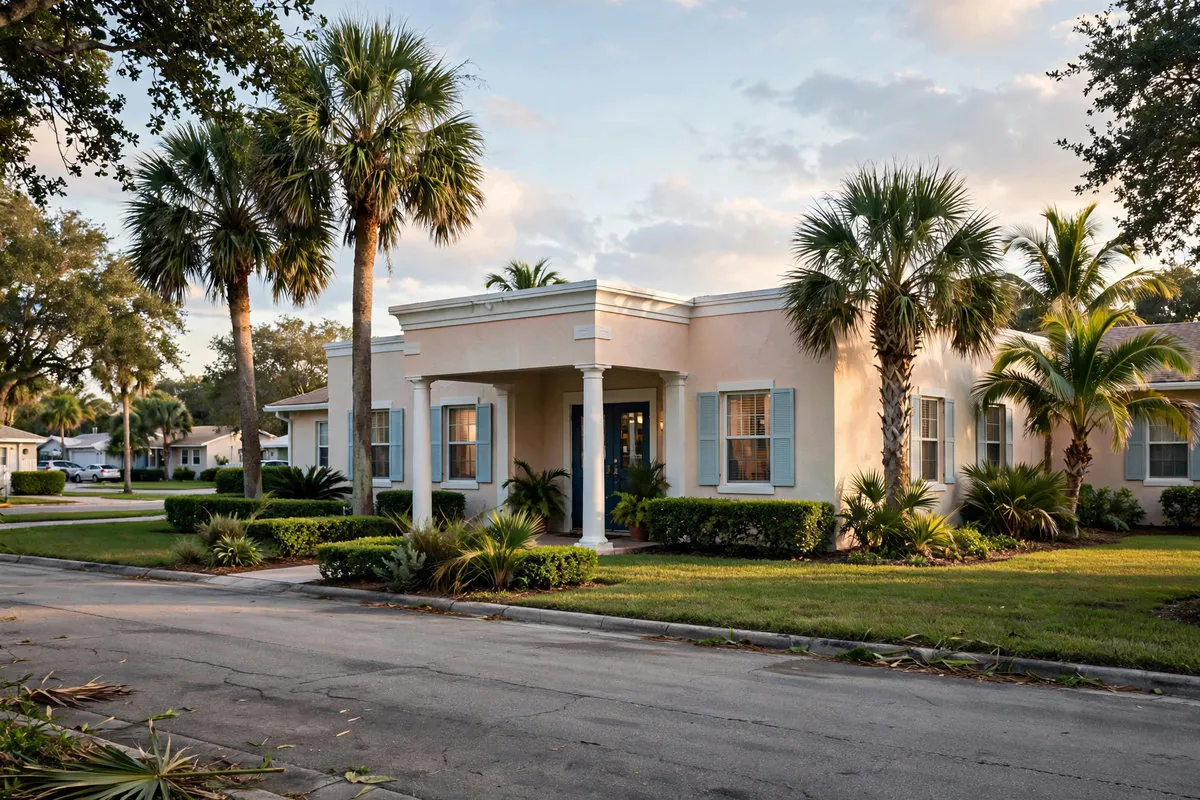
Lantana FL Nursing Home Abuse Lawyer
Lantana is one of Palm Beach County’s small coastal towns — a place of Intracoastal bridges, older neighborhoods west of Dixie Highway, and a pace that feels a generation slower than the corridor around it. Its long-term care footprint is small too: two certified nursing facilities, about 180 beds in total. In a town this size, a facility is not an abstraction. Your family may know a nurse who works there, a neighbor whose mother stayed there, a pastor who visits there. That familiarity is a comfort when care is good. When care fails, it makes families hesitate — and hesitation is exactly what a neglect case cannot afford.
Rafferty Domnick Cunningham & Yaffa helps Lantana residents and their families evaluate nursing home abuse and neglect claims. Because the town sits inside Palm Beach County, these cases draw on the same county-wide resources we use everywhere in the county — AHCA inspection files, Care Compare staffing data, and hospital transfer records — which we organize on our Palm Beach County nursing home abuse page. What follows is the Lantana version: the warning signs we see in smaller facilities, the Florida rules that govern them, and the first moves that protect both the resident and the record.
One point before anything else: if a resident is in danger today — untreated pain, a spreading wound, a sudden change no one will explain — act on the medical problem first. Treatment, a transfer evaluation, and a complaint can all happen this week; a claim is built afterward, out of the records those steps create.
Have Questions About Nursing Home Abuse?
Call us or request a case review by our experts.

Small Facility, Familiar Risks: Neglect Patterns in Lantana
Smaller facilities carry a particular risk profile. With about 180 certified beds across two homes, a Lantana facility’s margin for a flu outbreak, a staffing agency no-show, or two simultaneous admissions is thin. The failure mode is rarely dramatic. It is a weekend covered by unfamiliar agency nurses who do not know that Mrs. A pockets her medication, that Mr. B needs thickened liquids, that the resident in 214 will try to walk to the bathroom unassisted at night because she always has.
Dehydration and malnutrition surface constantly in smaller-home cases, because they are monitoring failures, not event failures. Nothing ‘happens’ on a particular day; instead, fluid charts drift, weights are recorded late or not at all, and a resident slides for three weeks until a family visit or a hospital transfer exposes it. Infections follow the same arc — a urinary tract infection missed until it becomes confusion, then a fall, then sepsis.
Wandering and elopement in a coastal town
Lantana’s geography raises the stakes of one specific failure: elopement. A resident with dementia who exits unnoticed is minutes from Dixie Highway traffic, canals, and the Intracoastal. Facilities that accept residents with known exit-seeking behavior take on the duty to match supervision, door alarms, and assessments to that risk. When a resident is found outside — or worse, is injured outside — the records that matter are the elopement risk assessments, alarm maintenance logs, and the staffing roster for that shift.
When ‘we’re like family’ replaces a care plan
The other Lantana pattern is informal care: concerns answered with reassurance instead of charting, changes noticed by an aide but never escalated to a nurse, family complaints handled with a conversation that leaves no paper. Friendliness is not a substitute for the assessment, documentation, and escalation Florida law expects, and a facility’s warmth at the front desk does not answer for what its records cannot show.
What Florida Law Requires of Lantana’s Nursing Homes
Lantana’s facilities answer to the same statewide framework as every Florida nursing home: Chapter 400 of the Florida Statutes. Section 400.022 guarantees residents a bill of rights — adequate and appropriate health care, dignity, privacy, visitation, and the ability to raise grievances without retaliation among them. Section 400.023 creates the civil action a resident (or, where the resident cannot act, the proper representative) may bring when negligence or a rights violation causes loss, injury, or death.
Licensure and oversight sit with the Agency for Health Care Administration. AHCA surveys Lantana facilities, investigates complaints, and publishes inspection results on Florida HealthFinder. Federal certification adds a second layer: Medicare’s Care Compare rates each home’s health inspections, staffing, and quality measures, and publishes the staffing hours the facility reports. In a two-facility town, these public records are unusually powerful — a family can read essentially the entire local inspection landscape in an afternoon, and so can we.
For the statewide framing of these claims — the types of cases, the investigation process, and the firm’s approach — see our Florida nursing home abuse overview. The law is statewide; the evidence is always local, and in Lantana the evidence concentrates in two buildings’ worth of charts, rosters, and survey files.
How Could Nursing Home Abuse Affect Your Legal Options?
Call us or request a case review by our experts.
Building the Record in a Lantana Neglect Case
Investigations in small facilities have one advantage: the universe of documents is manageable, and inconsistencies stand out. A Lantana investigation typically assembles the resident’s complete chart and care plan, the facility’s staffing schedules and assignment sheets for the relevant shifts, its AHCA survey history, and the records of any hospital that received the resident afterward. Where a resident was transferred to an area hospital in the Lake Worth–Boynton corridor or West Palm Beach, the receiving team’s admission assessment often describes the resident’s condition in terms the facility’s own chart avoided.
Witnesses matter differently here, too. In a small home, staff wear several hats, agency nurses rotate through, and former employees may still live locally. Roommates and their families — people who were in the building at visiting hours that your family could not make — sometimes hold the timeline that the chart omits. Identifying those witnesses early, before staff turns over and memories are coached into alignment, is one of the most time-sensitive parts of a Lantana case.
A dated family log is real evidence
Keep a simple log from the first day a concern arises: date, time, who you saw, what you observed, what you were told, and by whom. Photograph wounds, bedding, room conditions, and any posted notices with the date preserved. In case after case, a family’s contemporaneous log is what turns ‘things seemed off for weeks’ into a timeline an expert can work with — and what exposes the gap between a chart’s tidy entries and the room as it actually was.
First Steps for Lantana Families
The order of operations matters less than speed on the first two items: care and paper. Get the resident evaluated — by their own physician, an urgent transfer, or an emergency department — if their condition has changed. Put every request to the facility in writing from now on: requests for records, for a care-plan meeting, for an explanation of an incident. Verbal reassurance leaves nothing to review later; a dated email does.
- Request the complete chart, care plan, and incident reports in writing
- Photograph injuries and room conditions with dates intact
- Write down staff names, shift times, and exactly what you were told
- File a complaint with AHCA if the resident remains in the facility
- Contact the Long-Term Care Ombudsman for an in-facility advocate
- Do not sign new admission, arbitration, or release paperwork after an incident
- Have the Florida filing deadlines checked before any internal review wraps up
Rafferty Domnick Cunningham & Yaffa reviews Lantana nursing home matters for families at no charge for the initial consultation. Call (561) 516-5168 and bring whatever you have — a partial file is a normal starting point, and part of our job is knowing which records to demand next.
After a Death in a Lantana Facility: The First Questions
Some Lantana families reach this page too late for prevention. A parent went into a small coastal facility for rehabilitation or long-term care and did not come home, and the explanation offered — ‘she was elderly,’ ‘his heart just gave out’ — sits uneasily next to the decline the family watched over the preceding weeks. Florida law gives those families a structured way to test that explanation, but the structure has gates that close quickly, and the first gate is information: the complete chart, the hospital records from any final transfer, and the facility’s account of the last seventy-two hours, preserved before routine retention cycles and staff turnover thin them out.
The legal vehicle is generally a claim under Section 400.023 pursued through the resident’s estate, alongside Florida’s wrongful-death framework. An estate must be opened and a personal representative appointed to bring it — a probate step many families have not otherwise needed, and one our firm walks families through as part of the case rather than leaving them to arrange alone. The two-year wrongful-death limitations period under Section 95.11 runs from the date of death, which is why the estate conversation should happen in weeks, not seasons.
Should the family consider an autopsy or a medical examiner referral?
In some deaths, yes — particularly where the cause of death is unclear, where the decline was sudden after a period of documented problems, or where the death certificate’s stated cause does not match what the family observed. Whether a medical examiner case arises depends on the circumstances of the death, and a private autopsy is a family decision with cost and timing dimensions that counsel can explain. The larger point is sequencing: questions about post-death examination lose their value quickly, so raise them at the first consultation rather than after burial decisions are complete. Even where no autopsy occurs, hospital records, the chart, and expert review of both can usually reconstruct whether the care met the standard.
Grief and investigation are not opposites, and families should not feel that asking hard questions dishonors the facility staff who were kind. Kindness and negligence coexist in these files constantly — the aide the family loved may be the same aide who was assigned fourteen residents. A Chapter 400 investigation examines systems and records, not gratitude, and a Lantana family is entitled to both mourn and know.
One more Lantana-specific subject deserves mention because the town sits on the water: storms. Florida nursing facilities operate under emergency management requirements, and AHCA reviews facility emergency plans covering evacuation, power, staffing, and resident tracking. Coastal families should ask — before hurricane season, not during a watch — where residents would be evacuated, how families are notified, and how medications and records travel with residents. After any evacuation or storm-related transfer, document where your loved one went, in what condition they left and arrived, and who accompanied them. Disruptions are when monitoring lapses multiply, and a facility’s storm performance is part of its care record, not an act of God that excuses it. If a storm transfer exposed neglect that predated the weather — wounds, dehydration, medication chaos — that history belongs in the same investigation as everything else on this page.
Why Lantana Families Call RDCY
A two-facility town does not need a lawyer who will ‘look into long-term care.’ It needs a firm that already litigates these cases in Palm Beach County — in the Fifteenth Judicial Circuit — and that treats a 90-bed home’s chart with the same rigor it would bring to a hospital case. Rafferty Domnick Cunningham & Yaffa’s nursing home practice includes counsel focused on representing abuse and neglect victims, working alongside a Florida Bar board-certified civil trial lawyer with nursing home litigation in his background.
We will give you a straight read of the public record and the chart: what supports a claim, what does not, and what an investigation would need to find. If the records do not support action, you will hear that from us directly — that candor is worth as much as advocacy when your family is deciding how hard to push a facility your loved one may still live in.
Professional Recognition


Recognition applies to the named attorneys and selection years. See the linked profiles for details.
GOOGLE REVIEWS
General feedback from individual five-star Google reviews:
“He is true lawyer for the people displaying great enthusiasm, professionalism and compassion.”
— Jeff
“Can not say thank you enough!”
— PJ
Lantana Nursing Home Abuse FAQs
The answers below are general information about nursing home care, records, and claims in Florida. They are not legal advice about a specific resident or facility, and deadlines and procedures depend on the facts of each matter.
How many nursing homes are in Lantana, Florida?
Lantana has two certified nursing facilities with about 180 certified beds between them. Facility names and operators can change, so confirm a specific home’s current status, bed count, and ownership through AHCA’s Florida HealthFinder or Medicare’s Care Compare.
For a legal claim, identify the facility’s licensed operator name for the dates of your loved one’s stay — that is the name that belongs in records requests and any filing.
Sources: Medicare Care Compare; AHCA Florida HealthFinder Facility Search
What are the most common neglect warning signs in a small Lantana facility?
Watch for the slow changes rather than a single event: steady weight loss, dry skin and cracked lips suggesting dehydration, new or worsening pressure injuries, repeated urinary tract infections, unexplained bruising, missed or doubled medications, and a resident who is suddenly withdrawn or fearful around particular staff.
In smaller homes, also watch for unfamiliar agency staff on consecutive visits and care concerns that are answered verbally but never appear in the chart. Document each observation with a date and raise it in writing.
Sources: Florida Statutes Chapter 400, Online Sunshine; AHCA Florida HealthFinder Nursing Home Guide
A Lantana resident with dementia got out of the facility unnoticed. Is that a legal claim?
It can be. When a facility accepts a resident with known wandering or exit-seeking behavior, Florida law expects supervision, assessments, and safeguards matched to that risk.
An elopement investigation examines the resident’s elopement-risk assessments, door-alarm and maintenance records, staffing on the shift involved, and how long the resident was missing. Whether the facts support a claim under Section 400.023 depends on what those records show about what the facility knew and what it did — which is why preserving them quickly matters.
Sources: Florida Statutes Chapter 400, Online Sunshine; AHCA Florida HealthFinder Nursing Home Guide
How do I get my loved one’s records from a Lantana nursing home?
Make the request in writing to the facility, identifying the resident and the records sought — the complete chart, care plans, medication administration records, and incident reports.
Residents and their authorized representatives have rights to access records under Florida law and the facility’s obligations under Chapter 400. If the facility delays, narrows, or refuses production, that response itself should be documented; a lawyer can pursue the records through the claim process, and AHCA complaint channels exist for access problems involving a current resident.
Sources: Florida Statutes Chapter 400, Online Sunshine; AHCA Florida HealthFinder Facility Search
What does the Long-Term Care Ombudsman do for a Lantana resident?
The Florida Long-Term Care Ombudsman Program advocates for residents of nursing homes and similar facilities.
Ombudsmen visit facilities, receive and investigate complaints from residents and families, and work to resolve problems — care concerns, rights issues, discharge disputes — at the facility level. The service is free and is often the fastest way to get an independent set of eyes inside a Lantana facility while your loved one still lives there. An Ombudsman cannot award compensation, and contacting one does not pause any legal deadline.
Sources: AHCA Florida HealthFinder Nursing Home Guide; AHCA Florida HealthFinder Facility Search
Where are Lantana nursing home lawsuits heard?
State-court claims arising from care in Lantana are filed in the Circuit Court of the Fifteenth Judicial Circuit, Palm Beach County, principally at the Palm Beach County Courthouse in West Palm Beach.
Some matters proceed in arbitration instead, if an enforceable arbitration agreement was signed at admission. Many claims also resolve through negotiation or mediation. Your attorney should explain which path your case is on and what the realistic timeline looks like in this circuit.
Sources: Florida Statutes Chapter 400, Online Sunshine; AHCA Florida HealthFinder Facility Search
How long do I have to bring a nursing home neglect claim in Lantana?
Florida’s deadlines are short. Negligence-based claims are generally governed by a two-year limitations period, and wrongful-death claims have their own two-year period running from the date of death, under Section 95.11, Florida Statutes.
The precise analysis depends on the injury, when it was discovered or should have been discovered, and who is bringing the claim. Do not wait for a facility’s internal review or an agency investigation to conclude — neither one extends the filing clock.
Sources: Florida Statutes §95.11, Online Sunshine; Florida Statutes Chapter 400, Online Sunshine
Can a Lantana facility discharge my mother in retaliation for our complaints?
Retaliation for raising grievances is inconsistent with the residents’ rights in Section 400.022, and involuntary discharges are regulated: facilities must have a permitted reason, give proper written notice, and follow safe-discharge requirements.
If you receive a discharge notice after filing complaints, treat it as urgent — appeal and review deadlines are short. The Ombudsman Program handles discharge disputes regularly, and a lawyer can evaluate both the discharge fight and any underlying neglect claim together.
Sources: Florida Statutes Chapter 400, Online Sunshine; AHCA Florida HealthFinder Nursing Home Guide
What if the neglect happened during a hospital transfer from Lantana?
Transfers are a frequent fault line: a facility waits too long to send a deteriorating resident out, sends incomplete information with them, or the receiving hospital documents a condition — advanced pressure injuries, severe dehydration, untreated infection — that developed over time at the home.
The investigation compares the facility’s chart against the hospital’s admission assessment, which is usually the most candid contemporaneous description. Keep both sets of records; together they often tell the story neither tells alone.
Sources: AHCA Florida HealthFinder Nursing Home Guide; AHCA Florida HealthFinder Facility Search
What does it cost to have RDCY review a Lantana nursing home case?
The initial consultation is free. Bring the admission paperwork, any hospital records from a transfer, photographs, and your own notes or log if you have kept one — and if you have none of those yet, call anyway.
The first review identifies what the public record already shows about the facility, what additional records are needed, and whether the facts justify opening a full investigation under Chapter 400.
Sources: Florida Statutes Chapter 400, Online Sunshine; The Florida Bar — Public Information
Need Help With a Case Involving Nursing Home Abuse?
Call us or request a case review by our experts.


