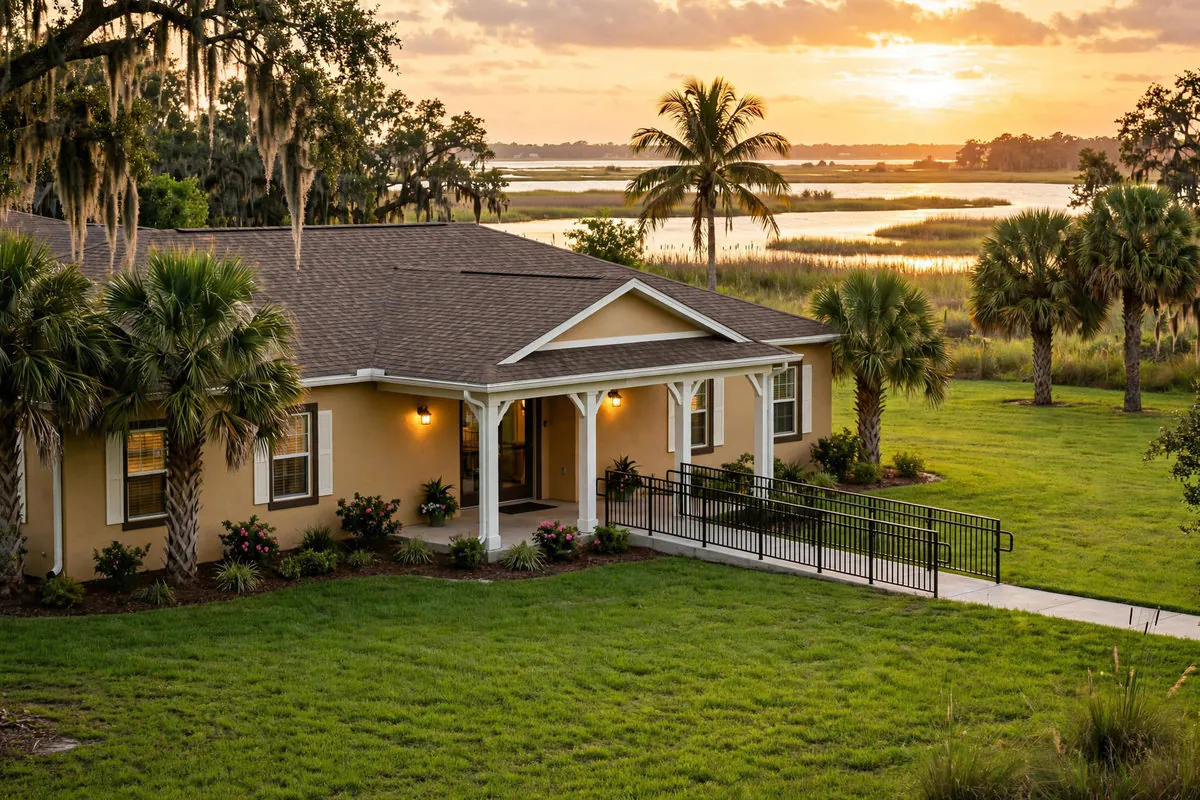
Belle Glade FL Nursing Home Abuse Lawyer
Belle Glade sits on the southeast shore of Lake Okeechobee, a rural Glades community of about 16,698 people where families often know the staff caring for their parents by name. That familiarity is a strength, but it can also make it harder to speak up when care starts to slip. When a resident in or near Belle Glade is hurt by neglect — a pressure injury that was never prevented, a fall nobody documented, medication given late or not at all — Florida law gives the resident and family real rights, and those rights do not depend on how small the community is.
Rafferty Domnick Cunningham & Yaffa (RDCY) represents Palm Beach County families in nursing home abuse and neglect cases, including families in the Glades. This page explains what neglect looks like in a rural care setting, what Florida chapter 400 requires of facilities, how a claim is investigated and filed in the 15th Judicial Circuit, and what to do in the first days after you notice something is wrong. For broader background, see our Florida nursing home abuse lawyer page and the Palm Beach County nursing home abuse hub. If you are worried about a loved one today, call (561) 516-5168 for a free case review.

Have Questions About Nursing Home Abuse?
Call us or request a case review by our experts.

Neglect in a Rural Community: How Harm Develops in Belle Glade Care Settings
Neglect rarely begins with a single dramatic event. In a small Glades-area facility it more often develops quietly: a resident who needs help turning in bed waits too long between repositioning rounds, call bells go unanswered during short-staffed overnight shifts, and early skin redness that should trigger a prevention plan is charted late or not charted at all. By the time a family member drives in and lifts the blanket, a preventable pressure injury may already be deep and infected.
Families in Belle Glade should also watch the transfer pattern. A resident sent to Lakeside Medical Center with dehydration, sepsis, or an infected wound has often been declining for days. Hospital records from that transfer frequently become the clearest, most independent evidence in the case, because hospital clinicians document the resident’s condition on arrival without any stake in how the facility described it beforehand.
Falls and fractures during understaffed shifts
A resident assessed as a fall risk needs supervision, assistive devices, and a call system that works — on every shift, including nights and weekends. In neglect cases the pattern repeats: the resident is found on the floor, the incident report is thin, and the chart shows no change to the care plan afterward. A fracture that sends a Glades resident to the hospital is not simply bad luck when the facility already knew the resident could not walk safely alone.
Nutrition, hydration, and the long drive between visits
Residents who cannot feed themselves depend entirely on staff for meals and fluids. When aides are stretched thin, trays leave rooms untouched and intake is charted from the plan rather than from what the resident actually consumed. Steady weight loss, cracked lips, confusion, and repeated urinary infections are warning signs families can spot even on infrequent visits — photograph them, date them, and raise them in writing.
What Florida Chapter 400 Requires of Facilities Serving Belle Glade Residents
Florida’s nursing home law, chapter 400 of the Florida Statutes, sets the floor for care. Section 400.022 spells out residents’ rights, including the right to receive adequate and appropriate health care, to be treated with dignity, and to be free from abuse and neglect. Section 400.023 creates the civil claim: when a facility violates a resident’s rights or fails to provide the care the law requires, the resident — or, after a death, the estate and survivors — may bring an action for damages.
Residents’ rights are practical, not decorative
The rights in section 400.022 map directly onto everyday care: the right to a safe environment, to have family notified of significant changes, to examine inspection results, and to voice grievances without retaliation. When a facility discourages complaints, limits visiting after a family raises concerns, or threatens discharge, that conduct itself may violate the statute — and it should be documented and reported, not absorbed quietly.
What inspection records can and cannot prove
A clean survey does not erase a resident’s injury, and a cited deficiency does not automatically win a case. Inspection records matter because they are contemporaneous and independent: they show what regulators observed about staffing, infection control, and care practices around the time your loved one was harmed. Your attorney weaves those records together with the chart, hospital records, and witness accounts to build the full picture.
How Could Nursing Home Abuse Affect Your Legal Options?
Call us or request a case review by our experts.
How a Belle Glade Nursing Home Case Is Built and Where It Is Filed
Preserving evidence in the first days
Photograph injuries and room conditions, keep a dated log of every visit and conversation, save discharge papers and hospital summaries, and write down the names of staff on duty. If your loved one has died, do not assume the record speaks for itself — ask early about autopsy and medical examiner questions, and let counsel move quickly to preserve the chart before routine retention schedules and staff turnover scatter the evidence.
Damages in a Glades neglect case
Recoverable damages can include medical expenses for treating the harm, the cost of care the resident still needs, and compensation for pain, suffering, and loss of dignity the resident endured. In a death case, Florida law provides for the estate’s and survivors’ losses as the statutes allow. No ethical lawyer can promise a figure at the outset; value follows the documented harm, the strength of the liability evidence, and the resident’s own story as the record tells it.
Why Glades Families Choose RDCY for Nursing Home Cases
RDCY is a Palm Beach County firm that tries catastrophic injury and elder neglect cases across Florida. Our attorneys are recognized by Lawdragon and Super Lawyers, publish on healthcare litigation, and have reported results that include a $1,760,000 nursing-home arbitration award — experience that matters when a facility and its insurer evaluate whether to fight or resolve a claim. The full recognition, publications, and results appear below on this page.
Related Nursing Home Abuse Pages
- Palm Beach County
- West Palm Beach
- Boca Raton
- Boynton Beach
- Delray Beach
- Jupiter
- Wellington
- Palm Beach Gardens
- Lantana
- Royal Palm Beach
- Riviera Beach
- Greenacres
- Belle Glade
- Lake Worth Beach
- Palm Springs
Professional Recognition


Recognition applies to the named attorneys and selection years. See the linked profiles for details.
NOTABLE RESULTS
Published RDCY outcomes, with broader practice results identified separately:
$31,000,000 catastrophic-injury result · $1,760,000 nursing-home arbitration award
Read more about these results
RDCY’s published results list a $31,000,000 catastrophic-injury outcome in Ft. Lauderdale. This is a broader catastrophic-injury result, not an outcome for this exact case type. Source: RDCY’s published results.
The firm’s Nicole Kruegel announcement reports a $1,760,000 nursing-home arbitration award. Firm source.
Prior results do not guarantee a similar outcome. Each case is different and must be evaluated on its own facts.
GOOGLE REVIEWS
General feedback from individual five-star Google reviews:“I recommend this firm highly for their honesty and integrity.” — Ally
“This firm is dedicated, compassionate and goes above and beyond.” — Ashley
Belle Glade Nursing Home Abuse FAQs
These answers give general information about nursing home neglect claims affecting Belle Glade and Glades-area residents. They are not legal advice for a specific resident; a free review of the actual records is the right next step.
Where would a nursing home neglect lawsuit for a Belle Glade resident be filed?
It would be filed in Palm Beach County circuit court. Belle Glade is in Palm Beach County, and nursing home cases from the Glades are heard in the 15th Judicial Circuit, principally at the Palm Beach County Courthouse in West Palm Beach.
Filing location follows the county, not the facility’s distance from the courthouse. Before any suit is filed, Florida chapter 400 requires pre-suit notice to the facility and a period for its investigation, so the timeline starts well before a complaint reaches the court.
Sources: Florida Statutes § 47.011 — Venue (Florida Senate) · Florida Statutes § 95.11 — Limitations of Actions (Florida Senate)
How can Belle Glade families check a nursing home’s inspection history?
Through AHCA’s Florida HealthFinder, which publishes inspection reports and deficiencies for licensed Florida nursing homes, and through Medicare Care Compare, which posts federal quality measures and overall star ratings for certified facilities.
Read several survey cycles, not just the most recent one, and note repeat deficiencies involving staffing, pressure injuries, or infection control. A pattern across surveys can support what your family observed during the same period.
Sources: Medicare.gov — Care Compare · Florida Statutes § 400.022 — Nursing Home Residents’ Rights (Florida Senate)
What rights does Florida law give a nursing home resident in Belle Glade?
Section 400.022 of the Florida Statutes guarantees residents adequate and appropriate health care, dignity, privacy, freedom from abuse and neglect, notice to family of significant changes, and the ability to complain without retaliation, among other rights.
These rights are enforceable. When a facility’s failure to honor them causes injury, section 400.023 allows a civil action for damages, and that is the legal foundation of most Florida nursing home neglect claims.
Sources: Florida Statutes § 400.022 — Nursing Home Residents’ Rights (Florida Senate) · Florida Statutes § 400.023 — Nursing Home Civil Enforcement (Florida Senate)
A Belle Glade resident was transferred to Lakeside Medical Center with sepsis. Why do those hospital records matter?
Hospital clinicians document the resident’s condition on arrival — wounds, hydration, infection, nutrition — independently of the nursing home’s own chart. When a resident arrives septic or with an advanced pressure injury, that arrival record can show how long the decline had been developing.
Request and preserve both records: the facility chart and the complete hospital record for the transfer. Comparing the two timelines is often where a neglect case becomes clear.
Sources: Florida Statutes § 395.3025 — Hospital Patient Records (Florida Senate) · Florida Statutes § 400.145 — Resident Records (Florida Senate)
How long do I have to bring a nursing home neglect claim for a Belle Glade resident?
Florida’s limitations period for negligence-based claims, including most nursing home neglect claims, is generally two years, measured under section 95.11 of the Florida Statutes, with specific rules for death cases and for when the injury was or should have been discovered.
Do not calculate the deadline yourself from a calendar. Records requests, pre-suit notice, and investigation all take time before filing, so an early review protects the claim even when the deadline seems distant.
Sources: Florida Statutes § 95.11 — Limitations of Actions (Florida Senate) · Florida Statutes § 400.023 — Nursing Home Civil Enforcement (Florida Senate)
What are the earliest warning signs of neglect a Glades family should act on?
Look for steady weight loss, dehydration, new or worsening pressure injuries, repeated infections, unexplained bruising, poor hygiene, soiled clothing or bedding, missed medications, and a resident who becomes withdrawn or fearful. In a rural facility, also note unfamiliar agency staff on repeated visits and concerns answered verbally but never charted.
Act on the pattern, not a single bad day: photograph what you see, date your notes, raise concerns in writing, and keep copies. That contemporaneous log often becomes important evidence later.
Sources: Florida Statutes § 400.022 — Nursing Home Residents’ Rights (Florida Senate) · Florida Statutes § 400.023 — Nursing Home Civil Enforcement (Florida Senate)
Can a facility retaliate against a Belle Glade resident whose family complains?
No. Florida law protects a resident’s right to voice grievances without reprisal, and retaliatory discharge or threats of discharge after complaints violate residents’ rights under chapter 400.
If a facility raises discharge after your family complains, get the stated reason in writing, keep every notice, and contact counsel promptly. Discharge rules have their own notice and appeal requirements that should not be navigated alone.
Sources: Florida Statutes § 400.022 — Nursing Home Residents’ Rights (Florida Senate) · Florida Statutes § 400.023 — Nursing Home Civil Enforcement (Florida Senate)
Who can bring a claim if a Belle Glade resident died after neglect?
When neglect causes death, the claim is generally brought by the personal representative of the resident’s estate on behalf of the estate and the survivors Florida law recognizes, under the state’s wrongful death framework alongside chapter 400.
Families should move quickly after a death: the chart, incident reports, and any relevant monitoring records must be preserved, and questions about autopsy or medical examiner involvement are best addressed in the first days.
Sources: Florida Statutes § 95.11 — Limitations of Actions (Florida Senate) · Florida Statutes § 400.023 — Nursing Home Civil Enforcement (Florida Senate)
What does it cost to have RDCY review a Belle Glade nursing home case?
The review is free. RDCY evaluates the records and explains whether the evidence supports a chapter 400 claim, what investigation remains, and what deadlines apply, without charge for that consultation.
Nursing home cases are typically handled on a contingency fee, meaning the firm’s fee comes from a recovery rather than from the family up front. The Florida Bar’s public resources explain how contingency arrangements work for injury claims generally.
Sources: Florida Statutes § 95.11 — Limitations of Actions (Florida Senate) · Florida Statutes § 768.81 — Comparative Fault (Florida Senate)
The facility serving my mother is small and everyone knows us. Will a claim make her care worse?
That worry is understandable in a community Belle Glade’s size, and the law accounts for it: retaliation against a resident for a family’s complaints is prohibited, and a pending claim usually increases, rather than decreases, the attention a resident’s chart receives.
If remaining in the facility is not safe, counsel can discuss transfer options alongside the claim, and concerns can also be reported through official channels. Protecting the resident comes first; the legal claim is built around that priority.
Sources: Florida Statutes § 400.022 — Nursing Home Residents’ Rights (Florida Senate) · Florida Statutes § 400.023 — Nursing Home Civil Enforcement (Florida Senate)
Related Articles
- What to Do After Nursing Home Abuse: The First 24 Hours in Florida
- What a Florida Nursing Home Has to Write Down, and What the Record Can and Cannot Show
- Why Florida Nursing Home Negligence Cases Are Harder to Win Than Families Expect
- What to Do if a Nursing Home Refuses to Provide Medical Records
- Investigating Food and Nutrition Neglect in Nursing Home Care
- Legal Protection Against Involuntary Nursing Home Discharges
Need Help With a Case Involving Nursing Home Abuse?
Call us or request a case review by our experts.