
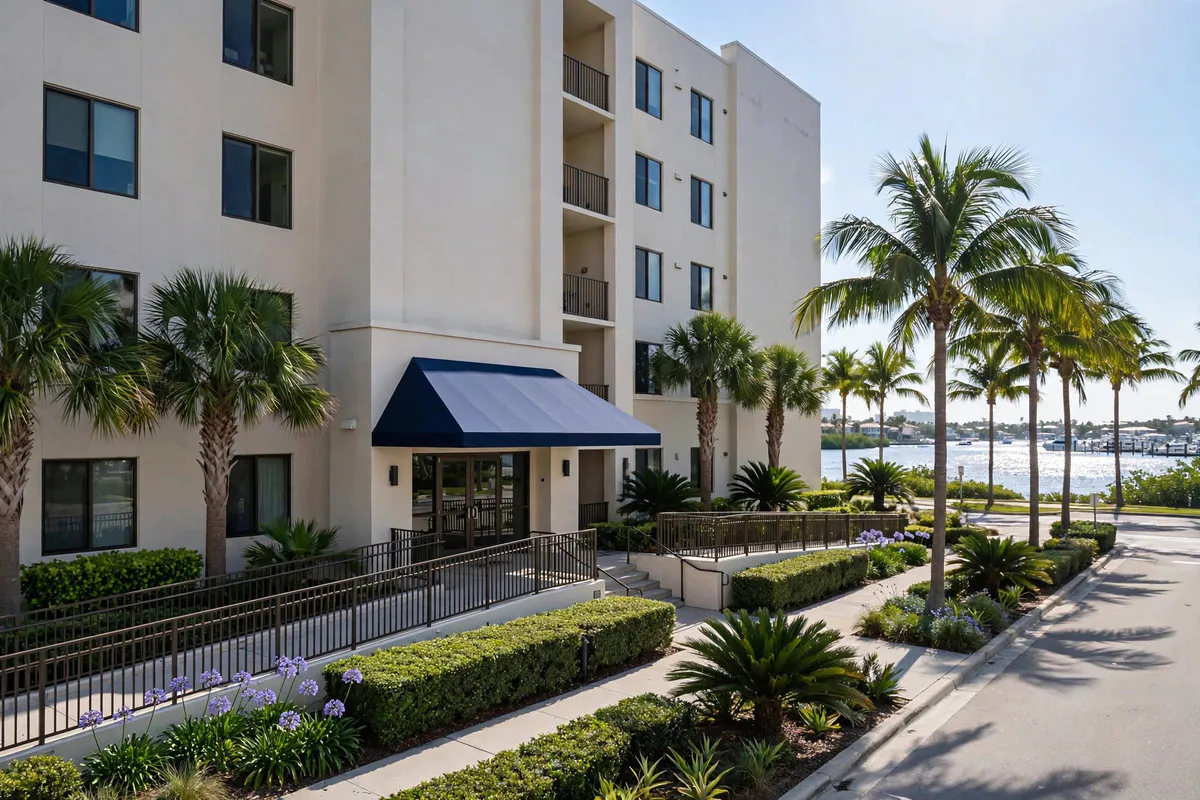
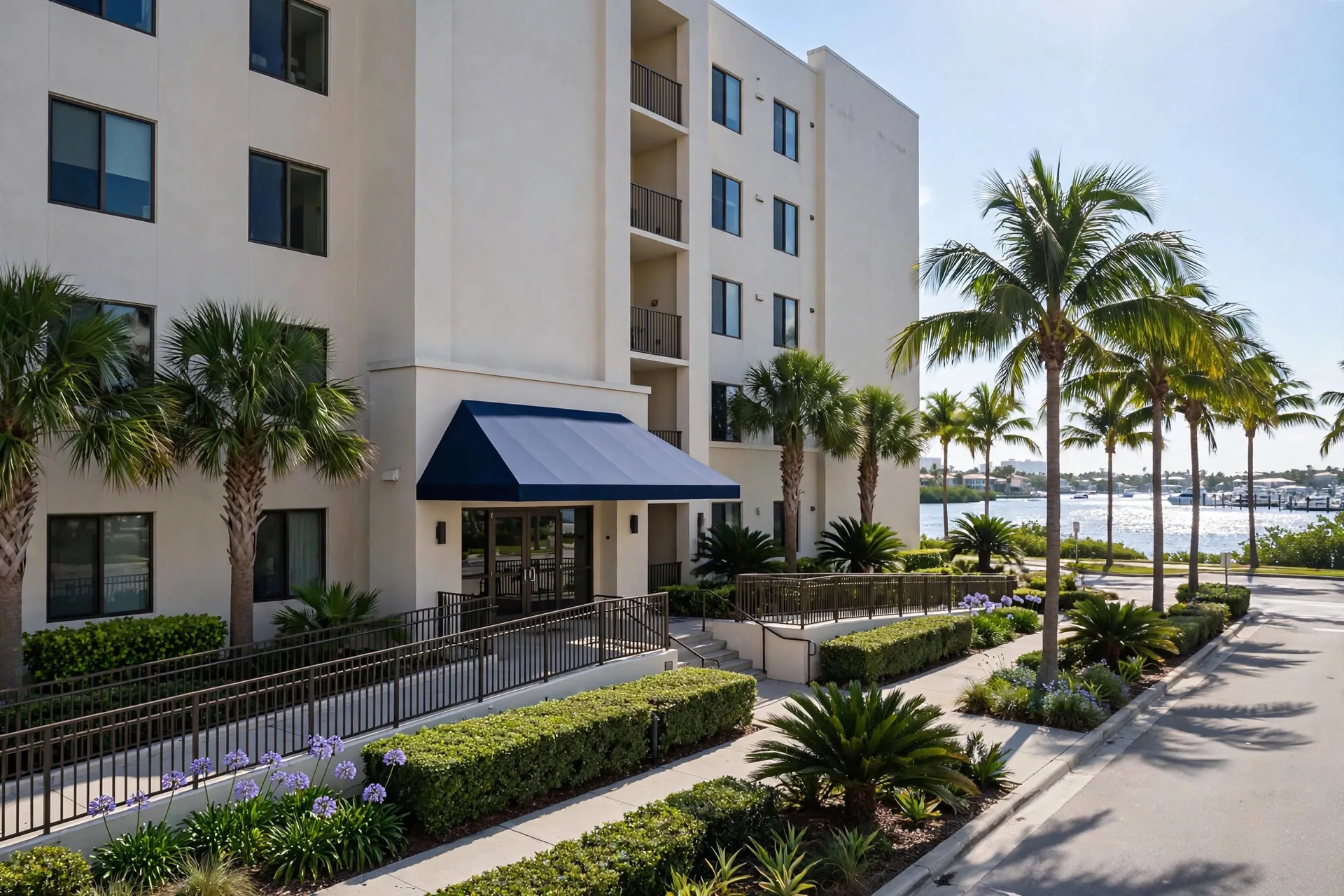
Riviera Beach FL Nursing Home Abuse Lawyer
Riviera Beach is a working coastal city of about 37,604 people — Singer Island’s condominiums on one side of the Intracoastal, established neighborhoods along Blue Heron Boulevard on the other, and a community that has cared for its own elders for generations. Its long-term care footprint is a single certified nursing facility of about 120 beds. Families here often place a loved one in that home because it is close: close to the spouse who still drives over every afternoon, close to the VA Medical Center that handles the resident’s other care, close to home in every sense that matters.
When that closeness is repaid with neglect — an infection caught too late, a transfer delayed a day too long, a resident sent home or to a hospital in a condition the family barely recognizes — the betrayal cuts deep, and so does the practical problem of what to do next. Rafferty Domnick Cunningham & Yaffa represents Riviera Beach residents and families in nursing home abuse and neglect claims. This page covers the patterns we investigate here, the Florida law that governs the city’s one facility, and the steps that protect a resident who may still be inside it. The county-wide picture is on our Palm Beach County nursing home abuse page.
As on every page in this series: care first. A resident whose condition is changing needs medical attention and a written record today. The legal claim is built from exactly those records.
Have Questions About Nursing Home Abuse?
Call us or request a case review by our experts.

Delayed Recognition, Delayed Transfer: The Riviera Beach Pattern
The Riviera Beach cases that reach us most often share a timeline. A resident develops a urinary tract infection, pneumonia, or a skin infection. The early signs — confusion, lethargy, a low-grade fever, eating less — are noted, minimized, or missed across a shift change or a weekend. By the time the facility calls for transport, the resident arrives at the hospital septic, and the family is told a version of events that makes the decline sound sudden. It rarely was. Infection in a frail resident is a clock, and the chart usually shows when the clock started.
Residents from Riviera Beach are commonly received at St. Mary’s Medical Center in West Palm Beach, and the hospital’s sepsis workup — cultures, lactate, wound findings, hydration status — becomes the spine of the investigation. A facility that assessed promptly, notified the physician, and transferred when the criteria were met has records that say so. A facility that watched and waited has records that say that instead, usually in the gaps: the assessment never charted, the provider call never logged, the family notification nobody can date.
The veteran in the nursing home
Riviera Beach is home to the West Palm Beach VA Medical Center, and many local nursing home residents are veterans whose care is split between VA providers and the facility. Split care creates split records — and a familiar defense, in which each side attributes a missed change to the other’s chart. A careful investigation gathers both record sets early and builds one timeline. Veterans and their families should also know that a claim against a private nursing facility is an ordinary Florida civil claim under Chapter 400; it does not run through the VA, and VA benefits are not a substitute for the facility’s own duties.
What Chapter 400 Promises a Riviera Beach Resident
Florida’s nursing home law does not grade on a curve for small cities or single facilities. Chapter 400 of the Florida Statutes applies in Riviera Beach exactly as it does in the largest county markets. Section 400.022 guarantees residents adequate and appropriate health care, dignity, privacy, visitation, control over personal affairs, and the right to raise grievances without retaliation. Section 400.023 gives the resident — or the proper representative, including an estate’s personal representative after a death — a civil action when negligence or a rights violation causes harm.
Two features of that framework matter in Riviera Beach practice. First, the claim is documentary: assessments, physician notifications, transfer decisions, and staffing records either support the facility’s account or undermine it, which is why written preservation demands go out early in our investigations. Second, the deadlines are short and indifferent to local relationships. Florida’s limitations periods — generally two years for negligence claims, two years from death for wrongful-death claims under Section 95.11 — run whether or not the family knows the administrator socially, and whether or not an agency investigation is still open.
The oversight layer is public and free to read. AHCA inspects the facility and posts its surveys on Florida HealthFinder; Medicare’s Care Compare publishes ratings and reported staffing; the Florida Long-Term Care Ombudsman Program advocates inside the facility for current residents. Our Florida nursing home abuse page explains the statewide system; in Riviera Beach, with one facility, a family can read that facility’s entire public history in an evening — and should, whether they are evaluating a claim or choosing care.
How Could Nursing Home Abuse Affect Your Legal Options?
Call us or request a case review by our experts.
Unsafe Discharges and the Right to Come Back
One Riviera Beach issue deserves its own section because families consistently misunderstand it: discharge. A facility cannot simply decide it is done with a difficult resident or a vocal family. Involuntary discharges are regulated — they require a permitted basis, proper written notice, and a safe discharge plan — and a hospital transfer does not quietly end a facility’s obligations, including the rules around holding a bed and readmitting the resident. A discharge notice that arrives days after a family files a complaint deserves immediate scrutiny, because grievance rights under Section 400.022 are not supposed to carry an eviction price tag.
If your family receives a discharge notice, treat the document as a deadline, not a decision. Appeal rights and response windows are short. The Long-Term Care Ombudsman Program handles discharge disputes as a core part of its work, and an attorney can assess the notice alongside any underlying neglect concern. Do not let a transfer to a hospital, or a threatened discharge, scatter the records: request the complete chart in writing before any move, and photograph the resident’s condition at transfer.
Financial exploitation: the quiet Riviera Beach complaint
Not every violation is medical. Families also report missing belongings, unexplained charges, and — most seriously — financial exploitation of residents with dementia by people with access to them. Florida’s residents’ rights framework and the facility’s own duties cover a resident’s personal funds and property, and suspected exploitation of an elderly person can also be reported to Florida’s adult protective services hotline. Document what is missing, when it was last seen, and who had access, and raise it in writing; paper trails protect residents here as much as in any wound case.
How a Riviera Beach Investigation Comes Together
Our investigation of a Riviera Beach matter typically runs on two record tracks that meet in the middle. From the facility: the complete chart and care plan, infection-control logs where relevant, physician notification records, staffing schedules, and the AHCA survey history. From outside the facility: the receiving hospital’s records — for many Riviera Beach residents, St. Mary’s — plus VA records where the resident’s care was split, pharmacy records, and the family’s own dated log and photographs.
Expert review then tests the facility’s account against the standards those records imply: Were changes in condition assessed and escalated when a reasonable facility would have acted? Did staffing match the resident’s assessed needs on the shifts that matter? Did the transfer happen when the criteria said go? Families do not need to answer those questions before calling us — assembling the material to answer them is the work — but the sooner the records are preserved, the more of the timeline survives staff turnover and routine document cycles.
- The complete nursing home chart, care plan, and incident reports
- Physician notification and transfer records, with times
- Receiving-hospital records, including the admission assessment
- VA records where the resident’s care was split between systems
- Staffing schedules and assignment sheets for the relevant shifts
- The facility’s AHCA survey and complaint history
- Your family’s dated notes, photographs, and complaint letters
Records Access, Billing Disputes, and Paying for Care in Riviera Beach
Two practical battles run alongside many Riviera Beach nursing home matters, and families often assume — wrongly — that they must be settled before anyone will look at the care. The first is records access. Residents and their legally authorized representatives are entitled to the resident’s records, and a facility that slow-walks a complete chart request after an incident is telling you something about its confidence in the file. Make requests in writing, date them, specify the complete record — chart, care plan, medication administration records, incident reports, and staffing-related documents where obtainable — and keep every response. Delays and partial productions should be documented, because they are both an AHCA complaint subject and, later, context a jury is allowed to weigh.
The second battle is money: disputed charges, questions about what a payer covers, a bill that keeps arriving while a family is deciding whether the care itself was negligent. Billing disputes and care claims are separate tracks. A family does not waive a Chapter 400 claim by paying a bill, and does not strengthen one by refusing to pay; what matters is keeping the two files distinct and getting advice before signing anything that blends them, such as a settlement-and-release offered in response to a billing complaint. Read any document a facility presents after an incident as a legal document, because that is how it will be read later.
A note on long-term care coverage questions
Families frequently ask whether Medicare or Medicaid affects a claim. Coverage determines who pays for care; it does not determine whether the care met Florida’s standard, and a facility’s duties under Chapter 400 do not vary with the resident’s payer source. Where a resident’s stay involves public benefits, there can be additional administrative questions after a recovery — liens and reporting obligations among them — which counsel handles as part of the matter. None of that is a reason to delay the two steps that cannot be recovered later: preserving the records and checking the deadlines.
Riviera Beach families managing all of this from a distance — adult children coordinating around work, a spouse who no longer drives at night — should know that the paper steps above can nearly all be done by email, fax, and phone, and that our office routinely works with the family member who holds the log rather than only the one who lives closest.
Riviera Beach also has a seasonal rhythm that affects how neglect is discovered. Many residents are the parents of seasonal residents, or are seasonal themselves, and the family’s closest observers may be in Florida only part of the year. Gaps in visiting are when slow declines accelerate unnoticed, which is why returning family members so often report a shock: the parent they see in November is not the parent they left in April. If your family is seasonal, build the monitoring system before you leave — a local contact who visits, a standing request for written updates and care-plan copies, a dated photo routine — and treat the return-visit shock as a documentation starting point rather than a mystery. Photograph, request the interim records in writing, and compare the facility’s account of the months between against the chart for those same months. The comparison is the investigation in miniature.
Why Riviera Beach Families Work With RDCY
Rafferty Domnick Cunningham & Yaffa is a Palm Beach County firm that tries cases in the Fifteenth Judicial Circuit, and nursing home litigation is a standing part of the practice — including counsel whose work focuses on abuse and neglect victims, and a Florida Bar board-certified civil trial lawyer with nursing home claims in his background. For a Riviera Beach family, that means the firm evaluating the case is the firm that will stand up in the Palm Beach County Courthouse in West Palm Beach if the case requires it.
We begin with candor: what the facility’s public record shows, what the hospital chart is likely to establish, and whether the timeline supports a Chapter 400 claim. Not every bad outcome is neglect, and we will say so when the records point that way. When they point the other way, we will show you the investigation plan and the deadlines that govern it. The first consultation is free — call (561) 516-5168.
Professional Recognition


Recognition applies to the named attorneys and selection years. See the linked profiles for details.
GOOGLE REVIEWS
General feedback from individual five-star Google reviews:
“He is true lawyer for the people displaying great enthusiasm, professionalism and compassion.”
— Jeff
“Can not say thank you enough!”
— PJ
Riviera Beach Nursing Home Abuse FAQs
The answers below are general information about nursing home care, records, and claims in Florida. They are not legal advice about a specific resident or facility, and deadlines and procedures depend on the facts of each matter.
How many nursing homes serve Riviera Beach, Florida?
Riviera Beach has one Medicare-certified nursing facility, with about 120 certified beds, for a city of roughly 37,604 residents.
Families also place loved ones in nearby West Palm Beach and Palm Beach Gardens facilities. Confirm any facility’s current operator, bed count, and certification through AHCA’s Florida HealthFinder or Medicare’s Care Compare. For a legal claim, the operator’s legal name during the residency is the detail that matters most.
Sources: Medicare Care Compare; AHCA Florida HealthFinder Facility Search
My veteran father gets VA care and lives in the Riviera Beach nursing home. Who is responsible if the facility missed his infection?
A private nursing facility is responsible for its own care regardless of a resident’s VA care. The facility’s duties under Chapter 400 — assessment, monitoring, physician notification, timely transfer — do not shrink because some care happens at the VA Medical Center.
Investigations in split-care cases gather both the facility chart and the VA records to build a single timeline, so neither side’s gaps hide in the other’s file. A claim against the facility is a Florida civil action, separate from the VA system.
Sources: Florida Statutes Chapter 400, Online Sunshine; AHCA Florida HealthFinder Nursing Home Guide
What records show whether a Riviera Beach facility waited too long to transfer my mother?
The key documents are the nursing assessments and progress notes in the days before transfer, the physician-notification log showing when the provider was called and what was reported, any transfer or refusal forms, and the receiving hospital’s admission workup — cultures, labs, wound and hydration findings.
The comparison between the facility’s last assessments and the hospital’s first ones is usually where a delay case is made or lost. Request the complete chart in writing promptly so the record is preserved.
Sources: Florida Statutes Chapter 400, Online Sunshine; AHCA Florida HealthFinder Facility Search
Can the Riviera Beach facility discharge my loved one because we complained?
Retaliation for grievances conflicts with the rights guaranteed by Section 400.022, and involuntary discharges are regulated: a facility needs a permitted basis, proper written notice, and a safe discharge plan.
A discharge notice that follows closely after complaints or a records request should be reviewed immediately, because appeal windows are short. The Long-Term Care Ombudsman Program takes discharge disputes regularly, and an attorney can evaluate the discharge and any underlying neglect claim together.
Sources: Florida Statutes Chapter 400, Online Sunshine; AHCA Florida HealthFinder Nursing Home Guide
Where are Riviera Beach nursing home claims filed?
State-court claims are filed in the Circuit Court of the Fifteenth Judicial Circuit, Palm Beach County, at the Palm Beach County Courthouse in West Palm Beach.
If the admission paperwork contains an enforceable arbitration agreement, the dispute may be routed to arbitration instead — one more reason the complete admission packet is reviewed at the start of every case. Negotiation and mediation resolve many matters on either track.
Sources: Florida Statutes Chapter 400, Online Sunshine; Florida Courts — Circuit Trial Courts
What is the deadline for a Riviera Beach nursing home claim?
Florida generally allows two years for negligence-based claims and two years from the date of death for wrongful-death claims, under Section 95.11, Florida Statutes, with the start date depending on the facts — including when an injury was or should have been discovered.
Agency complaints and Ombudsman involvement do not extend these periods. Because a single-facility town often keeps families in a wait-and-see posture, have the dates checked early and in confidence.
Sources: Florida Statutes §95.11, Online Sunshine; Florida Statutes Chapter 400, Online Sunshine
How do I check the inspection history of the Riviera Beach facility?
AHCA posts inspection (survey) reports, deficiencies, and complaint investigations on Florida HealthFinder, and Medicare’s Care Compare publishes the facility’s star ratings for health inspections, staffing, and quality, plus reported staffing hours.
Read several survey cycles, not just the latest, and note repeat citations in the same subject area. Repeat deficiencies in infection control, staffing, or supervision are the findings that most often connect to an individual claim.
Sources: Medicare Care Compare; AHCA Florida HealthFinder Facility Search
Belongings and money have gone missing from my uncle’s room in Riviera Beach. What should we do?
Document everything: what is missing, when it was last seen, who had access, and what the facility said when told.
Put the complaint in writing and keep the response. Facilities have duties regarding residents’ personal funds and property under Florida’s residents’ rights framework, and suspected exploitation of an elderly person can also be reported through Florida’s adult protective services channels. If exploitation is part of a broader pattern of neglect, tell your lawyer — it belongs in the same investigation file.
Sources: Florida Statutes Chapter 400, Online Sunshine; AHCA Florida HealthFinder Nursing Home Guide
Does a hospital transfer erase the Riviera Beach facility’s responsibility?
No. A transfer changes where the resident is treated; it does not rewrite how the resident arrived there.
In fact, the receiving hospital’s admission assessment is often the most important evidence in a neglect case, because it documents wounds, infection, dehydration, or medication problems as neutral clinicians found them. Bed-hold and readmission rules may also affect the resident’s right to return. Preserve both facilities’ records and note the exact transfer timeline, including who decided to send the resident out and when.
Sources: Florida Statutes Chapter 400, Online Sunshine; AHCA Florida HealthFinder Nursing Home Guide
What will RDCY look at first in a Riviera Beach nursing home case?
Three things: the transfer timeline (facility chart against hospital admission findings), the facility’s public record (AHCA surveys and Care Compare staffing), and the family’s own documentation — photographs, logs, and complaint letters.
From those, we can usually tell a family whether the facts support opening a full Chapter 400 investigation, what additional records are needed, and which deadlines control. The initial consultation is free; call (561) 516-5168 with whatever records you already have.
Sources: Florida Statutes Chapter 400, Online Sunshine; AHCA Florida HealthFinder Nursing Home Guide
Need Help With a Case Involving Nursing Home Abuse?
Call us or request a case review by our experts.


