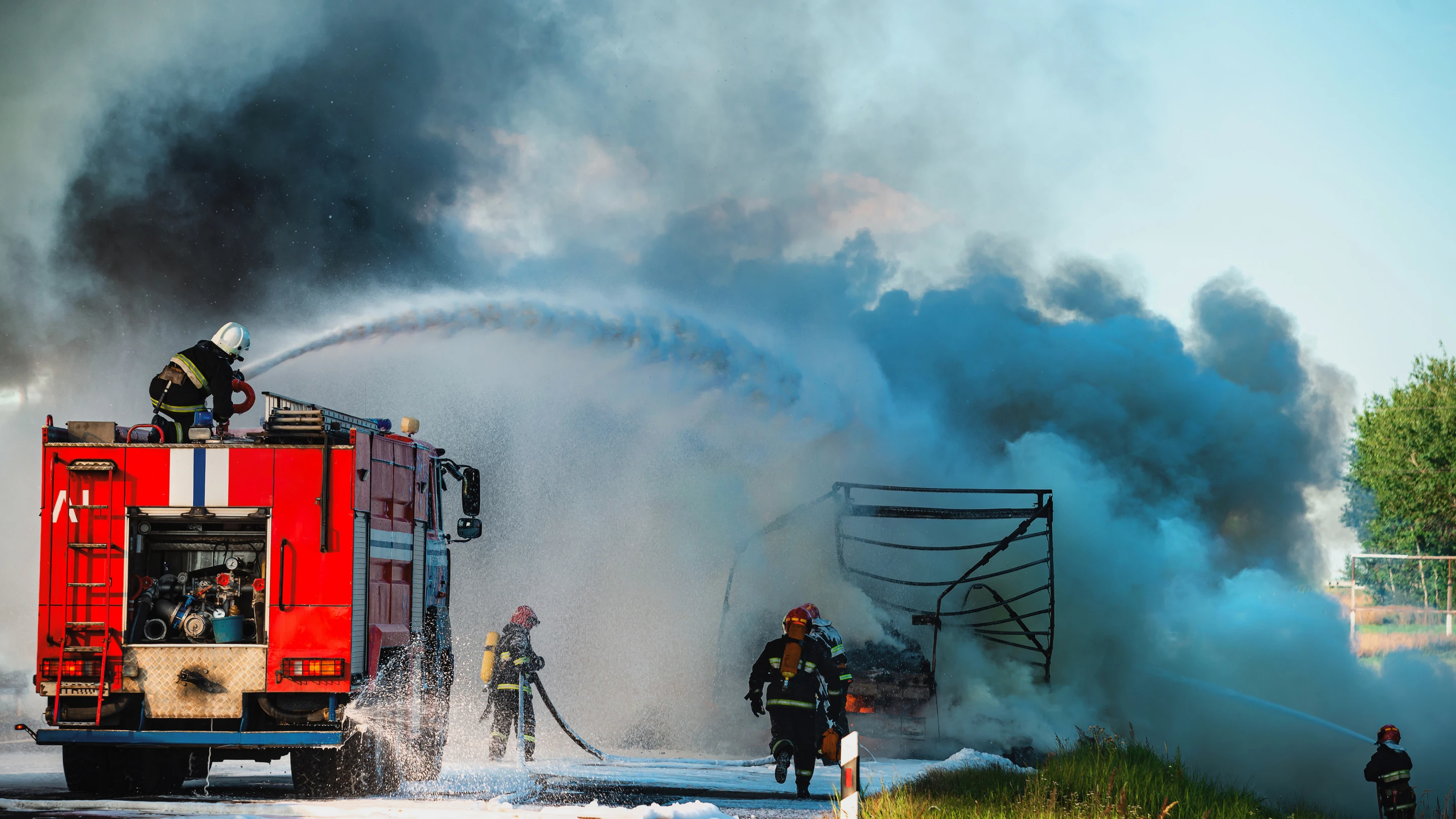
Florida Truck Accidents Involving Bad Weather Lawyer
Weather and road conditions are factors every driver in Florida has to respect — and commercial truck drivers are held to a higher standard when conditions turn. Rain, thunderstorms, fog, strong crosswinds, and slick or flooded pavement all change how a heavy truck performs and how far it needs to stop. Federal safety data has long attributed roughly one in five vehicle crashes nationwide to weather-related conditions, and Florida’s sudden afternoon storms make Palm Beach County highways some of the most demanding in the country.
If you were injured in a truck accident involving bad weather, a West Palm Beach lawyer at Rafferty Domnick Cunningham & Yaffa (RDCY) can help you determine what the driver and carrier should have done differently. A retained attorney can catalog the damages you suffered, identify which ones you may be eligible to seek compensation for, and build the claim around the evidence. This page explains how liability works when a crash happens in a storm — for the full range of truck cases, see our Florida truck accident practice page.
That distinction — between weather as a condition and weather as an excuse — runs through every section below. The rules that govern truck drivers in storms are specific, the data that shows whether they followed those rules is preserved in the truck itself, and Florida law gives injured people a defined window to act on both.
Have Questions About Truck Accidents Involving Bad Weather?
Call us or request a case review by our experts.

Bad Weather Liability: A Storm Does Not Excuse Careless Driving
Many people assume no one is truly to blame when an accident happens during bad weather or on poor roads. That is not how Florida civil law — or federal trucking regulation — sees it. Federal regulations mandate that truck drivers use extreme caution when adverse conditions are present, reduce speed when conditions warrant, and stop the trip when conditions become too dangerous to continue safely. Florida’s special-hazards statute imposes the same basic duty on every driver: control the vehicle for the conditions actually present, not the conditions a driver wishes for.
Commercial truck drivers may feel they do not have the option to postpone a trip or wait out a storm — delivery windows and hours-of-service clocks keep running. But that pressure explains a bad decision; it does not excuse one, and where dispatch pushed a driver to keep moving, the carrier that applied the pressure can share responsibility. When a truck driver does not adjust speed, following distance, and route decisions to what road and weather conditions warrant, they — and usually their employer — may be held liable for the accident that follows.
Dangerous Conditions on Palm Beach County Roads
Heavy rain is the most common dangerous condition in South Florida truck crashes. A loaded tractor-trailer needs substantially more distance to stop on wet pavement, standing water on I-95, Florida’s Turnpike, and US-27 can cause hydroplaning, and a sudden downpour can cut visibility to near zero in seconds. Drivers who maintain dry-road speed through those conditions are gambling with everyone around them.
Thunderstorms and lightning arrive with little warning in the summer months and bring wind gusts that can push a high-profile trailer across a lane — a particular danger for empty or lightly loaded trucks. Fog, blowing debris, and tropical storm or hurricane conditions round out the Florida picture. When these conditions are present or expected, truck drivers and everyone sharing the road with them need to be vigilant and cautious to decrease the chance of an accident — and the law measures their conduct against exactly that standard.
How Could Bad Weather Affect Liability in Your Truck Accident Case?
Call us or request a case review by our experts.
How Bad Weather Truck Accidents Happen in Palm Beach County
The patterns repeat across the county’s freight corridors. A tractor-trailer hydroplanes on standing water along I-95 or the Turnpike and drifts into the next lane. A driver following too closely in a downpour cannot stop when traffic compresses near an interchange. A gust front ahead of a thunderstorm pushes an empty trailer sideways on an elevated stretch of US-441 or State Road 80. A truck entering a flooded underpass or a water-covered rural stretch of US-27 loses traction and jackknifes across both lanes.
Rear-end collisions are the most common configuration, because stopping distance grows so sharply on wet pavement — a loaded truck at highway speed may need the length of two football fields or more to stop, and rain stretches that distance further. Multi-vehicle pileups follow when the first drivers cannot see stopped traffic through the rain. These are not unavoidable events: each one traces back to speed, following distance, equipment, or a decision to keep driving that the rules required the driver not to make.
What the Law Expects of a Truck Driver When Conditions Turn
The federal adverse-conditions rule sets the benchmark: reduce speed for rain, fog, and reduced traction, and discontinue the trip when conditions become sufficiently dangerous, stopping clear of the traveled roadway where possible. Florida law mirrors it — the posted speed limit is a maximum for ideal conditions, and driving at the limit on a flooded roadway can itself be unlawful speed for conditions.
In practice, careful drivers widen following distances well beyond the dry-road norm, slow before standing water rather than braking in it, check tires, wipers, and lights before a storm-season trip, and pull off rather than push through a cell they cannot see through. Each of those choices is documented in truck data and driver logs after a crash, which is why the investigation focuses on what the driver did in the minutes before impact — not just on the fact that it was raining.
Evidence That Proves a Bad Weather Truck Accident Claim
Weather cases are won on records. Archived observations and radar from the National Weather Service establish the precise conditions at the crash location and minute; roadway cameras and dash cameras show visibility and standing water; and the truck’s electronic control module records speed, braking, and throttle in the seconds before impact. Together they answer the only question that matters: given this weather, was this driver behaving the way the rules require?
Carrier records complete the picture — the driver’s logs and dispatch messages show schedule pressure, maintenance files show tire and equipment condition, and the driver’s qualification file shows training for adverse-weather driving. This evidence is perishable: electronic data overwrites, vehicles are repaired, and storm scenes drain. Sending a preservation demand and opening the investigation early is what keeps a bad weather claim provable.
Compensation After a Truck Accident Involving Bad Weather
An injured person can pursue the full range of Florida damages: past and future medical expenses, lost income and diminished earning capacity, rehabilitation and long-term care costs, property damage, and compensation for pain, suffering, and the loss of a normal life. Catastrophic injuries — brain and spinal injuries, multiple fractures, internal injuries — are common when a passenger vehicle meets a loaded truck at highway speed, and the damages case must be built around lifetime needs, not the first round of bills.
Carriers defend these claims by blaming the storm, so the damages presentation travels with the liability evidence: the same records that prove the driver should have slowed or stopped establish why the carrier’s insurance, not the injured family, bears the cost. Settlements and verdicts are measured against documented losses, which is why complete medical and economic documentation matters as much as the crash reconstruction.
Florida’s no-fault PIP coverage pays an initial layer of medical bills and lost wages regardless of fault, but serious truck accident injuries pass the statutory threshold quickly and outgrow PIP limits faster still. The claim against the driver and carrier is where the full recovery is pursued, and it is valued on the complete picture: treatment to date, the treating physicians’ prognosis, work capacity, and the care the injuries will require over the years ahead.
Filing Deadlines for Florida Truck Accident Claims
Florida law limits the time a potential plaintiff has to file a civil lawsuit. These laws exist so claims are brought while evidence is fresh and witnesses can still be found. The deadline is known as the statute of limitations, and Florida law generally gives injured victims two years from the date of a truck accident to file a personal injury lawsuit, although certain exceptions and additional deadlines may apply depending on the facts — including presuit notice where a government vehicle or roadway is involved.
Hiring an experienced attorney who has handled these cases as soon as possible increases a plaintiff’s chance of recovering damages, because the investigation — weather archives, truck data, carrier records — can begin while every source still exists. Waiting for the deadline risks losing both the evidence and the claim.
Work With a West Palm Beach Truck Accident Lawyer at RDCY
Dealing with claims adjusters, insurance companies, and police reports adds stress at exactly the moment you should be recovering. When you hire an experienced attorney, you have a dedicated ally handling those details while you recover mentally and physically from your injuries. RDCY investigates truck crashes across Palm Beach County, preserves the carrier’s data before it disappears, and works with reconstruction and weather experts where the conditions are disputed.
If you were injured by a truck driver who failed to respond to weather conditions appropriately, a West Palm Beach truck accidents involving bad weather lawyer at RDCY can help. The initial case review is free, and it starts with the facts: what the weather was, what the driver did, and what the claim is worth.
Not every weather-related crash produces a viable claim, and we say so plainly when the evidence shows a driver who genuinely did everything the conditions required. But carriers reach for the storm defense in nearly every case, including the many where the data tells a different story. An honest, evidence-based evaluation — early, while the records still exist — is how an injured person finds out which kind of case theirs is.
Related Truck Accident Pages
- Florida Truck Accident Lawyer
- Rollover Truck Accidents in Florida
- Motor Vehicle Accidents Across Florida
- Florida Personal Injury Lawyer
Professional Recognition


Recognition applies to the named attorneys and selection years. See the linked profiles for details.
Frequently Asked Questions About Truck Accidents Involving Bad Weather
Answers to common questions about liability, evidence, insurance, and deadlines after a Florida truck crash in rain, storms, fog, or other dangerous conditions. This is general information, not legal advice about a specific case.
Can a truck driver be liable for a crash that happened during bad weather?
Yes. Bad weather is not a legal excuse for careless driving. Federal motor carrier rules require commercial drivers to use extreme caution in adverse conditions, reduce speed when conditions warrant, and stop driving altogether when conditions become sufficiently dangerous. Florida law likewise requires every driver to adjust speed and control for special hazards such as rain, fog, and standing water.
When a truck driver keeps highway speed on a flooded roadway, follows too closely in heavy rain, or pushes on through a storm instead of stopping safely, that choice — not the weather — is the negligence. Weather becomes part of the claim as context: it defines what a careful driver should have done differently.
Sources: 49 CFR Part 392, Driving of Commercial Motor Vehicles (eCFR); Florida Statutes § 316.185, Online Sunshine.
What weather conditions most often contribute to truck accidents in Florida?
In Palm Beach County and across Florida, the recurring conditions are heavy rain and flooded pavement, afternoon thunderstorms with sudden visibility loss, lightning, dense fog, and strong crosswinds — including tropical storm and hurricane conditions. Standing water creates a hydroplaning risk for loaded and empty trucks alike, and a wet roadway roughly doubles the distance a heavy truck needs to stop.
National Weather Service flood guidance stresses how little moving or standing water it takes to make a vehicle uncontrollable, which is why driving into flooded sections of I-95, Florida’s Turnpike, or US-27 during a storm is treated as a driver decision, not an act of nature.
Sources: National Weather Service: Flood Safety; Florida Statutes § 316.185, Online Sunshine.
What should a truck driver do when conditions become dangerous?
The federal rule is explicit: when adverse conditions — fog, rain, dust, smoke, or other conditions that reduce visibility or traction — make driving hazardous, the driver must reduce speed, and when conditions become sufficiently dangerous, must discontinue the trip until it can be made safely. A driver who needs to stop should get the truck completely off the traveled roadway where possible.
Delivery schedules and hours-of-service pressure do not override that duty. If a carrier’s dispatch pushed a driver to keep moving through a storm, the carrier itself may share liability for the crash that followed.
Sources: 49 CFR Part 392, Driving of Commercial Motor Vehicles (eCFR); 49 CFR Part 395, Hours of Service of Drivers (eCFR).
How is fault proven in a bad weather truck accident case?
The investigation pairs the weather record with the truck’s own data. Archived National Weather Service observations, radar, and storm reports establish exactly what conditions existed at the crash time and place. The truck’s electronic control module, dash-camera footage, driver logs, dispatch communications, and GPS data then show how the driver responded — speed, braking, following distance, and whether the trip continued despite warnings.
Maintenance records matter too: worn tires and defective wipers or lights turn marginal weather into a crash, and those failures belong to the carrier. Preserving this evidence quickly is essential, because electronic data is routinely overwritten.
Sources: 49 CFR Part 392, Driving of Commercial Motor Vehicles (eCFR); National Weather Service: Lightning Safety.
Who can be responsible for a truck accident involving bad weather?
Responsibility can rest with several parties. The driver is responsible for adjusting to conditions. The motor carrier can be liable for its driver’s conduct and for its own failures — unrealistic schedules, dispatch pressure, poor maintenance, or sending a truck out on worn tires. A separate maintenance provider, a cargo loader whose shifting load destabilized the truck, or a manufacturer whose equipment failed may also share fault.
Florida’s comparative fault statute apportions responsibility among everyone whose negligence contributed, and each defendant’s share is measured against the evidence — including how each party responded to the same weather.
Sources: Florida Statutes § 768.81, Online Sunshine; 49 CFR Part 392, Driving of Commercial Motor Vehicles (eCFR).
What compensation can I recover after a bad weather truck accident?
A successful claim can cover medical expenses (past and future), lost wages and reduced earning capacity, vehicle and property damage, and the cost of rehabilitation and long-term care after serious injuries. It can also address noneconomic losses: pain and suffering, mental anguish, scarring or disfigurement, and loss of enjoyment of life. In a fatal crash, surviving family members may pursue wrongful death damages under Florida law.
Because commercial trucks carry substantial insurance coverage, these cases are usually defended aggressively on the theory that the storm — not the driver — caused the crash. Documenting the driver’s choices is what moves the claim from that framing to the evidence.
Sources: Florida Statutes § 768.81, Online Sunshine; Florida Statutes § 627.736, Online Sunshine.
How long do I have to file a truck accident lawsuit in Florida?
Florida’s limitations statute generally gives an injured person two years from the date of the crash to file a personal injury lawsuit based on negligence. Wrongful death claims carry their own two-year period measured from the date of death. Claims involving a government vehicle or a government-maintained roadway follow additional presuit notice requirements and shorter practical timelines.
Two years passes quickly in a case that requires weather records, electronic truck data, and expert reconstruction, and evidence disappears long before the deadline does. An early review protects both the claim and the proof it depends on.
Sources: Florida Statutes § 95.11, Online Sunshine; Florida Statutes § 768.28, Online Sunshine.
Does Florida’s no-fault insurance cover a truck accident injury?
Florida’s no-fault law requires most drivers to carry personal injury protection (PIP), which pays a portion of the injured person’s own medical bills and lost wages regardless of fault, subject to statutory limits and a prompt-treatment requirement. PIP is only a first layer: serious injuries that meet Florida’s statutory threshold can be pursued against the at-fault parties for the full measure of damages, including pain and suffering.
Truck accident injuries frequently exceed PIP limits quickly. The commercial claim against the driver and carrier is where full compensation is recovered, and it proceeds on its own deadlines regardless of the PIP claim.
Sources: Florida Statutes § 627.736, Online Sunshine; Florida Statutes § 95.11, Online Sunshine.
What if I was partly at fault for the crash in the rain?
You may still have a claim. Florida follows a modified comparative fault system: your recovery is reduced by your percentage of fault, and a claimant who is more than 50 percent at fault cannot recover. Insurers use wet-weather crashes to spread blame — arguing every driver should simply have stayed home — but the comparison is between each driver’s actual conduct and what the conditions required.
A driver traveling carefully at reduced speed who is struck by a speeding truck has a very different fault picture than the carrier’s first offer usually suggests. The evidence, not the adjuster’s framing, sets the percentages.
Sources: Florida Statutes § 768.81, Online Sunshine; Florida Statutes § 316.183, Online Sunshine.
What should I do after a truck accident during a storm in West Palm Beach?
Get medical care first, and move to safety if you can do so without entering flooded or traffic-exposed areas. Report the crash, and photograph the scene, the vehicles, standing water, and visibility conditions if it is safe — storm conditions change within the hour, and the scene that explains the crash may be gone by the time investigators arrive. Do not give a recorded statement to the carrier’s insurer before getting advice.
Then contact a truck accident lawyer promptly. The carrier’s investigation starts immediately; yours should too — weather archives, truck data, and witness accounts are all time-sensitive.
Sources: National Weather Service: Flood Safety; Florida Statutes § 95.11, Online Sunshine.
Related Articles
- What Records Matter After a West Palm Beach Collision Involving a Commercial Truck
- How To Document Damages: Treatment Courses, ADLs, And Pain Journals
- Why Most Car Accident Cases Never Go to Trial—and What it Means for You
- Why Contacting Counsel Before Record Requests Can Save Time And Reduce Cost
Need Help With a Truck Accident That Happened in Bad Weather?
Call us or request a case review by our experts.