
Margate FL Medical Malpractice Lawyer
Margate is a city of about 58,712 people in northern Broward County, and its hospital — HCA Florida Northwest Hospital, on State Road 7 — has served the Margate and Coconut Creek area for decades. Emergency care, surgery, cardiac care, and inpatient treatment for Margate families usually begin there, supplemented by the specialist offices, imaging centers, and urgent care clinics along Margate Boulevard, Sample Road, and Coconut Creek Parkway. Because Northwest is a community hospital rather than a large academic campus, Margate malpractice concerns often involve a different set of questions: Was a condition beyond the hospital’s capability recognized in time? Was a transfer arranged when it should have been? Were test results and deteriorating vital signs acted on with the urgency they required? Those questions are answerable — but only from the complete record, reviewed by an expert, inside Florida’s presuit framework. Rafferty Domnick Cunningham & Yaffa (RDCY) represents Margate patients and families in medical malpractice claims across Broward County. Margate sits in Florida’s 17th Judicial Circuit, so filed cases are heard at the Broward County Courthouse in Fort Lauderdale. Our Broward County medical malpractice page covers the county series, our Florida medical malpractice lawyer page covers the practice statewide, and a free review of your own care is one call away at (561) 516-5168.
Were You or a Loved One Harmed by Medical Negligence in Margate?
Call us or request a case review by our experts.
Community-Hospital Care and the Transfer Question
Community hospitals handle the great majority of everyday emergencies well, but their defining legal cases often involve the boundary of what they should treat themselves. A patient whose condition calls for a specialized intervention — advanced cardiac, neurological, or surgical capability — may need stabilization and timely transfer to a larger facility. When recognition or transfer is delayed, the harm is measured in the treatment window that closed while the patient waited. Other Margate cases never leave the building: emergency evaluations that underestimate chest pain, abdominal pain, or neurological symptoms; inpatient monitoring that misses a decline; medication dosing unsuited to a patient’s kidney function, age, or other prescriptions. Labor and delivery, post-surgical recovery, and hospital-acquired infection cases also appear in the Northwest catchment. In each, Florida’s test is the same. Did the care meet the prevailing professional standard — what reasonably careful providers and facilities would have done on these facts — and did the shortfall cause the injury? Answering takes the chart, the facility’s own protocols where relevant, and a qualified expert’s corroborating opinion, which state law requires before a claim can be pressed.First Steps After Care That Went Wrong in Margate
Start with your health: get appropriate follow-up care, even if that means a different provider or facility, and follow the treatment plan you trust. Then preserve the paper. Discharge summaries, after-visit instructions, prescription information, imaging and lab printouts, and bills from Northwest and from every provider who treated you afterward all become part of the record. Patient-portal downloads are a useful start, not a substitute for the complete chart. Write your own account while it is fresh — symptoms, times, what you reported, what you were told, and who was present. Families who sat in the room often hold details the chart omits. Avoid signing releases or giving recorded statements to an insurer before you understand what the claim involves, and be cautious with the hospital’s internal review process: it serves the institution’s purposes, runs on its own schedule, and does not stop your legal deadlines from running. Then have the case screened. A malpractice review is not a commitment to sue; it is how a Margate patient learns whether the records support the expert opinion Florida requires, what the controlling dates are, and what the realistic options look like.How Could Medical Malpractice Affect Your Legal Options?
Call us or request a case review by our experts.
How Florida’s Presuit System Treats a Margate Claim
Chapter 766 governs every Florida malpractice claim, including those arising at HCA Florida Northwest Hospital. The claimant’s presuit investigation must include a verified written medical expert opinion, under §766.203, corroborating reasonable grounds to believe the defendant was negligent and that the negligence caused injury. The expert must practice in the same or a similar specialty as the provider being reviewed. With that opinion in hand, a notice of intent is served under §766.106 on each prospective defendant — the hospital entity, and separately any individual providers whose care is at issue. A presuit period of generally 90 days follows, with the limitations clock tolled, informal exchange of records and information, and an insurer investigation on the defense side. The period ends with rejection, a settlement offer, or an offer to arbitrate damages. Unresolved claims proceed to suit in the 17th Judicial Circuit. The outer frame is §95.11(4): generally two years from the incident or from discovery — actual or reasonably achievable — and four years from the incident at the outside, with narrow exceptions. Because presuit itself consumes months and must finish inside that frame, a Margate patient who suspects negligent care should treat the calendar as part of the case, not an afterthought.The Losses a Claim Is Built to Cover
Damages follow the injury. Medical losses include the corrective treatment already received and the care the injury will require in the future — further surgery, therapy, medication, monitoring, and assistance at home. Work losses include wages already missed and, where recovery is incomplete, the reduction in what the patient can earn going forward. Both are proved with documents: records, bills, employer information, and expert projections where future needs are disputed. The law also answers for the injury’s human cost — pain, scarring, disability, and the loss of ordinary life — and in fatal cases the claim proceeds under Florida’s wrongful death statute through the personal representative for the estate and statutory survivors. Florida sets no general cap on compensatory damages in malpractice cases; the measure is the evidence in the individual case, which is why the documentation gathered early carries so much weight later.Emergency Department Cases in the Northwest Catchment
The emergency department at HCA Florida Northwest Hospital is where Margate’s malpractice stories most often begin. The recurring allegation is not rudeness or waiting — it is underestimation: chest discomfort discharged as reflux that proves to be a heart attack, a headache sent home that proves to be bleeding, abdominal pain treated symptomatically while a surgical emergency develops. Emergency medicine works under time pressure by design, and the standard of care accounts for that; it does not excuse skipping the workup the presenting symptoms required. These cases are reconstructed from timestamps. Arrival, triage category, EKG and troponin timing, imaging orders and reads, consultant calls, and the discharge decision each carry a time, and the sequence either shows a department responding to the information it had or shows warning signs accumulating unanswered. Expert review in emergency medicine compares that sequence against what a reasonably careful emergency physician would have done with the same presentation. A related group involves return visits — the patient who comes back within days, worse. A bounce-back is not proof of negligence in the first visit, but it focuses the inquiry: what did the first visit’s record show, what instructions were given, and what should a careful evaluation have caught? For Margate families, the practical lesson is to keep both visits’ paperwork together; in these claims, the two charts are read as one story.Surgical and Post-Operative Complications
Surgery at a community hospital covers a wide range — gallbladder and hernia procedures, orthopedic repairs, gynecologic and general surgery — and most of it goes well. The claims arise in two places: the operation itself, where an injury to a duct, vessel, nerve, or organ outside the intended field may reflect a departure from accepted technique; and the recovery, where bleeding, infection, or a leak declares itself in vital signs and lab trends that must be recognized and escalated. Post-operative cases are often the more provable of the two, because monitoring is documented continuously. The chart shows the fever curve, the drain output, the nursing calls, and the timing of the response. When a complication that timely intervention would have contained instead progresses to sepsis, a second operation, or a prolonged intensive care stay, the damages are equally documented — the additional care is in the same record set. Florida’s presuit framework applies identically: expert corroboration by a surgeon or other qualified specialist, notice to the hospital and to individual providers as the facts require, and a presuit period for the defense to evaluate. A Margate patient who needed unexpected corrective surgery, or whose recovery departed sharply from what was described beforehand, has exactly the kind of record an expert review can evaluate quickly and candidly.Settlement, Mediation, and Trial in Broward County
Most Margate claims that survive expert screening resolve without a jury — but they resolve on the strength of the alternative. Insurers evaluate a claim by predicting a trial, so the presuit package, the expert opinions, and the damages documentation are assembled with that prediction in mind. A claim that can be tried credibly settles credibly; one that cannot, does not. That is the practical reason RDCY builds each investigated case to trial standard from the beginning. Where suit is filed, Broward County practice adds court-ordered mediation before trial — a structured negotiation with a neutral mediator, held after discovery has clarified both sides’ positions. Many cases settle there, with the benefit of depositions and expert testimony already exchanged. Those that do not proceed to a jury of Broward County residents in the 17th Judicial Circuit, where the patient’s experts explain the standard of care and the defense presents its own. No outcome can be promised, and timelines vary with the court’s calendar and the complexity of the medicine. What can be described honestly is the sequence, the decision points, and the patient’s role at each — and that description, specific to your records rather than generic, is what a first consultation is for. Margate patients can request one at (561) 516-5168, at no charge.Nursing Care, Monitoring, and Hospital-Acquired Harm
A substantial share of hospital malpractice does not involve a physician’s decision at all. It involves the surveillance a hospital owes every admitted patient: vital signs taken and trended, call lights answered, fall precautions matched to the patient’s actual risk, pressure injuries prevented in patients who cannot reposition themselves, and early signs of infection or bleeding recognized and escalated. At a busy community hospital like Northwest, these duties are carried by nursing staff working within the facility’s own policies — and the policies themselves become evidence when they are not followed. Falls with fractures, stage III and IV pressure injuries, and infections acquired during the admission share a common evidentiary feature: they develop over time, in documented increments. Flowsheets, skin assessments, turning logs, and incident documentation show what the risk was assessed to be, what precautions were ordered, and what was actually done. A gap between the three is often the clearest negligence proof in the entire chart, and it belongs to the institution as much as to any individual nurse. Families usually sense these cases before they can name them — a parent who entered for a routine procedure and left with a broken hip from an unassisted bathroom trip, or a wound that plainly worsened over days of recorded observations. Those instincts deserve a professional answer. The presuit investigation puts the nursing record in front of qualified experts alongside the physician chart, because a complete claim accounts for every layer of the care that failed. If a Margate hospitalization involved a fall, a pressure injury, or an infection that developed during the stay, gather the records of the full admission and of the treatment that followed. RDCY will review them without charge, explain whether the documentation supports the expert corroboration chapter 766 requires, and identify every defendant the presuit notices should reach. Call (561) 516-5168 to start that review.The Corridor Around Northwest: Clinics, Specialists, and Second Opinions
Around the hospital, Margate’s care continues in the specialist offices, imaging centers, dialysis and rehabilitation providers, and urgent care clinics along State Road 7, Margate Boulevard, and the Sample Road corridor into Coconut Creek. Patients move among these providers on referrals that are sometimes documented carefully and sometimes barely documented at all. When a specialist’s recommendation never reaches the primary physician, or an imaging finding is filed without follow-up, the injury that follows may belong to the spaces between providers as much as to any single office. A Margate investigation therefore maps the whole course of care, not only the hospital admission. Office charts, referral letters, and result-routing records are requested alongside the hospital file, and the timeline is tested at every handoff. Patients who suspect something was lost between providers should keep every after-visit summary and portal message they have, however minor it seemed at the time — in coordination cases, those small documents are frequently what proves who knew what, and when they knew it.How the Two-Year Clock Works in Practice
Consider how the discovery rule operates on a common Margate fact pattern, stated generally. A patient is treated and told the outcome was expected; months later, a new provider reviewing the same records explains that an earlier finding should have been acted on. The two-year period may run from the treatment, from the later discovery, or from when reasonable diligence would have produced the discovery — and which date controls is a legal conclusion built on the specific record, not a guess a patient should make from a calendar at the kitchen table. That is why the screening review pays such close attention to the sequence of what the patient knew and when: the explanations given at discharge, the letters and portal messages that followed, and the first moment the outcome was questioned. Getting those dates established early, while documents are available and memories are fresh, protects the claim whichever way the analysis comes out.Why Margate Families Call RDCY
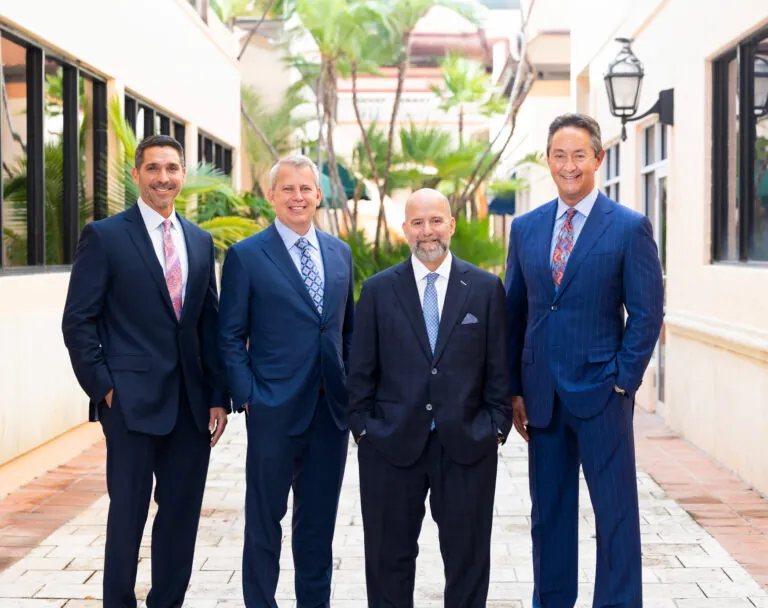
RDCY is a Florida trial firm whose work centers on catastrophic injury and medical negligence, including claims against hospitals and health systems. The firm’s attorneys publish on the legal questions that decide these cases, hold the professional recognition displayed below, and prepare every investigated claim as if it will be tried — because the claims that settle fairly are usually the ones the defense believes can be. For a Margate family, the engagement starts with a free, unhurried review: what happened at Northwest or elsewhere in the patient’s care, which records exist, what the deadlines are, and whether the facts warrant the expert investigation chapter 766 demands. If they do not, you will be told. If they do, each step will be explained before it is taken. Call (561) 516-5168 to begin.Related Pages
Medical malpractice pages in this Broward County series:- Broward County
- Fort Lauderdale
- Pembroke Pines
- Hollywood
- Miramar
- Coral Springs
- Pompano Beach
- Davie
- Sunrise
- Plantation
- Deerfield Beach
- Lauderhill
- Tamarac
- Weston
- Margate
- Coconut Creek
Professional Recognition


Recognition applies to the named attorneys and selection years. See the linked profiles for details.
Margate FL Medical Malpractice FAQs
General information for Margate patients about Florida malpractice claims follows. It is not legal advice, and it is not a substitute for a review of your own records.Which hospital do most Margate malpractice claims involve?
HCA Florida Northwest Hospital on State Road 7 is Margate’s community hospital and the starting point for much local emergency, surgical, and inpatient care.
Claims may also involve specialists, imaging centers, and the facilities a patient was transferred to or treated at afterward.Sources: AHCA Florida HealthFinder Facility Search; Florida Statutes Chapter 766, Online Sunshine
What if my injury involved a delayed transfer from Northwest Hospital?
Transfer timing is a recognized issue in community-hospital cases. The review compares what the chart showed — symptoms, test results, and the patient’s course — against when transfer was considered and completed, judged by a qualified expert under the standard of care.
Florida’s presuit expert corroboration applies to these claims as to any other.Sources: Florida Statutes Chapter 766, Online Sunshine; AHCA Florida HealthFinder Facility Search
Where is a Margate malpractice lawsuit filed?
Margate is in Broward County, in Florida’s 17th Judicial Circuit.
After the chapter 766 presuit process concludes without resolution, suit is filed at the Broward County Courthouse in Fort Lauderdale.Sources: Florida Statutes Chapter 766, Online Sunshine; Florida Courts — Circuit Trial Courts
How much time do I have after treatment in Margate to pursue a claim?
Under §95.11(4), generally two years from the incident or from when it was discovered, or should have been discovered, with an outer limit of four years from the incident and limited exceptions.
Presuit notice must be served inside that period, so the review should start promptly.Sources: Florida Statutes §95.11, Online Sunshine; Florida Statutes Chapter 766, Online Sunshine
What is the expert corroboration Florida requires?
Section 766.203 requires that before presuit notice, a qualified medical expert in the same or a similar specialty review the records and give a verified written opinion that there are reasonable grounds to believe the care was negligent and caused the injury.
A claim cannot responsibly proceed without it.Sources: Florida Statutes Chapter 766, Online Sunshine; AHCA Florida HealthFinder Facility Search
Should I wait for Northwest Hospital’s internal review before calling a lawyer?
No. An internal review serves the institution, follows its own timetable, and does not pause Florida’s deadlines.
Your limitations period keeps running while it proceeds, and the presuit process itself takes months — an early, independent records review protects both.Sources: AHCA Florida HealthFinder Facility Search; Florida Statutes Chapter 766, Online Sunshine
How can I check inspection or quality information for a Florida hospital?
AHCA’s Florida HealthFinder publishes facility and inspection information, and CMS publishes hospital quality data.
These sources give general background about a facility; whether your care met the standard of care is determined from your chart by a qualified expert.Sources: CMS Provider Data; AHCA Florida HealthFinder Hospital Guide
What losses can a Margate malpractice claim include?
A claim can address past and future medical expense, lost wages and reduced earning capacity, and pain, disability, and loss of enjoyment of life caused by the negligence.
Florida imposes no general cap on compensatory damages in malpractice cases, so recovery is built from the evidence in the individual case.Sources: Florida Statutes Chapter 766, Online Sunshine; AHCA Florida HealthFinder Facility Search
Can a family member act if the patient died after care in Margate?
Yes. Where negligent care causes death, Florida’s wrongful death framework allows the personal representative of the estate to bring the claim for the estate and statutory survivors.
Chapter 766 presuit requirements, including expert corroboration, still apply before suit.Sources: Florida Statutes Chapter 766, Online Sunshine; AHCA Florida HealthFinder Facility Search
What does it cost to have RDCY look at a Margate case?
The initial review is free.
Call (561) 516-5168 to describe the care and outcome; the firm will explain the records needed, the presuit steps, and the deadlines, and whether the facts support the expert investigation Florida law requires.Sources: Florida Statutes Chapter 766, Online Sunshine; The Florida Bar — Public Information
Related Articles
- How Florida’s Medical Malpractice Pre-Suit Investigation Works
- Suing for Medical Malpractice After Emergency Room Negligence
- Understanding Birth Injury Lawsuits
- Why Contacting Counsel Before Record Requests Can Save Time And Reduce Cost
- How To Document Damages: Treatment Courses, ADLs, And Pain Journals
- How Missed or Delayed Diagnoses Happen—and Why Differential Diagnosis Protocols Matter
Need Help With a Case Involving Medical Malpractice?
Call us or request a case review by our experts.