Plantation FL Medical Malpractice Lawyer
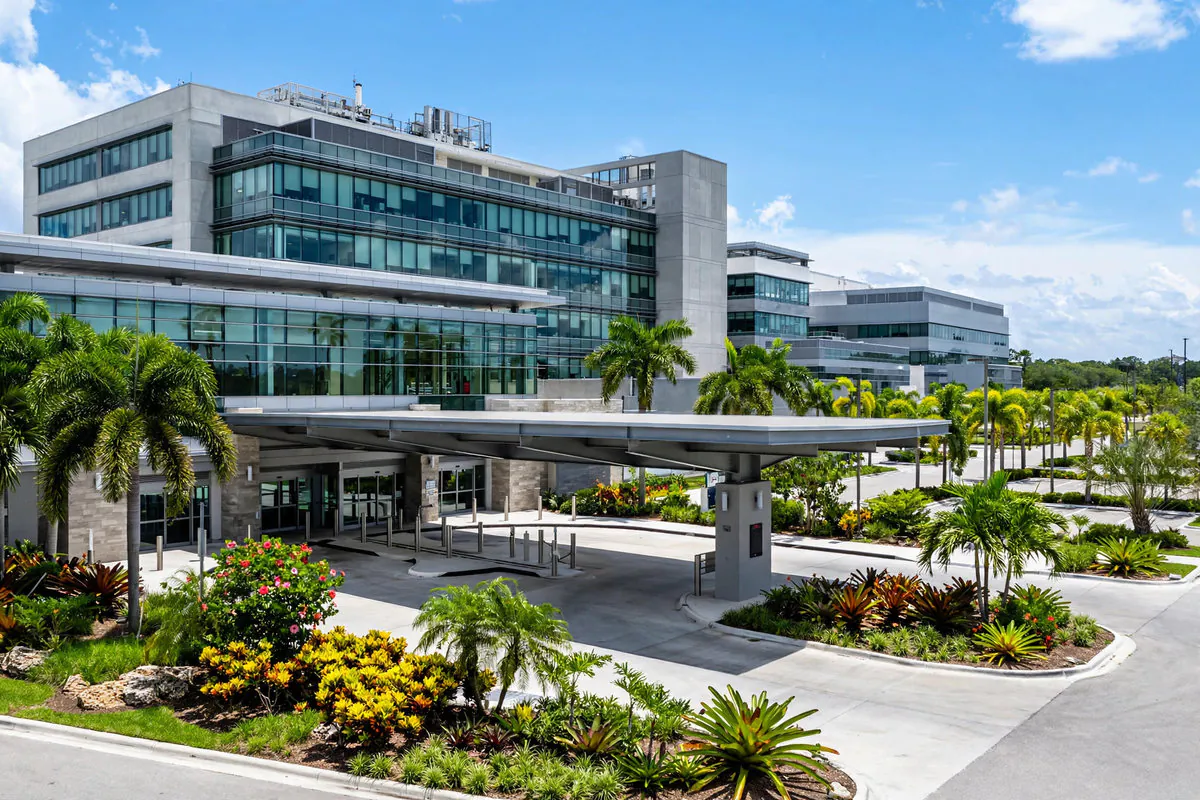
Plantation sits at the geographic center of Broward County, and its medical footprint matches its position. HCA Florida Westside Regional Medical Center — recently rebranded as HCA Florida Westside Hospital — serves its roughly 91,750 residents and draws patients from Sunrise, Davie, Lauderhill and Fort Lauderdale as well. Around it, the corridors along Pine Island Road, University Drive and Broward Boulevard carry the specialist groups, diagnostic centers and surgery offices that feed into, and receive referrals back from, the hospital. It is one of the busiest crossroads of care in the county. Busyness is its own risk factor. High-volume emergency departments, operating rooms running back-to-back schedules and intensive care units staffed around the clock all depend on systems — triage protocols, monitoring, closed-loop communication — and malpractice investigations in Plantation frequently come down to whether those systems were actually followed on a particular shift. Rafferty Domnick Cunningham & Yaffa investigates those questions for Plantation patients as part of its Broward County medical malpractice practice, within the firm’s statewide Florida medical malpractice work. If you are reading this because a Plantation hospital stay ended in harm nobody has explained, you are not expected to have answers already. Bring the questions, the discharge papers and your timeline; the investigation supplies the rest. And if the medical situation is still unfolding, treatment comes first — always.
Were You or a Loved One Harmed by Medical Negligence in Plantation?
Call us or request a case review by our experts.
Inside Westside Regional: The Settings Where Plantation Claims Begin
Three settings generate the largest share of serious reviews arising from care in Plantation. The first is the emergency department, where the decisive errors are usually about recognition: a stroke treated as vertigo, a heart attack worked up as reflux, sepsis whose early hours were spent waiting rather than on antibiotics and fluids. Time-stamped records — triage notes, monitor data, medication administration records — allow an expert to reconstruct exactly what was known and when. The second is the operating room and the recovery period after it. Surgical claims in Plantation range from injury to structures outside the operative field, to retained-item and wrong-site events, to anesthesia problems, to the slower-moving failures of post-operative monitoring in which bleeding or infection announces itself in vital signs long before anyone acts. The third is the intensive care and step-down units, where ventilator management, line infections and missed deterioration across shift changes are recurring themes.Questions an investigation of Plantation hospital care answers
- What did the patient’s own hospital policies require, and does the chart show those steps happening?
- Which provider owned each decision — surgeon, anesthesiologist, hospitalist, nursing team — and what did each one document?
- Do the electronic record’s timestamps and audit trail match the story the narrative notes tell?
- When the patient’s condition changed, how long passed before a provider responded, and what did that interval cost?
- Would timely, standard care probably have produced a materially better outcome?
Florida’s Presuit Gauntlet, Run From Plantation
Every Plantation malpractice claim must clear Chapter 766 before it can become a lawsuit. A good-faith presuit investigation, corroborated by a verified written opinion from a qualified medical expert in the relevant specialty, comes first. Then a notice of intent is served on each prospective defendant — in a hospital case that can mean the facility, individual physicians, and practice groups, each identified from the chart — and the presuit investigation period runs, ordinarily 90 days, with the limitations clock tolled in the meantime. The exchange during those 90 days matters more than many families expect. Records are produced, unsworn statements may be taken, and the defense forms its first real valuation of the case. A notice served on a thin investigation invites a rejection letter; a notice backed by a complete chart, a credible same-specialty expert and a precise damages picture is what moves a Plantation case toward a serious settlement discussion — or, failing that, a complaint filed from strength in Broward circuit court.Timing is the trap
Florida’s two-year limitations period (with its four-year repose backstop) does not leave room for a late start once presuit is factored in. Records requests take weeks; the right expert must review before corroborating; each defendant must be served properly. Plantation patients who begin the review while follow-up care is still ongoing protect themselves; those who wait for a final outcome before asking questions often find the calendar, not the medicine, deciding their case.How Could Medical Malpractice Affect Your Legal Options?
Call us or request a case review by our experts.
From Plantation to the Fort Lauderdale Courthouse
Unresolved Plantation cases are litigated in the 17th Judicial Circuit at the Broward County Courthouse in Fort Lauderdale, roughly twenty minutes east. The practical shape of the case stays rooted in Plantation: depositions of the treating team, inspections of policies in force on the date of care, and experts opining on the same hospital systems the jury pool’s own families use. Broward jurors, drawn from across the county, generally need no persuading that hospital systems matter — many have sat in the same emergency department waiting room. Recovery, when negligence and causation are proved, follows the harm. For Plantation patients that can mean the cost of revision surgery and future care, rehabilitation, lost wages and diminished earning capacity, and compensation for pain, suffering and disability. Florida law sets no general cap on compensatory damages in malpractice cases, and fatal cases move under the wrongful death statute. The firm builds the damages side of a case with treating providers, life-care planners and economists as the injury requires — documented figures, not estimates offered to win a signature.Care that crossed city lines
Westside Regional’s catchment means a Plantation chart often sits in the middle of a longer story: a Sunrise resident’s emergency surgery, a Davie patient’s transfer for a higher level of care, a Lauderhill family’s rehabilitation course. Cross-city care changes nothing about the analysis. Each facility’s records are gathered, each provider is measured against its own standard, and the claim is assembled as one chronology with the Plantation care in its proper place.Surgical Claims in Plantation: From the Consent Form to the Audit Trail
Patients sometimes assume the consent form they signed ends the inquiry — that a listed complication, once acknowledged, can never be malpractice. That is not the law. Consent covers the inherent risks of a properly performed procedure; it is not permission to perform the procedure negligently. An infection can be a known risk and still result from a break in sterile technique. Bleeding can be a known risk and still become a claim when post-operative monitoring missed its obvious signs for six hours. The Plantation investigation separates the injury itself from the care around it, because claims live in the care. The operative report is the starting document, not the ending one. Anesthesia records show the minute-by-minute physiology of the case. Nursing counts document the sponge and instrument reconciliation. The recovery-room record shows what the patient looked like when the surgical team handed off, and the floor notes show whether the surgeon’s post-operative orders — vital-sign frequency, drain outputs, laboratory checks — were carried out and acted on. Where the electronic audit trail shows an order entered hours after the note describing it, or a result viewed long after it posted, those intervals become part of the case. Expertise is matched accordingly. A Plantation surgical claim is corroborated by a surgeon in the same specialty, and where anesthesia or post-operative management is at issue, by experts in those fields as well. Florida’s presuit rules require that corroboration to be in hand before notice, which is why the complete chart — every layer, not the discharge summary alone — is requested the moment a surgical case is accepted for investigation.The First Week: A Practical Checklist for Plantation Families
Families who suspect a serious error at Westside Regional or another Plantation provider usually ask what to do immediately. The list is short and entirely within reach. First, secure the medical situation: follow up with trusted treating providers, get second opinions where the diagnosis is uncertain, and do not let a legal question delay needed care. Second, gather paper before it scatters — discharge instructions, the medication list from the chart and the bottles themselves, imaging and laboratory printouts, bills and insurance statements, and every patient-portal message, downloaded rather than screenshotted where possible. Third, write the family’s own account now. Dates blur quickly; a one-page timeline made this week — symptoms, arrival times, what each provider said, when the condition changed, who visited and what they witnessed — will be worth more in a deposition than a confident reconstruction offered a year later. Keep it factual: what was observed, not conclusions about fault. Fourth, be careful with communications. Do not sign releases or give recorded statements to a hospital’s insurer or risk department before getting advice, and preserve anything the hospital sends, including satisfaction surveys and letters about the event. Fifth, make the call while options are open. The free review at (561) 516-5168 starts the records requests and the deadline protection that presuit requires. Plantation families lose claims far more often to calendars and missing records than to the underlying medicine — and both of those failure modes are preventable in the first week.Birth Injury Reviews Arising From Plantation Deliveries
Westside Regional delivers babies as well as treating emergencies, and labor-and-delivery care produces some of the most consequential reviews the firm undertakes in Plantation. The evidence is unusually complete: continuous fetal monitoring strips record the baby’s condition minute by minute, and the timing questions that decide these cases — when distress appeared, when it was recognized, how long passed before delivery was accomplished — are answered from that record rather than from recollection. Maternal care is reviewed on the same timeline: hemorrhage recognition, blood-pressure emergencies and post-delivery monitoring. Birth injury cases also change the damages analysis. Where a child faces lifelong care needs, the claim must be built with pediatric specialists, life-care planners and economists who can document decades of future requirements, and Florida procedure adds protections for a minor’s recovery, including court oversight of settlements. Those structures take time to assemble properly, which returns to the theme running through every Plantation case: the families who fare best are the ones whose records were requested while the delivery was still recent history. A free review begins that process, and parents are told candidly — after expert screening — whether the monitoring record supports the questions they have been asking since the delivery room.Two Hospitals, One Border: Plantation Patients Treated in Fort Lauderdale
Plantation’s western position in the county means its residents split their hospital care. Westside Regional handles much of it, but Plantation patients are also transferred east — to Broward Health Medical Center or specialty programs in Fort Lauderdale — when a condition outgrows a community hospital’s resources, and many Plantation specialists admit at more than one facility. A transfer does not reset the legal analysis. The sending hospital is judged on the decision to transfer and the patient’s stability for the trip; the receiving hospital is judged on its own care from arrival; and the handoff documentation between them is examined like any other link in the chain. Families should list every facility in order when they call, including rehabilitation and skilled nursing stops after the acute stay, because the complete map determines which records the firm requests first and which defendants the presuit notices must reach inside the limitations window. Plantation families also ask whether an apology or an early explanation from the hospital changes anything legally. It does not decide the case in either direction. Internal event reviews are generally conducted under quality-assurance protections, and the account a family receives in a conference room is rarely the complete picture the chart contains. The investigation described on this page exists precisely because of that gap: it works from the full record, tests it against same-specialty expert opinion, and reaches conclusions the hospital’s own process is not designed to deliver to a patient. A family that has already sat through such a meeting has lost nothing by calling — the records, the deadlines and the presuit requirements are exactly where they were — but the clock point made throughout this page still applies, and it applies from the date of the care, not the date of the meeting.Why Plantation Families Retain Rafferty Domnick Cunningham & Yaffa
Hospital cases are expert cases, and they are resource cases. Rafferty Domnick Cunningham & Yaffa tries complex medical malpractice matters across Florida and counts attorneys recognized nationally for malpractice trial work; its lawyers publish on the subjects — hospital liability, damages, the effect of technology on medical judgment — that decide these lawsuits. For a Plantation family, that means a team that can retain the right specialists, read an audit trail, depose a care team in sequence and try the case in Fort Lauderdale if the defense will not price it fairly. The first step costs nothing: a consultation and records review, with a straight answer about what the evidence shows. Reach the firm at (561) 516-5168. County-wide context is on the Broward County medical malpractice page, and the firm’s full practice is described on its Florida medical malpractice page.Related Medical Malpractice Pages
Rafferty Domnick Cunningham & Yaffa handles medical malpractice matters across Broward County. These pages cover the county hub and the communities in this cluster:- Broward County
- Fort Lauderdale
- Pembroke Pines
- Hollywood
- Miramar
- Coral Springs
- Pompano Beach
- Davie
- Sunrise
- Plantation
- Deerfield Beach
- Lauderhill
- Tamarac
- Weston
- Margate
- Coconut Creek
Professional Recognition


Recognition applies to the named attorneys and selection years. See the linked profiles for details.
GOOGLE REVIEWS
General feedback from individual five-star Google reviews:“He is true lawyer for the people displaying great enthusiasm, professionalism and compassion.” — Jeff
“Can not say thank you enough!” — PJ
Plantation FL Medical Malpractice FAQs
The answers below are general information about Florida medical malpractice law and the local courts and facilities that affect cases in this area. They are not legal advice about any specific treatment, and an attorney should review the actual records before anyone relies on a deadline or a conclusion about a provider’s care.Which hospital serves Plantation, FL?
HCA Florida Westside Regional Medical Center — now branded HCA Florida Westside Hospital — is Plantation’s hospital, serving the city’s roughly 91,750 residents and drawing patients from Sunrise, Davie and other central Broward communities.
AHCA’s Florida HealthFinder publishes facility information for it and for the other regulated providers in the Plantation area.Sources: Florida Statutes Chapter 766, Online Sunshine; AHCA Florida HealthFinder Facility Search
Where is a Plantation malpractice lawsuit filed?
In the circuit court for the 17th Judicial Circuit at the Broward County Courthouse in Fort Lauderdale, after Florida’s Chapter 766 presuit process is completed.
Plantation is in Broward County, so its medical malpractice cases — including those arising at Westside Regional — are heard there, with juries drawn from across the county.Sources: Florida Courts — Circuit Trial Courts; Florida Statutes Chapter 766, Online Sunshine
What must happen before RDCY can file suit over care at Westside Regional?
Chapter 766 requires a presuit investigation corroborated by a verified written opinion from a qualified medical expert, service of a notice of intent on each prospective defendant under §766.106, and completion of the presuit investigation period, ordinarily 90 days.
Only then may a complaint be filed; the presuit record becomes the foundation of the Plantation lawsuit.Sources: Florida Statutes Chapter 766, Online Sunshine; AHCA Florida HealthFinder Facility Search
How long do Plantation patients have to start a malpractice claim?
Generally two years from the incident or from when the injury was or should have been discovered, and no more than four years from the incident under the statute of repose, with limited exceptions.
Hospital records and electronic audit trails should be requested early, and Plantation patients should begin the review promptly because presuit consumes a significant share of the window.Sources: Florida Statutes §95.11, Online Sunshine; Florida Statutes Chapter 766, Online Sunshine
Can the hospital itself be responsible, or only the doctors?
Both can be. A hospital may be liable for its own systems and employees — nursing care, monitoring, staffing, policies — and, depending on the relationship, for physicians who practice there.
The Plantation chart, employment and credentialing relationships, and the hospital’s own policies determine how responsibility is allocated among the facility and individual providers.Sources: Florida Statutes Chapter 766, Online Sunshine; AHCA Florida HealthFinder Facility Search
What is the electronic audit trail, and why does it matter in a Plantation case?
Modern hospital charts are electronic, and the system records when entries were created, viewed and edited.
That audit trail can confirm — or contradict — the timeline in the narrative notes for care at Westside Regional, which is often decisive in emergency, surgical and ICU cases. Preserving and obtaining it early is a standard part of the firm’s investigation.Sources: Florida Statutes Chapter 766, Online Sunshine; AHCA Florida HealthFinder Facility Search
Does Florida cap what a Plantation malpractice victim can recover?
There is no general cap on compensatory damages in Florida medical malpractice cases. Economic damages such as future care and lost earnings, and noneconomic damages, are established by the evidence; wrongful death claims follow their own statute.
The firm’s notable results in other matters do not predict the value of any Plantation claim.Sources: Florida Statutes Chapter 766, Online Sunshine; AHCA Florida HealthFinder Facility Search
My family member was transferred into Westside Regional from another city. Does that complicate the claim?
It is routine rather than a complication. Transfers into Plantation from Sunrise, Davie, Lauderhill and elsewhere are part of Westside Regional’s role as a central Broward hospital.
The investigation collects records from the sending and receiving facilities and evaluates each stage of care in sequence; suit, if needed, is filed in Broward County circuit court.Sources: Florida Statutes Chapter 766, Online Sunshine; AHCA Florida HealthFinder Facility Search
How do I verify a Plantation doctor’s license or find complaint information?
Through the Florida Department of Health’s licensing portal, which provides license status and final disciplinary actions, supplemented by facility information on AHCA’s Florida HealthFinder.
These public sources are a starting point only; the negligence question in a Plantation case is answered from the treatment records and same-specialty expert review.Sources: Florida Department of Health Licensing & Regulation; Florida Statutes Chapter 766, Online Sunshine
What will the firm look for in its free review of a Plantation case?
Whether the complete records show care that departed from the professional standard and whether that departure caused serious, provable harm — the two findings Florida law requires, supported by the expert corroboration Chapter 766 demands.
Call (561) 516-5168; the review is free and the assessment is direct, including when the records do not support a claim.Sources: Florida Statutes Chapter 766, Online Sunshine; The Florida Bar — Public Information
Related Articles
- The ‘Captain of the Ship’ Doctrine in Florida Surgical Malpractice
- How do experts evaluate whether earlier stroke treatment could have changed the outcome in Florida?
- How To Document Damages: Treatment Courses, ADLs, And Pain Journals
- Why Hospital Risk-Management Policies Often Influence Liability and Settlement Strategy
- How Residency Training Affects Medical Malpractice Cases
- What Are the Legal Implications of AI and Machine Learning in Medical Malpractice Cases?
Need Help With a Case Involving Medical Malpractice?
Call us or request a case review by our experts.