
Hollywood FL Medical Malpractice Lawyer
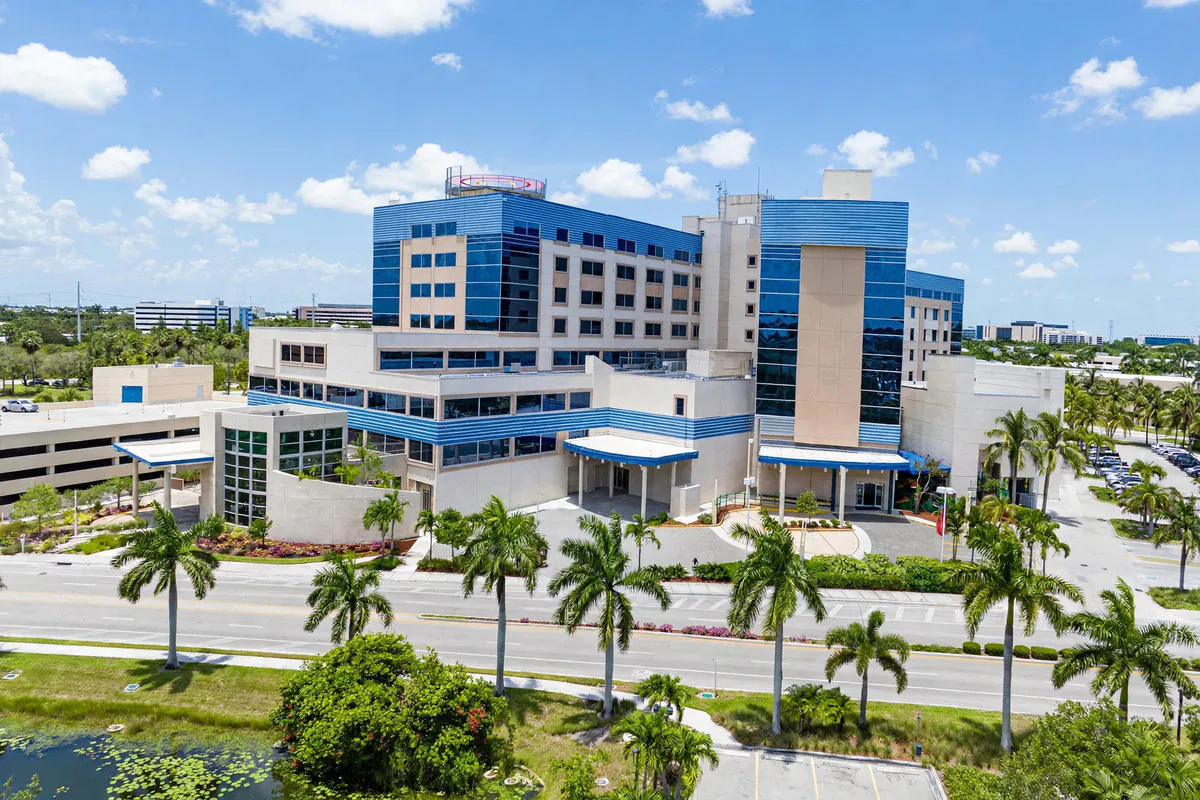
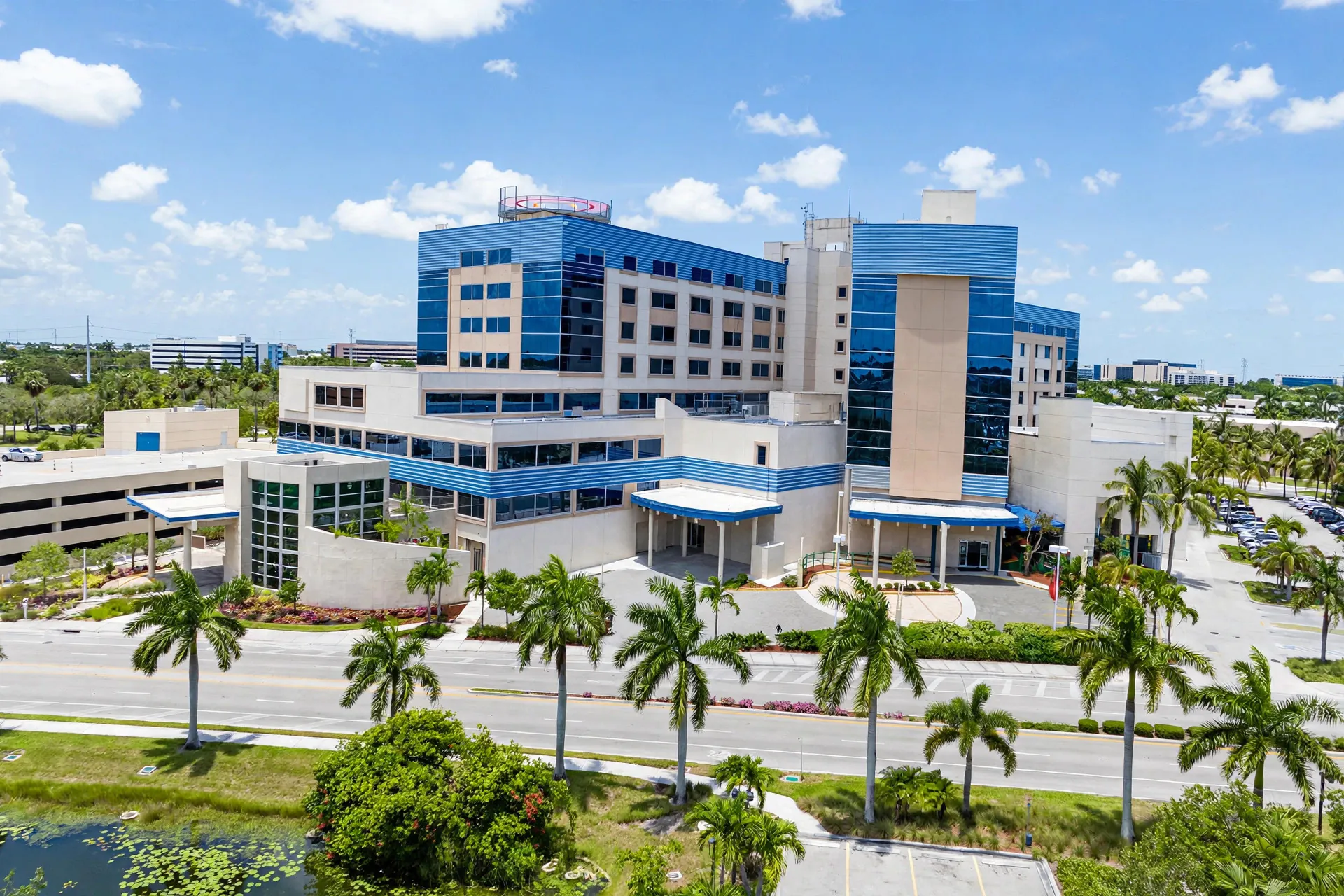
In Hollywood, serious medical care has an address: Memorial Regional Hospital, the flagship of the Memorial Healthcare System and a Level I trauma center serving southern Broward County. Its emergency department, trauma service, transplant and cardiac programs, and the Joe DiMaggio Children’s Hospital campus next door treat some of the sickest and most severely injured patients in the region — about 153,067 people call Hollywood home, and the hospital’s catchment reaches well beyond the city line. High-acuity care saves lives every day. It also means that when something goes wrong, it often goes wrong in fast, complex, multi-team treatment where the record is enormous and the timeline is measured in minutes.
Rafferty Domnick Cunningham & Yaffa (RDCY) investigates medical malpractice claims arising from care in Hollywood, from trauma and emergency treatment to surgery, maternity care, and hospital-acquired complications. This page explains how those investigations work under Florida law — the expert corroboration and presuit notice chapter 766 requires, the deadlines in §95.11(4), and where a Hollywood case is heard. For the county-wide view, see our Broward County medical malpractice page; for the statewide framework, our Florida medical malpractice page.
Were You or a Loved One Harmed by Medical Negligence in Hollywood?
Call us or request a case review by our experts.

Trauma and Emergency Care: Where Hollywood Claims Often Begin
A Level I trauma center runs on protocols: airway, imaging, operative intervention, intensive care. When a Hollywood family questions trauma care, the questions are usually about sequence and timing — how quickly bleeding was found and controlled, whether imaging was read and acted on, how handoffs between the trauma, surgical, and ICU teams were documented. Those questions cannot be answered from a discharge summary. They are answered from the minute-by-minute record: trauma flow sheets, operative notes, transfusion records, and the imaging itself.
Emergency care outside the trauma bay raises a different set of concerns. Missed heart attack and stroke presentations, infections sent home that returned as sepsis, and fractures or internal injuries not appreciated on a first visit are recurring themes in emergency malpractice nationally, and Hollywood’s emergency volume — residents, beach visitors, and patients transferred in from smaller facilities — makes the department a common setting for the claims families bring to counsel.
None of this means fast care is careless care. Emergency and trauma medicine are judged against what a reasonably prudent provider would have done with the information available at the time, not with hindsight. That is precisely why Florida requires a qualified expert — in a trauma case, typically a trauma surgeon or emergency physician — to review the record before any claim proceeds.
Children’s Care and Birth-Related Concerns in Hollywood
Joe DiMaggio Children’s Hospital, on the Memorial Regional campus in Hollywood, provides pediatric specialty, surgical, and intensive care for children across Broward County. Claims involving children follow the same chapter 766 presuit path as adult claims, but the stakes of the investigation are different: an injury to a child can mean a lifetime of care needs, and Florida’s limitations rules treat claims involving young children differently from adult claims. Families should not assume the adult two-year framework is the whole analysis — and should not assume they have unlimited time either. Early review is what protects both points.
Birth-related concerns arise on the maternity side of Memorial Regional as well: fetal monitoring that was not acted on, a delivery that families believe should have become a cesarean sooner, or newborn complications recognized late. Obstetric records are unusually complete — monitoring strips, timed nursing entries, cord gases — and an obstetric expert’s reading of that timeline is usually the center of the presuit review.
How Could Medical Malpractice Affect Your Legal Options?
Call us or request a case review by our experts.
Florida’s Presuit System, Applied to a Hollywood Case
Every Florida malpractice claim, including one arising at Memorial Regional, must clear presuit before it can become a lawsuit. Under §766.203, the claim must first be corroborated by a qualified medical expert’s opinion that reasonable grounds exist to support it. Counsel then serves a notice of intent under §766.106 on each prospective defendant — which, in a hospital case, may include the hospital entity and individual providers, each of whom must be identified and served correctly.
Service starts a presuit investigation period, generally 90 days, with structured information exchange between the sides. Hospitals in Florida manage this stage through risk management and insurers, and the presuit presentation — records, chronology, expert support, and a documented account of the harm — is what that review is based on. A thin presuit file invites rejection; a complete one frames the decisions the insurer has to make.
If presuit ends in rejection, the case is filed in the 17th Judicial Circuit at the Broward County Courthouse in Fort Lauderdale. Hollywood families should expect the litigation — hearings, depositions, and any trial — to center on Fort Lauderdale even though the care happened minutes away in Hollywood.
The Clock: Two Years, Four Years, and Why Hollywood Families Should Not Wait
Section 95.11(4) gives most Florida malpractice claimants two years from the incident, or from when the injury was or should have been discovered, to commence the action — and presuit, with its expert review and 90-day investigation period, must fit inside the strategy for that deadline. A separate four-year statute of repose runs from the date of the incident itself and can bar even a recently discovered claim, subject to narrow exceptions.
Trauma and surgical cases often feel as though the clock is generous because recovery is long. In practice the opposite is true: the record in a Memorial Regional case is voluminous, expert review takes time, and identifying every provider involved in a multi-team resuscitation is painstaking work. Starting while memories and records are fresh is not a sales point; it is how the presuit file gets built properly. If the care in Hollywood happened a year or more ago, the deadline analysis should be the first task, before anything else is debated.
Damages in Catastrophic Hollywood Cases
Because Memorial Regional treats catastrophic injuries, malpractice claims arising there can involve harms layered on top of the original emergency: a brain injury worsened by delayed intervention, a limb lost to a missed compartment syndrome, a death that a family believes timely surgery would have prevented. The legal task is to separate the injury the patient arrived with from the additional harm the alleged negligence caused — a causation question that turns on expert evidence, not sympathy.
What a claim may address, where liability and causation are proved, includes additional medical and rehabilitation costs, future care needs, lost earnings and earning capacity, and the human losses Florida law recognizes. Florida does not impose a general cap on compensatory damages in most malpractice cases, but this page gives no figures for a Hollywood case: outcomes turn on the individual proof, and the firm’s verified results are set out in the Notable Results section below rather than promised for any new matter.
Intensive Care and the Days After the Emergency
For many Hollywood families, the emergency at Memorial Regional is not where their questions end — it is where they begin. A patient who survives the trauma bay or the operating room enters intensive care, and the ICU record becomes its own universe: ventilator settings and weaning attempts, sedation and neurological checks, lines and the infections they can carry, pressure-injury prevention for a patient who cannot move. Deterioration in the ICU is often gradual, documented in trends rather than events, and a claim arising there asks whether the trend was seen and answered in time.
That kind of review is painstaking and genuinely expert-dependent. An intensivist reading days of flowsheets sees a different chart from the one a family sees, and the presuit corroboration for an ICU claim must come from that level of review. It also affects timing: ICU records are among the largest in hospital practice, and assembling and reviewing them inside the §95.11(4) period is a scheduling reality, not a detail. Hollywood families who suspect an ICU failure should expect counsel to talk about record volume and expert scheduling in the first conversation, because both drive the calendar.
Hospital-acquired conditions raise a related distinction. Some infections and complications occur despite exemplary prevention; others follow lapses in line care, turning, or monitoring that the chart itself documents. Public quality data — CMS hospital measures and AHCA facility information — can show how a facility performs in aggregate, but aggregate performance neither proves nor defeats an individual claim. The individual chart does that work, and it is where RDCY’s investigation stays focused.
After Presuit: Litigation in Fort Lauderdale, and What Hollywood Families Should Expect
If presuit ends in rejection, the case moves to the Broward County Courthouse in Fort Lauderdale, and its character changes. Pleadings, discovery, depositions of the treating providers, and competing expert testimony replace the presuit exchange. Treating physicians and nurses from the Hollywood care are deposed on their own notes; the experts who corroborated the claim are tested by the defense; and the damages presentation — future care, earning capacity, the family’s account of daily life — is developed for a jury rather than an insurer’s file. A firm that built the presuit record properly does not start over at this point; it litigates from the foundation presuit created.
Timelines in litigated Broward malpractice cases are measured in many months, and mediation is a standard waystation before any trial date. Families should hear that plainly at the outset, alongside the counterweight: the presuit structure means a claim that reaches litigation has already survived an expert’s scrutiny and an insurer’s review, which is more vetting than most civil claims receive before filing. Neither fact guarantees an outcome. Both are reasons the process rewards patience and punishes improvisation.
What a Hollywood family can control is the quality of what goes in: complete records, honest chronology, preserved documents, and early engagement while the §95.11(4) clock has room in it. RDCY’s role is the rest — the expert review, the presuit presentation, and, where presuit fails, a case prepared for the 17th Judicial Circuit from the day the notice was served.
Surgical Claims at a High-Volume Regional Center
Memorial Regional’s surgical volume spans trauma operations, scheduled specialty surgery, and emergency procedures on patients who arrive with no prior relationship to the hospital. Surgical malpractice concerns in that setting divide into three broad kinds, each with its own evidence. The first is technical: whether the operation itself was performed to the standard, a question the operative report, anesthesia record, and post-operative course answer together. The second is judgment: whether surgery was indicated, timely, and preceded by the workup the presentation required — the missed internal injury that reaches the operating room hours late is the classic example. The third is everything around the operation: antibiotic timing, counts and specimen handling, handovers to recovery and the ICU, and the recognition of the complications every surgical team knows to watch for.
Informed consent sits alongside these, and is often misunderstood. A signed consent form documents that risks were disclosed; it is not a waiver of negligent care, and Florida law does not treat it as one. A claim may examine both whether a material risk should have been disclosed and whether the care itself met the standard — separate questions, separately proved. Families who were told that a bad surgical outcome was simply ‘a known risk’ are entitled to have both questions asked by an expert who was not in the room.
Because surgical teams at a regional center include residents, attending surgeons, anesthesiologists, and nursing staff across several services, the provider-identification work described earlier on this page is at its most demanding in operative cases. The chart’s signature blocks, staffing records, and service notes determine who actually did what — a factual foundation that must be laid before presuit notice can be served correctly on each prospective defendant in a Hollywood surgical claim.
Visitors, Transfers-In, and Hollywood’s Wider Catchment
Memorial Regional’s catchment does not stop at the Hollywood city line, and neither do the claims it generates. Patients arrive by transfer from smaller facilities across South Florida and by ambulance from the beaches and the interstate, and some are visitors whose follow-up care — and whose discovery that something went wrong — happens in another state entirely. Those cases remain Florida malpractice cases: Florida presuit, Florida deadlines, and a filing in the 17th Judicial Circuit, with records gathered from the sending facility as well as the Hollywood chart. Distance is an inconvenience to be managed early, particularly for records and for the patient’s own treating follow-up providers, whose testimony about the injury’s course may matter as much as the hospital record itself.
For Hollywood residents, the mirror image also occurs: stabilized at Memorial Regional and transferred onward to a specialty center elsewhere. The claim analysis follows the care, not the family’s address, and each facility’s segment is judged on its own record. Mapping that full itinerary at the first review — every facility, every date — is the unglamorous step on which correct presuit service, correct expert selection, and a defensible deadline analysis all depend.
How a Hollywood Review Begins
A review of Hollywood care at RDCY begins without any commitment beyond the conversation itself: the dates are checked against §95.11(4), the providers and services involved at Memorial Regional or elsewhere in the city are listed, and the records needed for expert review are identified. Families leave that first discussion knowing what the chart must show, which specialty will read it, and how long the presuit sequence is likely to take. In a practice area where the statute front-loads the work, that clarity — about process, about timing, and about what cannot be promised — is the service the first call is meant to provide.
How RDCY Handles a Hollywood Investigation
RDCY builds a Hollywood case the way the presuit statute demands: complete records from every Memorial entity and independent practice involved, a minute-level chronology for emergency and trauma care, review by an expert in the right specialty, and a presuit notice that gives the defense a file it must take seriously. Where the expert does not find reasonable grounds, the firm says so — filing an unsupported claim helps no one, least of all a family that deserves a straight answer.
The firm litigates in Broward County’s 17th Judicial Circuit and prepares malpractice cases for trial from the presuit stage onward. To discuss care received in Hollywood, call (561) 516-5168. Readers weighing options elsewhere in the county can compare the process on our Broward County medical malpractice page.
Related Medical Malpractice Pages
Medical malpractice help across Broward County, organized by city:
- Broward County
- Fort Lauderdale
- Pembroke Pines
- Hollywood
- Miramar
- Coral Springs
- Pompano Beach
- Davie
- Sunrise
- Plantation
- Deerfield Beach
- Lauderhill
- Tamarac
- Weston
- Margate
- Coconut Creek
Professional Recognition


Recognition applies to the named attorneys and selection years. See the linked profiles for details.
GOOGLE REVIEWS
General feedback from individual five-star Google reviews:
“He is true lawyer for the people displaying great enthusiasm, professionalism and compassion.”
— Jeff
“Can not say thank you enough!”
— PJ
Hollywood Medical Malpractice FAQs
These answers cover the questions Hollywood patients and families ask most — many of them shaped by Memorial Regional’s role as a trauma and referral center. They are general information about Florida malpractice law, not advice about a specific case.
Where is a malpractice case from Hollywood, FL heard?
After presuit, a case arising from care in Hollywood is filed in the circuit court of the 17th Judicial Circuit at the Broward County Courthouse in Fort Lauderdale.
Hollywood does not have its own circuit court; Broward County litigation is centralized in Fort Lauderdale.
Sources: Florida Statutes Chapter 766, Online Sunshine; AHCA Florida HealthFinder Facility Search
Memorial Regional is a trauma center. Does that change the standard of care?
The legal standard remains the prevailing professional standard for the specialty involved, judged on the information available at the time.
Trauma and emergency cases are typically reviewed by experts in trauma surgery or emergency medicine, and the minute-by-minute record — flow sheets, imaging, operative notes — is central to that review.
Sources: Florida Statutes Chapter 766, Online Sunshine; AHCA Florida HealthFinder Facility Search
What has to happen before suing over care at Memorial Regional Hospital?
Chapter 766 presuit: a qualified expert must corroborate reasonable grounds for the claim, and a notice of intent must be served on each prospective defendant.
The presuit investigation period must then run before a complaint can be filed in the 17th Judicial Circuit.
Sources: Florida Statutes Chapter 766, Online Sunshine; AHCA Florida HealthFinder Facility Search
How long do I have after emergency care in Hollywood to pursue a claim?
Generally two years from the incident or from discovery of the injury under §95.11(4), with a four-year statute of repose from the incident and narrow exceptions.
Presuit takes time inside that window, so a deadline review should happen early — especially where the record is large, as trauma records are.
Sources: Florida Statutes §95.11, Online Sunshine; Florida Statutes Chapter 766, Online Sunshine
Can a claim involve a child’s care at Joe DiMaggio Children’s Hospital in Hollywood?
Yes — claims involving pediatric care follow the same chapter 766 presuit structure, but limitations rules for young children differ from the adult framework and future-care damages can be substantial.
The analysis is fact-specific and should be done promptly rather than assumed.
Sources: Florida Statutes Chapter 766, Online Sunshine; AHCA Florida HealthFinder Facility Search
Several teams treated my family member at Memorial Regional. Who is reviewed?
The investigation identifies each provider and entity whose care is in question — emergency, trauma, surgical, anesthesia, radiology, and hospital nursing among them.
Each prospective defendant must be corroborated against and served in presuit, which is one reason complete records from every involved service matter.
Sources: Florida Statutes Chapter 766, Online Sunshine; AHCA Florida HealthFinder Facility Search
How can I research Memorial Regional Hospital before deciding anything?
AHCA’s Florida HealthFinder publishes facility information for Florida hospitals, CMS publishes federal quality data, and the Florida Department of Health publishes practitioner licensure and discipline records.
Those sources provide background; whether care met the standard in a specific case is determined by expert review of the records.
Sources: AHCA Florida HealthFinder Hospital Guide; CMS Provider Data
Does a death after trauma care in Hollywood automatically support a claim?
No. Trauma patients often arrive with life-threatening injuries, and a claim requires proof that a departure from the standard of care caused or contributed to the death, beyond the harm the original injury would have caused.
That causation analysis is expert-driven and is the core of the presuit review in fatal cases.
Sources: Florida Statutes Chapter 766, Online Sunshine; AHCA Florida HealthFinder Facility Search
What records matter most in a Hollywood trauma or ER case?
Trauma flow sheets, emergency department notes, imaging and radiology reads, operative and anesthesia records, transfusion and medication records, and ICU notes — plus the records of any facility the patient was transferred from or to.
The sequence and timing documented in those records usually decide what an expert can and cannot support.
Sources: Florida Department of Health Licensing & Regulation; Florida Statutes Chapter 766, Online Sunshine
How do I reach RDCY about care in Hollywood?
Call (561) 516-5168 for a case review, or contact the firm through its website.
Note the dates of the Hollywood care, the services involved — emergency, trauma, surgery, maternity, or pediatrics — and any records you already hold; that lets counsel begin with the deadline and the expert-review question.
Sources: Florida Statutes Chapter 766, Online Sunshine; The Florida Bar — Public Information
Related Articles
- Suing for Medical Malpractice After Emergency Room Negligence
- How Florida’s Medical Malpractice Pre-Suit Investigation Works
- How Missed or Delayed Diagnoses Happen—and Why Differential Diagnosis Protocols Matter
- Why Hospital Risk-Management Policies Often Influence Liability and Settlement Strategy
- Legal Implications of Inadequate Fetal Monitoring During Delivery
- How To Document Damages: Treatment Courses, ADLs, And Pain Journals
Need Help With a Case Involving Medical Malpractice?
Call us or request a case review by our experts.


