
Pembroke Pines FL Medical Malpractice Lawyer
Pembroke Pines is one of Broward County’s largest residential cities, home to about 171,178 people, and much of its hospital care runs through the Memorial Healthcare System. Families here deliver babies, schedule surgery, and head for emergency care at Memorial Hospital West on Flamingo Road and at Memorial Hospital Pembroke, and many more residents use the system’s clinics, imaging centers, and specialist offices across the city’s western neighborhoods. When that care falls below the accepted standard and someone is seriously hurt, the question that follows is rarely simple: what happened inside the chart, and what does Florida law require before anything can be filed?
Rafferty Domnick Cunningham & Yaffa (RDCY) represents patients and families in medical malpractice matters arising from care in Pembroke Pines and across Broward County. This page explains how a concern about care at a Pembroke Pines hospital or practice is investigated under Florida’s medical malpractice presuit system, which deadlines control, and what records matter first. It is general information about the process, not a judgment about any individual provider — that judgment can only come after a qualified medical expert reviews the complete records.
If you are looking for the wider picture first, our Broward County medical malpractice page maps the county-wide landscape, and our Florida medical malpractice page covers the statewide rules that govern every claim, wherever the care occurred.

Were You or a Loved One Harmed by Medical Negligence in Pembroke Pines?
Call us or request a case review by our experts.

Medical Care in Pembroke Pines and Where Concerns Arise
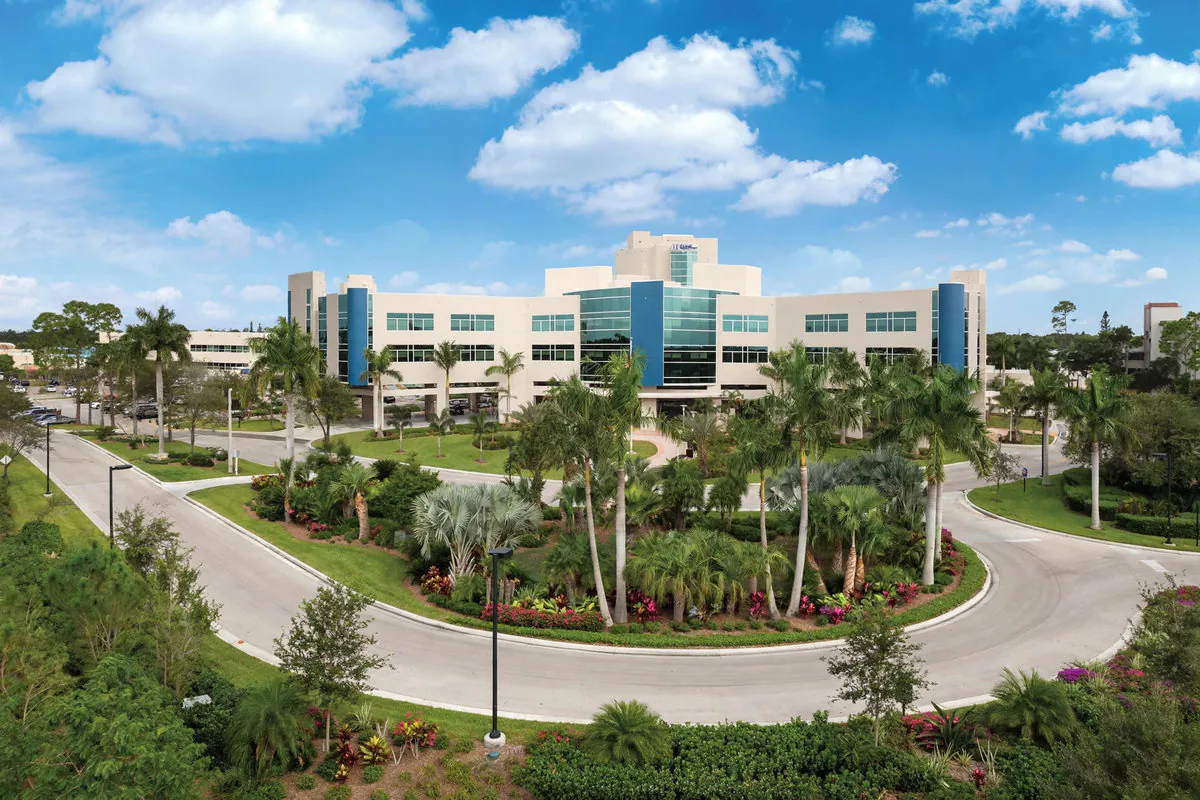
Memorial Hospital West is the city’s principal full-service hospital, with emergency, surgical, cardiac, and maternity care drawing patients from Pembroke Pines, western Miramar, and Southwest Ranches. Memorial Hospital Pembroke serves the city’s eastern side. Around those two anchors sits a dense network of primary-care practices, urgent care centers, surgical centers, and diagnostic imaging — which means a single episode of care in Pembroke Pines often involves several separate providers, each holding part of the record.
The concerns families bring to counsel tend to follow the care itself: a diagnosis that came months too late, a surgical complication that was not recognized in time, medication changes after discharge that were never reconciled, or a newborn injured during a delivery that families believe should have moved faster. None of those concerns proves negligence on its own. Florida law treats a bad outcome and a breach of the standard of care as different things, and separating them is the first real work in any Pembroke Pines case.
Because Memorial is a large system, records for one patient may live in several places — the hospital chart, a separate radiology report, anesthesia records, and the notes of an independent practice that treated the patient inside the hospital. Identifying every custodian of the record early is not a clerical detail; the presuit investigation described below depends on the complete file, and an expert reviewing a partial chart can reach a conclusion the full record would not support.
What Florida Requires Before a Pembroke Pines Malpractice Lawsuit
Florida does not allow a medical malpractice lawsuit to be filed the way most injury cases are filed. Chapter 766 of the Florida Statutes requires a presuit investigation first. Before suit, a prospective claimant must have the claim reviewed by a qualified medical expert who can corroborate that there are reasonable grounds to believe the care fell below the prevailing professional standard and caused injury. That corroboration requirement, in §766.203, is the gate every Pembroke Pines claim must pass through.
The formal process begins with a notice of intent under §766.106, served on each prospective defendant. Service of that notice starts a presuit investigation period — generally 90 days — during which the provider and its insurer review the claim, and the parties exchange information under the presuit discovery rules. At the end of that period the provider may reject the claim, offer to admit liability and proceed on damages, or make a settlement offer. Only after presuit is completed can a complaint be filed in court.
For a Pembroke Pines case, that court is ordinarily the Broward County circuit court — the 17th Judicial Circuit, sitting at the Broward County Courthouse in Fort Lauderdale. The distance matters practically, not legally: hearings, depositions, and trial all happen in Fort Lauderdale, and a firm handling a Pembroke Pines claim should be set up for Broward practice from the first notice onward.
How Could Medical Malpractice Affect Your Legal Options?
Call us or request a case review by our experts.
Deadlines for Care Received in Pembroke Pines
Florida’s medical malpractice limitations period is short, and it runs while presuit is still ahead of you. Under §95.11(4), an action generally must be commenced within two years from the time the incident occurred or, in cases where the injury was not immediately apparent, within two years from when it was discovered or should have been discovered with due diligence. Serving presuit notice near the end of that period extends it only in the limited ways the statute allows, which is why counsel usually works backward from the deadline rather than forward from the first phone call.
Behind the two-year period sits a four-year statute of repose: with narrow exceptions, no malpractice action may be brought more than four years after the date of the incident itself, however late it was discovered. The repose rule is the reason a delayed cancer diagnosis in Pembroke Pines — where the alleged failure may have happened at an imaging visit years before symptoms appeared — needs a deadline analysis at the very start, before records are even complete.
Different facts can change the calculation. Claims involving young children, and cases involving fraud or intentional concealment, are treated differently in the statute, and wrongful-death claims carry their own timing. None of that should be worked out from a website. If care in Pembroke Pines happened more than about eighteen months ago and you are only now asking questions, treat the deadline question as the urgent one and have it analyzed first.
Records: Building the Complete File for Memorial Care
A malpractice investigation in Pembroke Pines usually starts with paper. Patients have a right to obtain their medical records, and a complete request should reach beyond the discharge summary: nursing notes, medication administration records, operative and anesthesia reports, imaging and the radiologist’s interpretations, laboratory results, and the fetal monitoring strips in a birth case. The discharge summary is a summary — the underlying notes are where timing, orders, and responses are documented.
Families often keep the second half of the file without realizing it: after-visit summaries, patient-portal messages, prescription lists, and the records of the next provider who treated the complication. A follow-up physician’s notes frequently describe what the first episode left behind, and bills and explanation-of-benefits statements help establish dates when memory is uncertain. Keeping those documents together, unedited, is genuinely useful — an expert reads the sequence of care as a timeline, and gaps in that timeline become questions the other side will ask.
Public sources can add context, though never proof of negligence. The Florida Department of Health publishes licensure and discipline information for individual practitioners, and AHCA’s Florida HealthFinder provides facility information for hospitals such as Memorial Hospital West and Memorial Hospital Pembroke. Those sources help a family understand who provided care and where; the standard-of-care question itself still turns on the records and expert review.
How RDCY Investigates a Pembroke Pines Claim
RDCY’s investigation follows the structure Florida law imposes. Counsel obtains and organizes the complete record, builds a chronology of the care, and puts the file before a medical expert in the relevant specialty for the corroborating review §766.203 requires. Where the expert supports reasonable grounds, presuit notice is prepared and served, and the firm handles the presuit exchange with the provider and its insurer. Where the expert does not support the claim, the client hears that plainly — an unsupported case does not become stronger by being filed.
The damages side is investigated with the same care. A serious malpractice injury in Pembroke Pines can mean revision surgery, rehabilitation, home care, lost earning capacity, and a changed daily life for the whole household. Documenting that picture — treating-provider records, future-care needs, and the family’s own account of daily limitations — is part of the presuit presentation, not an afterthought once liability is argued.
Florida law does not impose a general cap on compensatory damages in most medical malpractice cases, but this page deliberately describes process rather than numbers: what any individual claim may address depends on its own proof of liability, causation, and loss, evaluated on its facts. Anyone who gives you a figure for a Pembroke Pines case before an expert has reviewed the records is guessing, and you should treat the guess accordingly.
Surgery, Anesthesia, and Post-Operative Care in Pembroke Pines
A large share of the hospital care in Pembroke Pines is procedural: scheduled operations at Memorial Hospital West, outpatient procedures at surgical centers, and the anesthesia care that accompanies both. Concerns in this area tend to cluster around recognition rather than the procedure itself. A post-operative bleed, infection, or respiratory problem that is charted in nursing notes for hours before it is escalated presents a different question from a known surgical risk that materializes despite attentive care. The records that answer it are the recovery-room notes, vital-sign flowsheets, escalation entries, and the operative and anesthesia reports read together, in time order.
Anesthesia claims follow their own logic. Airway events, positioning injuries, and medication reactions in the operating room are documented in the anesthesia record’s minute-level entries, and review ordinarily requires an anesthesiology expert in addition to a surgical one. Families rarely know which specialty’s review their case needs until the chart is assembled; that is a reason the records-first sequence matters, because serving presuit notice on a theory the wrong expert corroborated wastes the one structured opportunity chapter 766 provides before suit.
Outpatient procedures deserve the same seriousness as inpatient surgery. A Pembroke Pines patient discharged from a surgery center who deteriorates at home raises questions about discharge criteria, the instructions given, and the response when the family called back. Those phone calls — when they happened, who took them, and what was documented — are part of the record too, and portal messages and call logs should be preserved alongside the chart rather than treated as the family’s private notes.
Medication Safety After Discharge From a Pembroke Pines Hospital
Discharge is one of the most error-prone moments in hospital care, and Pembroke Pines families feel it directly: a patient leaves Memorial Hospital West or Memorial Hospital Pembroke with a medication list that must be reconciled against what they were taking before admission, what was changed in the hospital, and what their regular pharmacy and physicians believe they are on. When a discontinued drug is refilled, a new drug duplicates an existing one, or a dose changes without the change being communicated, the resulting harm can look like a new illness rather than a medication error — which is one reason these cases are discovered late and need prompt deadline analysis when they surface.
The documentary trail for a medication claim is unusually concrete: the admission medication reconciliation, inpatient administration records, the discharge list, pharmacy fill records, and the follow-up provider’s notes when the problem declared itself. An expert reviewer — sometimes a pharmacist-supported clinical review in addition to a physician — works through that chain to find where it broke. Families help by keeping the actual discharge paperwork and bottles rather than a cleaned-up summary; discrepancies between documents are often the evidence.
Not every adverse drug event is negligence. Medications carry known risks, allergic reactions can be unforeseeable, and a bad interaction can occur despite careful prescribing. The legal question is narrower: whether the prescribing, reconciliation, monitoring, or communication departed from what a reasonably prudent provider would have done for that patient. That question, like every other on this page, is answered on the records — and it is the question RDCY’s presuit investigation is built to ask before any Pembroke Pines claim is filed.
A Final Word on Timing for Pembroke Pines Families
Everything on this page converges on a single practical point: the investigation Florida requires takes time, and the clock Florida imposes does not wait for it. Expert review of a complete Memorial chart, corroboration under §766.203, and a presuit period measured in months must all fit inside the limitations framework of §95.11(4). A Pembroke Pines family that begins while the care is recent gives that process room to work; a family that begins near the deadline forces every step to be hurried, and some meritorious questions simply cannot be answered responsibly on a rushed record. If you take one action from this page, make it the early phone call — the rest of the sequence can only follow from it.
Costs, Fees, and the First Conversation
Families in Pembroke Pines often delay the first call because they assume they cannot afford the question. Ask directly, in that first conversation, how malpractice representation is charged, what costs an investigation involves, and what happens if expert review does not support a claim — a firm that handles this work will answer all three without hedging. What no family should do is let a cost assumption make the limitations decision for them: the §95.11(4) analysis costs nothing to request, and it is the one part of a Pembroke Pines case that cannot be recovered once it is missed. The records, the expert, and the presuit process all follow from starting; nothing follows from waiting.
Why Families in Pembroke Pines Turn to RDCY
RDCY is a Florida trial firm whose practice includes complex medical malpractice and catastrophic injury litigation. The firm’s attorneys prepare malpractice claims through the full chapter 766 process — expert corroboration, presuit notice, and litigation in the circuit courts, including the 17th Judicial Circuit in Broward County. For a Pembroke Pines family, that means the same firm that reviews the Memorial records is the firm prepared to try the case in Fort Lauderdale if presuit does not resolve it.
The firm also serves as a resource beyond a single city. Readers comparing options across the county will find the same process explained for neighboring communities on this site, and the firm’s broader background on its Florida medical malpractice page. To discuss care received in Pembroke Pines, call (561) 516-5168 for a case review.
Related Medical Malpractice Pages
Medical malpractice help across Broward County, organized by city:
- Broward County
- Fort Lauderdale
- Pembroke Pines
- Hollywood
- Miramar
- Coral Springs
- Pompano Beach
- Davie
- Sunrise
- Plantation
- Deerfield Beach
- Lauderhill
- Tamarac
- Weston
- Margate
- Coconut Creek
Professional Recognition


Recognition applies to the named attorneys and selection years. See the linked profiles for details.
GOOGLE REVIEWS
General feedback from individual five-star Google reviews:
“He is true lawyer for the people displaying great enthusiasm, professionalism and compassion.”
— Jeff
“Can not say thank you enough!”
— PJ
Pembroke Pines Medical Malpractice FAQs
Answers below address the questions Pembroke Pines patients and families ask most often about medical malpractice claims. They are general information about Florida law and the local care landscape, not legal advice about a specific case.
Where would a medical malpractice case from Pembroke Pines be filed?
A malpractice suit arising from care in Pembroke Pines is ordinarily filed in the circuit court for the 17th Judicial Circuit, at the Broward County Courthouse in Fort Lauderdale, after Florida’s presuit process is completed.
Pembroke Pines has no separate circuit court of its own; Broward County cases are handled centrally in Fort Lauderdale.
Sources: Florida Statutes Chapter 766, Online Sunshine; Florida Courts — Circuit Trial Courts
What must happen before I can sue over care at Memorial Hospital West?
Florida chapter 766 requires a presuit investigation first.
A qualified medical expert must review the records and corroborate reasonable grounds to believe the care departed from the prevailing standard and caused injury, and a notice of intent must be served on each prospective defendant, starting a presuit investigation period before any complaint can be filed.
Sources: Florida Statutes Chapter 766, Online Sunshine; AHCA Florida HealthFinder Facility Search
How long do I have to bring a malpractice claim in Pembroke Pines?
Under Florida law the general period is two years from the incident, or from when the injury was discovered or should have been discovered, and a four-year statute of repose applies from the date of the incident with narrow exceptions.
Because presuit must happen before suit, the deadline analysis should be done early rather than at the end of the period.
Sources: Florida Statutes §95.11, Online Sunshine; Florida Statutes Chapter 766, Online Sunshine
How do I get my records from Memorial Hospital Pembroke or Memorial Hospital West?
Patients can request their records from the treating facility’s medical records department, and a complete request should include nursing notes, operative and anesthesia reports, imaging, and medication records — not only the discharge summary.
Counsel can also obtain records with a signed authorization as part of a presuit review.
Sources: AHCA Florida HealthFinder Facility Search; Florida Statutes Chapter 766, Online Sunshine
Does a poor outcome at a Pembroke Pines hospital automatically mean malpractice?
No. Medicine involves known risks, and a complication or poor result can occur without negligence.
A Florida malpractice claim requires proof that the provider departed from the prevailing professional standard of care and that the departure caused the injury — which is why an expert review of the complete chart is required before suit.
Sources: Florida Statutes Chapter 766, Online Sunshine; AHCA Florida HealthFinder Facility Search
Can I check a Pembroke Pines doctor’s license or discipline history?
Yes. The Florida Department of Health publishes practitioner profiles, licensure status, and reported discipline, and AHCA’s Florida HealthFinder provides information about hospitals and other licensed facilities.
Those public records give background, but they do not by themselves establish the standard of care in an individual case.
Sources: Florida Department of Health Licensing & Regulation; Florida Statutes Chapter 766, Online Sunshine
What kinds of Pembroke Pines cases does presuit expert review apply to?
The corroboration requirement applies to medical malpractice claims generally — including claims involving surgery, emergency care, diagnosis, medication, and obstetric care in Pembroke Pines.
The reviewing expert must be qualified in the relevant specialty, and the review must be completed before presuit notice is served.
Sources: Florida Statutes Chapter 766, Online Sunshine; AHCA Florida HealthFinder Facility Search
My parent was harmed by care in Pembroke Pines. Can family members help pursue answers?
Family members often hold key parts of the picture — portal messages, medication lists, and notes from follow-up care — and an authorized representative can request records for a patient who cannot do so.
Who may bring a claim, and in what capacity, depends on the circumstances, including whether the claim involves a death, and should be reviewed with counsel.
Sources: Florida Statutes Chapter 766, Online Sunshine; AHCA Florida HealthFinder Facility Search
What happens during the 90-day presuit period after notice is served?
During the presuit investigation period the provider and its insurer review the claim and the parties exchange information under chapter 766’s presuit discovery rules.
At the end of the period the provider may reject the claim, admit liability and contest only damages, or make an offer. If the claim is rejected, suit may then be filed in the 17th Judicial Circuit.
Sources: Florida Statutes Chapter 766, Online Sunshine; AHCA Florida HealthFinder Facility Search
How do I contact RDCY about care received in Pembroke Pines?
Call RDCY at (561) 516-5168 or use the firm’s contact page to request a case review.
Bring the names of the Pembroke Pines providers involved, the approximate dates of care, and any records or portal documents you already have — that material lets counsel start with the two questions that control everything else: what the records show, and what deadline applies.
Sources: Florida Statutes Chapter 766, Online Sunshine; The Florida Bar — Public Information
Related Articles
- How Florida’s Medical Malpractice Pre-Suit Investigation Works
- How Missed or Delayed Diagnoses Happen—and Why Differential Diagnosis Protocols Matter
- Why Contacting Counsel Before Record Requests Can Save Time And Reduce Cost
- How To Document Damages: Treatment Courses, ADLs, And Pain Journals
- Why Hospital Risk-Management Policies Often Influence Liability and Settlement Strategy
- Birth Injury Lawsuits for Delayed Emergency C-Sections
Need Help With a Case Involving Medical Malpractice?
Call us or request a case review by our experts.


