Sarasota FL Medical Malpractice Lawyer
Sarasota is the Sarasota County seat and a Gulf coast city with a large retiree population, which means its hospitals and physician practices carry an unusually heavy load of cardiology, orthopedic, surgical and chronic-disease care. The center of that system is Sarasota Memorial Hospital, the region’s public hospital. When care there — or at a Sarasota clinic, imaging center or surgical practice — falls below the accepted standard and a patient is seriously harmed, Florida law provides a path to accountability, but it is a demanding one that starts long before any lawsuit.
This page explains how medical malpractice claims work for Sarasota patients and families: where local care is delivered, what Florida’s chapter 766 presuit process requires, which deadlines control, and how Rafferty Domnick Cunningham & Yaffa (RDCY) investigates a claim. It sits under our statewide Florida medical malpractice practice. Sarasota malpractice cases are filed in the Twelfth Judicial Circuit at the Sarasota County Courthouse.
A disappointing outcome is not, by itself, malpractice. Medicine involves risk even when everyone does their job. A claim exists when the records show a provider departed from the standard of care — the care a reasonably prudent similar provider would have given — and that departure caused the injury. Sorting one from the other takes complete records and a qualified expert’s review, and Florida’s clocks start running early.
Have Questions About Medical Malpractice?
Call us or request a case review by our experts.
Medical Care in Sarasota: Where Treatment Happens
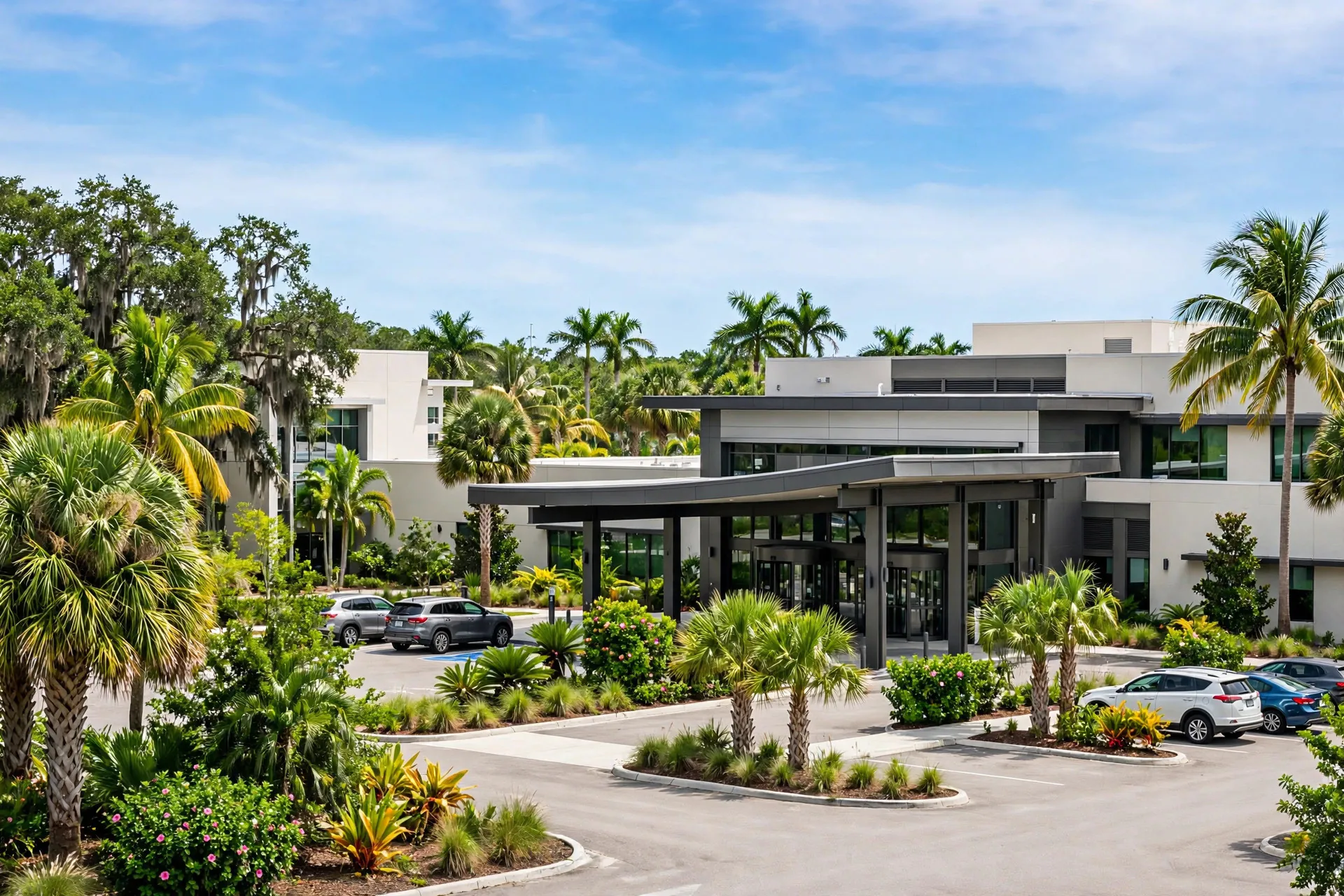
Sarasota Memorial Hospital anchors care in the city, providing emergency, surgical, cardiac and inpatient services for Sarasota County and drawing patients from across the Gulf coast. Around it sits a wide ring of supporting care: specialist practices, outpatient surgery centers, diagnostic imaging groups, rehabilitation providers and primary care offices serving the city’s retiree-heavy neighborhoods and its seasonal population.
A malpractice review has to map that whole picture. One harmful episode can involve an emergency physician from one group, hospital nursing staff, an independent surgeon and an outside radiology practice that read the scan — each keeping separate records and carrying separate insurance. Finding every provider in the chain, and getting complete records from each, is the first work of a Sarasota investigation.
Sarasota patients also cross county lines for care, and providers from more than one system may appear in a single chart. Venue still follows the county framework: a Sarasota County case proceeds in the Twelfth Judicial Circuit, and the presuit steps described below apply no matter which facility delivered the care.
The Errors Sarasota Patients Ask Us About
The questions Sarasota families bring us most often involve delayed diagnosis — a cancer, stroke or cardiac condition that was visible in symptoms, imaging or lab work but not acted on in time. In a city where many patients are older and manage several conditions at once, a missed or late diagnosis can close off treatment options that would have been open months earlier.
Surgical and procedural errors form a second group: wrong-site procedures, retained items, anesthesia mistakes and failures to recognize and treat post-operative bleeding or infection. Medication errors — wrong drug, wrong dose, dangerous interactions in a patient already taking many prescriptions — are a recurring concern for older Sarasota patients, as are emergency department discharges that send a deteriorating patient home.
Not every bad result in these categories is negligence. The legal question is always comparative: what should a careful provider in the same specialty have done with the same information, and would doing it have changed the outcome? That is why Florida requires a medical expert in the relevant field to corroborate a claim before it can move forward.
How Could Medical Malpractice Affect Your Legal Options?
Call us or request a case review by our experts.
Florida’s Presuit Process: What Must Happen Before a Sarasota Lawsuit
Florida chapter 766 requires a presuit investigation before a medical malpractice lawsuit can be filed. The prospective claimant must have the records reviewed by a qualified medical expert, and that expert must corroborate that reasonable grounds exist to believe negligence occurred and caused injury. Without that corroboration, a claim cannot responsibly — or lawfully — proceed.
Once corroborated, a notice of intent to initiate litigation is served on each prospective defendant, which opens a 90-day presuit period. During that window the provider’s side conducts its own review, and the parties exchange information; the provider may reject the claim, make a settlement offer, or offer to admit liability and proceed to arbitration on damages. Many claims resolve in or shortly after this stage.
Presuit is not a formality that can be rushed at the end. The expert review, the records gathering and the notice drafting all take time, and the limitations clock keeps running while they happen — which is why Sarasota families are better served starting the review early rather than waiting for records to arrive on their own.
How Long Do You Have? The Two-Year Rule and the Four-Year Cap
Under Florida Statutes §95.11(4), a medical malpractice action generally must be commenced within two years from when the incident occurred or when it was discovered — or should have been discovered with reasonable diligence. Which date applies is often one of the most contested questions in a case, and it is decided on the specific facts of what the patient knew and when.
Behind the two-year rule sits a harder outer limit: a statute of repose that generally bars claims brought more than four years after the incident, subject to narrow exceptions such as fraud or concealment, and special rules for young children. A claim can be medically strong and still be lost entirely if these deadlines pass.
The presuit process interacts with the deadlines — a properly served notice of intent tolls the clock for the presuit period — but tolling is technical and unforgiving of mistakes. Treat the date of the care, and the date you first suspected something was wrong, as urgent facts to review with counsel, not details to work out later.
Protecting a Sarasota Claim in Its First Weeks
Start by writing down a timeline while memories are fresh: dates of appointments, procedures and hospitalizations, the names of providers, what symptoms were reported, what you were told, and when the harm became apparent. Keep discharge papers, prescription bottles, bills, portal printouts and any messages exchanged with providers.
Request complete records early from every provider involved — the hospital chart from Sarasota Memorial Hospital’s records process and separate records from each practice or imaging group. Gaps and late productions are common; an early, documented request makes them easier to close. Patients are entitled to their own records under Florida law, and licensing information for Florida providers is maintained by the Department of Health.
Finally, be careful with early conversations. A provider’s insurer or risk management department may contact you quickly; you are not required to give a recorded statement before understanding your position. A focused case review at (561) 516-5168 can establish what the records show before positions harden.
What a Sarasota Malpractice Claim Can Address
A successful claim addresses the losses the negligence caused: additional medical treatment and rehabilitation, future care needs, lost earnings and diminished earning capacity, and the physical pain and human losses that accompany a serious injury. Where malpractice causes a death, Florida’s wrongful death framework governs who may recover and for what.
Florida does not impose a general cap on compensatory damages in medical malpractice cases, but every element of loss still has to be proved — usually through treating records, independent expert testimony and, for future care, a structured life-care analysis. Speculation is not compensated; documented harm is.
That proof burden is another reason the presuit record matters so much. The chart, the imaging, the medication history and the expert’s analysis are the case. Building them carefully from the start is what allows a Sarasota family to negotiate — or try the case — from a position of strength.
How a Sarasota Malpractice Investigation Actually Proceeds
The work begins with records: a complete chart request to every Sarasota provider who touched the care, including nursing notes, medication administration records, imaging and its underlying studies, lab results and, where relevant, the electronic record’s audit trail showing when entries were made or changed. Families are often surprised that the hospital chart alone is not the whole record.
A nurse consultant or in-house reviewer typically builds the chronology first — what happened, in what order, and where the documentation thins or contradicts itself. The file then goes to the corroborating expert in the relevant specialty, whose chapter 766 opinion either supports the claim or ends the inquiry. That sequence protects families from pursuing claims the evidence cannot carry.
If corroboration follows, the notice of intent and presuit exchange proceed, and the provider’s own review sometimes produces the first real explanation a family has received. Cases that settle usually settle on the strength of this file; cases that do not are filed in the Twelfth Judicial Circuit already organized for discovery and trial.
Sarasota Medical Malpractice and Nursing Home Harm: Knowing Which Claim You Have
Sarasota families sometimes arrive unsure whether harm that began in a hospital and continued in a rehabilitation or nursing facility is one claim or two. The answer matters: hospital and physician negligence proceeds under chapter 766’s presuit rules, while nursing home resident-rights claims arise under chapter 400, with different procedures and proof. Care that crosses settings — a surgical error at the hospital, then neglect during recovery — can involve both frameworks at once.
RDCY also serves Sarasota families on the nursing home side; our Sarasota nursing home abuse page explains that framework. Sorting the claim correctly at intake is what prevents a family from running the wrong process against the wrong deadline.
What Sarasota Families Usually Want to Know First
Two questions come before all others: did this have to happen, and what happens to the person who was harmed now? The first is the expert’s question, answered from the record. The second is practical — the cost of the care the injury now requires, the work that will be missed, the help a spouse or adult child must now provide at home. A malpractice claim is built to answer both, in that order, because the second answer has no value without the first.
Families also ask whether bringing a claim will affect ongoing care. It should not: providers may not retaliate against a patient for pursuing a lawful claim, and many Sarasota clients continue treatment within the same systems while presuit runs. What a claim does change is the conversation — explanations become documented, and the record a family receives becomes the complete one.
Damages, Liens and the Practical End of a Sarasota Case
Serious malpractice recoveries are reduced, in practice, by what must be repaid: health insurer and Medicare or Medicaid liens, outstanding medical balances, and the costs of the experts who proved the case. A settlement figure is therefore not the amount a family keeps, and any honest evaluation separates the gross recovery from the net early. Florida law and the payer’s rules govern which liens attach and how far they can be negotiated down, and that negotiation is part of the legal work, not an afterthought. Planning for it from presuit onward — tracking who paid for what care — prevents the end of a Sarasota case from becoming its most confusing chapter.
Why Sarasota Families Bring These Cases to RDCY
RDCY is a Florida trial firm whose work centers on catastrophic injury and medical negligence. The firm investigates malpractice claims the way they will ultimately be judged: complete records first, a qualified expert’s corroboration second, and presuit conducted with the trial in view if the provider refuses to accept responsibility.
For Sarasota clients, that means one firm handling the Twelfth Circuit filing, the chapter 766 process and the expert work, while the family deals with a single point of contact. The firm’s statewide Florida medical malpractice practice serves patients well beyond its Palm Beach County home, including Gulf coast families whose care was delivered in Sarasota.
The review itself costs nothing to request. If the records do not support a claim, you will be told that plainly. If they do, you will understand the presuit steps, the deadlines and the likely road ahead before deciding how to proceed.
Related Pages
Medical malpractice help in Sarasota and across Florida:
- Medical Malpractice Overview
- West Palm Beach
- Jacksonville
- Pensacola
- Orlando
- Tampa
- Miami
- Fort Lauderdale
- Boca Raton
- Delray Beach
- Boynton Beach
- Jupiter
- Wellington
- Clearwater
- Lakeland
- Sarasota
- St. Petersburg
- Sarasota Nursing Home Abuse
Professional Recognition


Recognition applies to the named attorneys and selection years. See the linked profiles for details.
GOOGLE REVIEWS
General feedback from individual five-star Google reviews:
“He guided me through everything and made the process as easy and stress-free as possible.”
— Halley
“You can sum this firm up with two simple words: The Best.”
— Jamie
Sarasota FL Medical Malpractice FAQs
These answers are general information about Florida medical malpractice law as it applies in Sarasota and Sarasota County — not legal advice about a specific case. Florida’s presuit and deadline rules are technical, and the facts of your care control the outcome.
I was treated at Sarasota Memorial Hospital — can I bring a malpractice claim for that care?
Yes, if the evidence supports one. A claim turns on the care itself rather than the building it happened in: whether the provider met the standard of care, and whether a departure from that standard caused the injury. Care at Sarasota Memorial Hospital is reviewed the same way as care at any Sarasota provider — by obtaining the complete chart and having it assessed by a qualified expert in the relevant specialty.
If that expert corroborates negligence and causation, the claim proceeds through Florida’s chapter 766 presuit process before any lawsuit is filed in the Twelfth Judicial Circuit. A poor outcome alone is not enough; the records and the expert review are what determine whether a Sarasota claim can move forward.
Sources: Florida Statutes § 766.106 — Medical Negligence Presuit Notice (Florida Senate) · Florida Statutes § 95.11 — Limitations of Actions (Florida Senate)
Where would a Sarasota medical malpractice lawsuit be filed?
In the Twelfth Judicial Circuit, at the Sarasota County Courthouse. Sarasota is the Sarasota County seat, and circuit — set by county — controls where a malpractice case is filed. You can confirm the circuit structure on the Florida Courts website.
Filing comes last, not first. Before a complaint can be filed, chapter 766 requires expert corroboration, a notice of intent to each prospective defendant, and a 90-day presuit period. Only after presuit concludes without resolution does the case become a Twelfth Circuit lawsuit.
Sources: Florida Statutes § 47.011 — Venue (Florida Senate) · Florida Statutes § 95.11 — Limitations of Actions (Florida Senate)
How long do I have to bring a Sarasota malpractice claim?
Generally two years under Florida Statutes §95.11(4) — measured from the incident, or from when the injury was discovered or should have been discovered with reasonable diligence. Sarasota patients often lose time at exactly this step, because a complication can look like a normal recovery risk until records are reviewed.
A statute of repose generally bars claims more than four years after the incident, with narrow exceptions. Because a presuit notice of intent tolls the clock only when properly served, the safest course is to have the dates reviewed early rather than calculated at the deadline.
Sources: Florida Statutes § 95.11 — Limitations of Actions (Florida Senate) · Florida Statutes § 766.106 — Medical Negligence Presuit Notice (Florida Senate)
What is the chapter 766 presuit process for a Sarasota case?
Presuit is Florida’s mandatory screening step for malpractice claims. A qualified medical expert must first review the records and corroborate reasonable grounds to believe negligence caused injury. The claimant then serves a notice of intent on each prospective defendant, opening a 90-day period in which the provider investigates and responds.
At the end of presuit the provider may reject the claim, offer settlement, or offer to admit liability and arbitrate damages. Many Sarasota claims resolve during or shortly after this window; those that do not proceed to suit in the Twelfth Judicial Circuit with the presuit record already built.
Sources: Florida Statutes § 766.106 — Medical Negligence Presuit Notice (Florida Senate) · Florida Statutes § 95.11 — Limitations of Actions (Florida Senate)
How do I get my medical records from Sarasota providers?
Request them from each provider separately — the hospital chart through Sarasota Memorial Hospital’s records process, and office records from each physician practice, imaging center or surgical group involved. Florida patients are entitled to copies of their own records, and a malpractice review needs the complete set, not a discharge summary alone.
You can also check a hospital’s profile through AHCA’s Florida HealthFinder and federal provider data through CMS. If a provider delays or produces an incomplete chart, documented follow-up requests — and counsel’s involvement — usually close the gap faster than repeated phone calls.
Sources: Florida Statutes § 395.3025 — Hospital Patient Records (Florida Senate) · Florida Statutes § 456.057 — Patient Records (Florida Senate)
Does it cost anything to have RDCY review a Sarasota malpractice case?
No. The initial case review is free, and malpractice matters are evaluated on their records before any commitment is made. If the expert review does not corroborate a claim, you will be told that directly rather than carried through a process the evidence cannot support.
General information about how Florida lawyers may charge and what clients should expect is published by The Florida Bar. Any fee arrangement in a specific case is set out in writing before work begins, so the cost question is answered on paper, not by assumption.
Sources: Florida Statutes § 95.11 — Limitations of Actions (Florida Senate) · Florida Statutes § 768.81 — Comparative Fault (Florida Senate)
What kinds of Sarasota medical errors can support a claim?
The recurring categories are delayed or missed diagnosis, surgical and anesthesia errors, medication mistakes, failures to monitor or escalate a deteriorating patient, and emergency care that discharges a patient who should have been admitted or worked up further. Each category is judged against the standard of care for that specialty.
What matters legally is not the label but the proof: records showing what the provider knew, what a reasonably prudent similar provider would have done, and a qualified expert connecting the departure to the harm. Provider licensing and disciplinary frameworks are maintained by the Florida Department of Health.
Sources: Florida Statutes § 766.106 — Medical Negligence Presuit Notice (Florida Senate) · Florida Statutes § 95.11 — Limitations of Actions (Florida Senate)
A Sarasota provider offered to settle quickly — should I sign?
Not before the records have been independently reviewed. An early offer is made before your damages — future care, lost earnings, the full extent of the injury — are known, and a signed release generally ends the claim permanently, including for complications that appear later.
Florida’s presuit framework exists partly to slow this moment down: the 90-day investigation period gives both sides the records before positions are taken. Having the chart and an expert’s view first is the difference between a settlement that reflects the harm and one that merely closes a file.
Sources: Florida Statutes § 766.106 — Medical Negligence Presuit Notice (Florida Senate) · Florida Statutes § 95.11 — Limitations of Actions (Florida Senate)
What compensation can a Sarasota malpractice claim pursue?
A claim can pursue the losses the negligence caused: past and future medical care, rehabilitation, lost income and reduced earning capacity, and noneconomic losses such as pain and suffering. In a death case, Florida’s wrongful death provisions govern who may recover and which losses count.
Chapter 768 supplies part of that damages framework. Nothing is automatic — each element must be documented and, for future needs, supported by expert analysis. Florida imposes no general cap on compensatory damages in malpractice cases, but proof, not sympathy, sets the value.
Sources: Florida Statutes § 768.81 — Comparative Fault (Florida Senate) · Florida Statutes § 95.11 — Limitations of Actions (Florida Senate)
My parent was harmed by care in Sarasota but I live out of state — can I act?
Often, yes — but authority matters. An adult child does not automatically hold legal authority over a parent’s claim; that depends on the parent’s capacity, any health care surrogate or power of attorney documents, or a guardianship or estate appointment after a death. The first step is establishing who the proper claimant is.
The investigation itself can be run from anywhere: records are requested from the Sarasota providers, the expert review proceeds under chapter 766, and any filing is made in the Twelfth Judicial Circuit. The Florida Bar’s public resources explain the roles of surrogates and representatives in general terms.
Sources: Florida Statutes § 95.11 — Limitations of Actions (Florida Senate) · Florida Statutes § 47.011 — Venue (Florida Senate)
Related Articles
- Loss of Consortium Claims in Florida Birth Injury Lawsuits
- Non-Economic Damages in Florida Birth Injury Lawsuits
- What does an Expert Witnesses in Florida Birth Injury Lawsuits do?
- Clubfoot and Other Musculoskeletal Birth Injuries in Florida
- Common Challenges in Florida Birth Injury Claims and How to Overcome Them
- Severe Birth Trauma: Legal Protections and Compensation in FL
Need Help With a Case Involving Medical Malpractice?
Call us or request a case review by our experts.