Lakeland FL Nursing Home Abuse Lawyer
A troubling call from a nursing home can be difficult to assess, especially when you live hours away from your parent. You may hear that your parent fell, developed a wound, lost weight, became unusually confused, or was transferred to a hospital. Sometimes different staff members give different explanations.
A decline in health does not automatically mean that a nursing home was negligent. The immediate priorities are your parent’s safety, an appropriate medical assessment, and preservation of the information that may explain what happened.
Find what you need: What to do now · Live outside Florida · Lakeland nursing homes · Family checklist · Florida deadlines · FAQs
Rafferty Domnick Cunningham & Yaffa
Nursing home abuse legal help

What to Do Now
If your parent appears to be in immediate danger, call 911. For other concerns:
- Ask for a medical assessment. Find out whether the attending clinician has been notified and whether your parent needs evaluation at a hospital.
- Write down what changed. Record dates, symptoms, names, staff explanations, hospital visits, and questions that remain unanswered.
- Preserve what you already have. Keep original photographs, messages, discharge papers, medication lists, bills, and voicemails.
- Report suspected abuse or neglect. The Florida Abuse Hotline accepts reports at 1-800-962-2873.
- Confirm your authority. Being an adult child does not automatically give you access to the complete chart or authority to file a lawsuit for your parent.
Live Outside Florida? Start Here.
You can raise concerns about a parent in a Lakeland nursing home even when you live in another state. Ask for a scheduled care conference and the name and role of a reliable facility contact. If your parent can make decisions, ask whether your parent will authorize the facility to discuss care with you.
Family involvement and legal authority are different. A provider may discuss information relevant to your involvement in care when permitted by your parent and federal privacy rules. Access to the complete record usually requires your parent’s written direction or authority under applicable law. The same distinction matters if a legal claim is considered.
Before speaking with a lawyer, gather the facility’s name, the important dates, a short description of what changed, and any photographs, messages, hospital papers, or authority documents already available to you. You do not need to obtain the complete nursing home chart before asking questions.
Talk through what changed.
Rafferty Domnick Cunningham & Yaffa can help you identify the issues that need closer review. To request a free consultation, call (561) 516-5168.
Nursing Home Experience at Rafferty Domnick Cunningham & Yaffa
Families usually need more than a review of the nursing home’s explanation. A meaningful investigation may require nursing home records, hospital and EMS documentation, pharmacy information, electronic chart data, staffing evidence, and opinions from qualified medical professionals.
Rafferty Domnick Cunningham & Yaffa handles Florida nursing home abuse cases, including matters involving catastrophic injury and wrongful death. The firm’s work focuses on determining what care the resident required, what the facility knew, what staff actually did, and whether a failure caused avoidable harm.
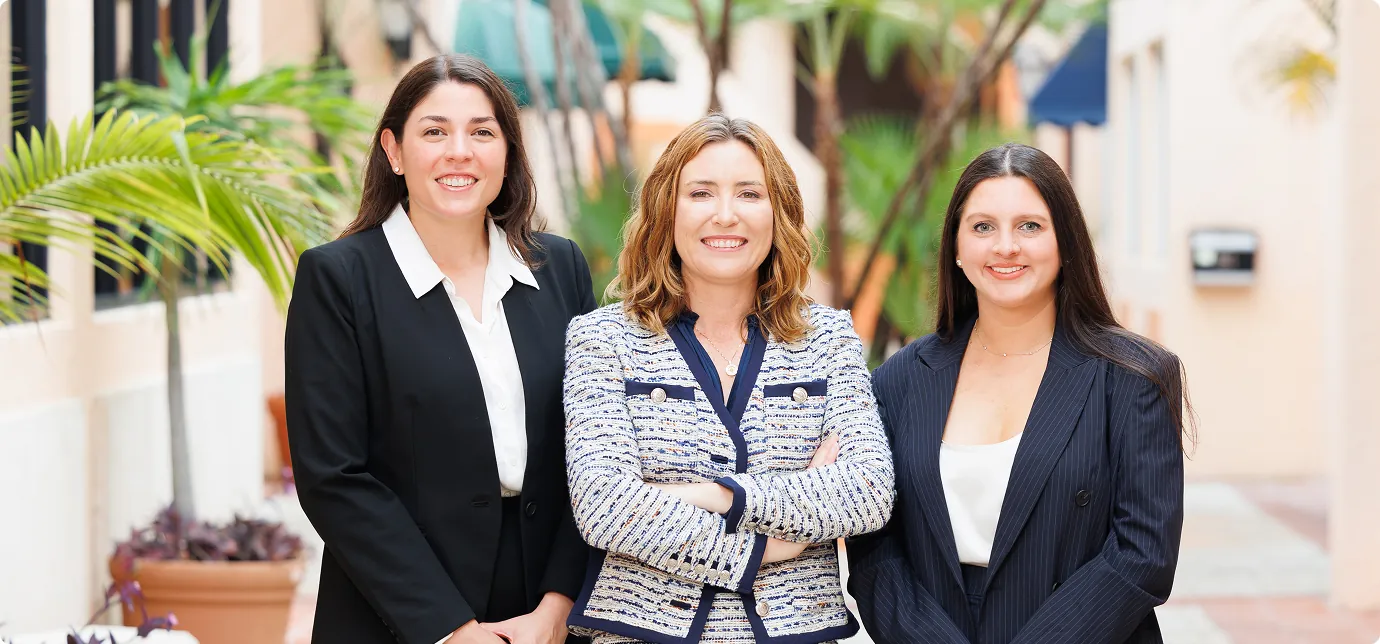
Lindsey Gale
Lindsey Gale’s practice is committed to representing people affected by nursing home abuse. Her work includes catastrophic injury and wrongful death matters, and she has been admitted to the Florida Bar since 2017.
That focus matters when the nursing home chart is incomplete, the resident had serious health conditions before the incident, or several organizations participated in the resident’s care. The legal question is rarely whether something bad happened. It is whether the available evidence connects the injury to a failure by a legally responsible person or organization.
Why Lakeland Nursing Home Cases Can Be Hard to Reconstruct
Lakeland is a regional center for health care and long-term care in a fast-growing county. A nursing home resident may receive services from facility employees, an outside physician group, a pharmacy, a wound-care provider, a laboratory, a hospice organization, a rehabilitation provider, or a medical equipment company.
A sudden transfer to Lakeland Regional Health Medical Center can create another important set of records. The emergency department may document wounds, dehydration, infection, fractures, medication concerns, mental-status changes, or statements made when the resident arrived. EMS personnel may separately record the resident’s condition and what facility staff reported.
Those records do not always tell the same story. The nursing home chart may describe a gradual decline while hospital records document an acute problem. A late chart entry may not show when care was actually delivered. Pharmacy records may establish when a prescription was changed or filled. Electronic audit data may show when an entry was created or edited.
The first task is often to identify every provider and records custodian involved—not merely to accept the facility chart as the complete account.
A Lakeland Long-Term-Care Snapshot
The U.S. Census Bureau estimated Lakeland’s population at 125,520 in 2025, an increase of 11.5% from the city’s 2020 population base. Census estimates indicate that 21.5% of Lakeland residents are 65 or older.
Growth among older Polk County residents has been especially significant. A 2026 Florida Agency for Health Care Administration report used a January 2025 county population estimate of 828,998, including 182,270 residents age 65 or older. The report stated that Polk County’s older population had grown 24.1% since the 2020 census and identified approximately 17 nursing home beds for every 1,000 residents age 65 or older at that midpoint.
These numbers do not say anything about what happened to an individual resident. They do help explain why Lakeland cases may involve a substantial network of nursing homes, hospitals, physicians, pharmacies, regulators, and records systems.
CMS Information for Nursing Homes With Lakeland Mailing Addresses
The Centers for Medicare & Medicaid Services publishes information about Medicare- and Medicaid-certified nursing homes through its Provider Information dataset and Medicare Care Compare.
The overall rating combines information involving health inspections, staffing, and quality measures. CMS describes the scale as:
- 1 star: Much below average
- 2 stars: Below average
- 3 stars: Average
- 4 stars: Above average
- 5 stars: Much above average
These are CMS categories, not assessments by Rafferty Domnick Cunningham & Yaffa. A rating does not prove that abuse occurred, and it does not determine civil liability. An unavailable rating would not mean zero stars.
The table contains all 12 supplied provider records for which the CMS mailing city was Lakeland. A mailing city does not establish that the property is within Lakeland’s exact municipal limits. The CCN identifies the particular Medicare-certified provider.
Source: CMS Provider Information dataset; processing date August 1, 2026; retrieved September 11, 2026. The linked Medicare profile may contain information newer than the ratings retained in this snapshot.
|
Facility and Medicare profile |
CCN |
Overall stars
|
|
105482 |
2 / 5 | |
|
106138 |
1 / 5 | |
|
105693 |
2 / 5 | |
|
105949 |
5 / 5 | |
|
105620 |
2 / 5 | |
|
105283 |
2 / 5 | |
|
105660 |
4 / 5 | |
|
106120 |
2 / 5 | |
|
106146 |
3 / 5 | |
|
105301 |
1 / 5 | |
|
105354 |
1 / 5 | |
|
106002 |
2 / 5 |
On smaller screens, scroll horizontally to view the complete table.
CMS ratings can change as inspections, staffing reports, and quality data are added. A higher rating is not an assurance that every resident received appropriate care. A lower rating does not establish that a particular injury resulted from neglect. An individual case still requires evidence of a duty, a failure, causation, and harm.
Where Important Evidence May Be Created
The incident that first concerns a family may happen in a resident’s room, bathroom, dining area, hallway, therapy space, or outdoor area. The clearest evidence may be created somewhere else.
A hospital evaluation can provide an independent, time-stamped description of the resident’s condition. Lakeland Regional Health Medical Center operates a 24-hour emergency department at 1324 Lakeland Hills Boulevard. Its records may include admission notes, photographs, laboratory results, imaging, medication reconciliation, specialist consultations, and discharge instructions.
Separate documentation may exist with:
- Ambulance or fire-rescue personnel
- Outside physicians and advanced-practice providers
- Pharmacies and pharmacy consultants
- Laboratories and diagnostic imaging providers
- Wound-care clinicians
- Hospice or home-health organizations
- Rehabilitation and therapy providers
- Medical equipment companies
- Hospitals that treated the resident before or after the event
Identifying those sources early can help preserve a more reliable timeline.
Nursing Home Abuse and Neglect Cases the Firm Handles
Nursing home cases can involve deliberate mistreatment, failures in basic care, or a combination of the two. Rafferty Domnick Cunningham & Yaffa has resources addressing:
- Physical and sexual abuse
- Emotional and mental abuse
- Financial exploitation
- Nursing home neglect
- Bedsores and pressure injuries
- Infections and sepsis
- Falls and related injuries
- Dehydration
- Medication errors
- Malnutrition or unexplained weight loss
- Wandering or elopement
- Delayed medical evaluation or hospital transfer
- Resident-on-resident violence
- Improper restraints
- Wrongful death
The presence of a wound, fall, infection, or weight change does not automatically establish negligence. The investigation must address what risks were known, what the care plan required, what staff did, and whether an omission caused additional harm.
What to Do When Something Does Not Seem Right
For a concern that is not an immediate emergency:
- Ask for a current medical assessment. Find out when a nurse last examined your parent and whether a physician or other clinician has been contacted.
- Speak with your parent privately when possible. Listen without suggesting an answer. Respect your parent’s ability to make decisions and describe what happened.
- Ask for specific dates and names. “When did this begin?” is more useful than accepting “recently.”
- Request a care conference. Ask the facility to include the people who can address nursing care, medication, nutrition, therapy, wound care, or discharge planning.
- Keep your own chronology. Separate what you personally saw from information relayed by staff, another resident, or another family member.
- Confirm what authorization is required. Ask what the facility needs before it will discuss care or release records.
- Use the appropriate reporting channel. Suspected abuse may be reported to DCF. Facility complaints may also be submitted to AHCA, while the Florida Long-Term Care Ombudsman Program helps residents and families address care and resident-rights concerns.
An agency complaint and a civil claim serve different purposes. Reporting a concern does not file a lawsuit or stop a civil deadline.
A Family Checklist for Your Next Conversation
Keep these notes together so you can explain the concern clearly.
- Dates
- When was your parent admitted?
- When did you first notice a change?
- When did staff first discuss it with the family?
- Was there a hospital transfer or emergency visit?
- Changes in condition
- New bruising, wounds, pain, weakness, or swelling
- Weight loss, dehydration, or reduced eating
- Confusion, withdrawal, fear, or unusual sleepiness
- Fever, infection symptoms, or breathing problems
- A fall, medication concern, or unexplained injury
- Staff conversations
- Name and position of each person
- Date and approximate time
- What the person said
- Any explanation that later changed
- Follow-up that was promised
- Medical and hospital visits
- Hospital or clinic name
- Admission and discharge dates
- Diagnoses or concerns discussed
- Ambulance or emergency response
- Follow-up treatment ordered
- Original documents already available
- Unedited photographs and videos
- Text messages and emails
- Portal communications
- Medication lists
- Hospital discharge papers
- Bills and insurance correspondence
- Voicemails and call logs
- Authority
- Written authorization from your parent
- Health care power of attorney
- Guardianship documents
- Estate or personal-representative documents
- Any facility form identifying an authorized contact
- Questions still unanswered
- What changed, and when?
- Who evaluated the resident?
- When was the clinician notified?
- Was the care plan changed?
- Why was hospital transfer delayed or ordered?
- What documents or test results have not been explained?
Preserve originals and avoid editing files. Do not enter restricted systems, remove facility records, or access information you are not authorized to obtain. A complete chart is not required before you begin asking questions.
Evidence Worth Preserving
A nursing home stay can generate thousands of pages of clinical and administrative material. Depending on the concern, an investigation may examine:
- Admission assessments and care plans
- Minimum Data Set assessments
- Nursing and certified nursing assistant notes
- Medication and treatment administration records
- Physician orders and notification records
- Fall-risk assessments and post-fall evaluations
- Skin assessments, wound measurements, and wound photographs
- Weight, nutrition, hydration, and intake records
- Laboratory and diagnostic results
- Therapy and rehabilitation records
- Hospital, EMS, pharmacy, and outside-provider documentation
- Staffing schedules and assignment sheets
- Electronic chart audit trails
- Incident reports and internal communications when legally obtainable
- Surveillance video and access-control information
- Ownership, management, and insurance records
Video, electronic entries, text messages, and other data may be overwritten or deleted under routine retention practices. When that evidence could matter, a lawyer can consider whether a prompt preservation request is appropriate.
Medical Decline Is Not the Same as Negligence
Nursing home residents frequently have several serious medical conditions. Frailty, cognitive impairment, infection, vascular disease, reduced mobility, medication effects, poor appetite, and terminal illness can contribute to a decline even when appropriate care is provided.
For that reason, the occurrence of a fall, pressure wound, infection, or weight change does not answer the legal question. The National Academies’ review of nursing home safety explains that nursing home residents often have a substantial underlying risk of falls. Its discussion of nursing home care delivery similarly describes medical and functional factors that can contribute to pressure injuries, dehydration, and other adverse outcomes.
A careful review asks narrower questions:
- Was the risk recognized?
- Was an appropriate care plan created?
- Was the plan followed?
- Did staff respond reasonably when the resident’s condition changed?
- Was a physician notified?
- Was hospital transfer delayed?
- Did the delay or omission cause an avoidable injury or worsen an existing condition?
Florida Nursing Home Rights, Records, and Deadlines
Florida’s Nursing Home Residents’ Bill of Rights protects residents’ dignity, privacy, communication, participation in treatment, access to appropriate care, and freedom from abuse, neglect, exploitation, and improper restraints.
A resident also has the right to raise grievances without reprisal and to review recent government inspection results and plans of correction.
Obtaining Nursing Home Records
Under Florida Statutes section 400.145, a nursing home must provide records after receiving a compliant written request from a competent resident or properly authorized representative. The statute provides:
- 14 working days for records concerning a current resident
- 30 working days for records concerning a former resident
Different requirements apply after a resident dies. Depending on the circumstances, the request may require estate documents, a qualifying will, or an attorney’s verification of the requester’s relationship and the absence of a court-appointed representative.
Federal HIPAA rules likewise distinguish between family involvement and the authority to exercise a patient’s record-access rights. An adult child is not automatically a parent’s personal representative.
Time Limits and Presuit Requirements
Florida Statutes section 400.0236 generally requires a Chapter 400 damages action to begin within two years of the incident or its discovery—or when it should have been discovered through reasonable diligence. A four-year outer limit usually applies, with a limited extension involving fraudulent concealment or intentional misrepresentation.
Before a lawsuit is filed, section 400.0233 requires presuit notice and investigation. A lawsuit generally cannot be filed during the 75-day evaluation period after notice is mailed.
There is no single insurance deadline that replaces these statutory rules. An insurer may impose requests or policy-related procedures, but an internal insurance review does not preserve a resident’s civil claim. Determining the claimant, defendants, legal theory, and applicable deadlines can take time.
If records or video may disappear, ask about preservation promptly.
To discuss a potential Lakeland nursing home abuse matter with Rafferty Domnick Cunningham & Yaffa, call (561) 516-5168.
Who May Be Responsible
Florida law does not make every company shown in a corporate ownership chart automatically liable. Under section 400.023, potential defendants may include:
- The licensed nursing home operator
- A management or consulting company with relevant operational control
- Managing employees
- Direct caregivers, whether employees or contractors
- Other persons or entities when the required legal and evidentiary showing can be made
Other providers may have separate duties. A physician group, pharmacy, transportation provider, equipment company, or outside clinician is not responsible merely because it participated in the resident’s care. The evidence must connect a particular party to a duty, a breach, causation, and harm.
Who Has Authority to Bring a Claim
A living resident may bring an action. Florida law also permits a guardian—or a person or organization acting on the resident’s behalf with the required consent—to do so in appropriate circumstances.
An adult child should not assume that family status alone provides authority. If the resident can make decisions, the resident’s consent and wishes remain central. If the resident lacks capacity, the effect of a health care power of attorney, guardianship order, or other authority document must be evaluated.
After a resident dies, the personal representative of the estate generally brings the action. The people entitled to recover damages and the person authorized to file the lawsuit are not necessarily the same.
What If the Resident’s Health or Conduct Contributed?
A facility or insurer may argue that an injury resulted from age, illness, impaired judgment, unavoidable decline, refusal of care, or failure to follow instructions. Those issues may affect the medical and legal analysis, but they do not automatically defeat a claim.
A care plan should account for known limitations. A resident with dementia may forget safety instructions. A resident with weakness may need help transferring. A resident who cannot reposition independently may require staff assistance. Describing a vulnerable resident as “noncompliant” does not establish what care was reasonably required.
Florida’s comparative-fault statute can reduce damages when fault is legally attributed to a claimant in an applicable negligence action. It may bar recovery when a person is found more than 50% responsible for that person’s own harm, subject to the statute’s medical-negligence exception. Which rule applies depends on the claim’s legal classification and facts.
Insurance and Nursing Home Claims
Medicare, Medicaid, or private health insurance may pay some of the resident’s medical or long-term-care expenses. Those benefits are different from the liability insurance that may cover a nursing home or another responsible party.
A facility’s liability insurer may request records, an authorization, a written statement, or other information. Before signing a broad release, a family should understand what information is being requested, who will receive it, and how it may be used.
Insurance coverage does not establish that the insured party was negligent. It also does not determine the full measure of legally recoverable damages. Coverage, liability, causation, and damages are related but separate issues.
Rafferty Domnick Cunningham & Yaffa
Nursing home abuse legal help
Compensation in a Nursing Home Case
Compensation depends on the legal claim, the injury, the evidence connecting the injury to the defendant’s conduct, and the person authorized to bring the action. Recoverable losses may include:
- Additional hospital and medical expenses
- Costs of necessary care or treatment
- Physical pain and emotional suffering
- Loss of enjoyment of life
- Permanent impairment or disability
- Property or financial losses
- Funeral expenses
- Damages available to an estate and eligible survivors after a wrongful death
Florida’s Wrongful Death Act determines which damages may be recovered after a death and which survivors may recover them.
Punitive damages are not routine. Florida Statutes section 400.0237 requires an evidentiary showing and court approval before a punitive-damages claim may be added.
Government Reports and Government Claims Are Different
Florida agencies perform different functions:
- DCF Adult Protective Services receives reports concerning suspected abuse, neglect, exploitation, or self-neglect of vulnerable adults.
- AHCA regulates licensed health care facilities and investigates complaints within its authority.
- The Long-Term Care Ombudsman Program advocates for residents and helps address care, communication, transfer, discharge, and resident-rights concerns.
- Law enforcement investigates conduct that may constitute a crime.
A government report can help protect a resident and may create useful documentation. It does not automatically establish civil liability, and an administrative finding may use standards or evidence different from those used in a civil case.
Most nursing home claims involve private organizations. If a state agency, county, municipality, or another public entity may be responsible, Florida’s sovereign-immunity statute can impose separate written-notice requirements and recovery limits. Those rules should be examined promptly because another applicable deadline may expire sooner.
Lakeland Hospitals, Courts, and Agencies
Medical and Hospital Records
Lakeland Regional Health Medical Center operates a 24-hour emergency department at 1324 Lakeland Hills Boulevard. Hospital documentation may help establish the resident’s condition upon arrival, testing performed, statements reported by the nursing home, treatment provided, and discharge plan.
Lakeland Regional Health directs patients seeking copies of records to its Health Information Management or medical-records process. The person requesting records must still have the authority required by privacy law.
Courts and Court Records
Polk County is part of Florida’s Tenth Judicial Circuit, which includes Polk, Hardee, and Highlands counties. Whether a particular case belongs in Polk County depends on venue, the parties, the facility’s location, and the claims asserted.
The Polk County Clerk of the Circuit Court and Comptroller maintains court records. Its Lakeland Government Center is at 930 East Parker Street, although a nursing home lawsuit is not necessarily handled at that location.
Reporting and Resident Assistance
- Florida DCF Adult Protective Services: 1-800-962-2873
- AHCA Health Care Facility Complaint Form
- AHCA Consumer Complaint Call Center: 1-888-419-3456
- Florida Long-Term Care Ombudsman Program: 1-888-831-0404
- South Central Ombudsman District, serving Polk County: 863-413-2764
How Rafferty Domnick Cunningham & Yaffa Investigates a Case
An investigation usually begins with a focused timeline: the resident’s health and abilities before the event, the first observed change, what staff said, when a clinician was contacted, and what happened next.
The legal team may then:
- Determine who has authority to act for the resident or estate.
- Identify the licensed operator, management entities, and involved care providers.
- Obtain nursing home, hospital, EMS, pharmacy, and outside-provider records.
- Compare known risks with assessments, care plans, and documented care.
- Review medication, skin, nutrition, fall, and monitoring records.
- Examine electronic audit information and staffing evidence when relevant.
- Review government inspection and complaint material without treating it as conclusive.
- Consult qualified medical professionals about the standard of care and causation.
- Evaluate presuit requirements, deadlines, damages, and available insurance.
The purpose is not to treat every poor outcome as misconduct. It is to determine whether the evidence supports a connection between a preventable failure and an injury.
Cities We Serve for Nursing Home Abuse Cases in Polk County
- Auburndale
- Bartow
- Davenport
- Haines City
- Lake Wales
- Lakeland
- Winter Haven
Related Florida Nursing Home Resources
Tell RDCY What Changed
For the initial phone conversation, have the nursing home’s name, the important dates, and a short description of the change that concerns you. Mention any hospital transfer and whether your parent can authorize discussions or record requests. Keep your timeline, original available documents, and authority papers nearby.
You do not need to decide for yourself whether negligence occurred. Ask what information may be important, whose authority is required, and what issues need further investigation.
Ask your questions about a Lakeland nursing home concern.
To request a free consultation with Rafferty Domnick Cunningham & Yaffa, call (561) 516-5168.
Lakeland FL Nursing Home Abuse FAQs
These answers provide general information about Lakeland nursing home concerns. The resident’s condition, the family member’s authority, the available evidence, and the legal classification of a claim can change the analysis.
I live outside Florida—what can I do if I am worried about my parent in a Lakeland nursing home?
You can report an urgent concern, ask for a care conference, document what you have been told, and seek help from Florida agencies even if you live in another state. If your parent appears to be in immediate danger, call 911 or ask someone near the facility to do so.
If your parent can make decisions, ask whether your parent will authorize staff to speak with you. HIPAA permits certain care-related discussions when the patient agrees or does not object, but that is different from a right to obtain the complete chart. The South Central Ombudsman District serves Polk County and may assist with care, communication, and resident-rights concerns.
Sources: HHS guidance on communicating with a patient’s family; Florida DCF Adult Protective Services; Florida Ombudsman district offices.
What should I do first if I suspect nursing home abuse or neglect in Lakeland?
Address immediate safety and medical needs first. Call 911 if the resident appears to be in danger or needs emergency treatment. Otherwise, ask for a prompt medical assessment, find out whether a clinician has been notified, and write down the symptoms, dates, names, and explanations you receive.
Suspected abuse, neglect, or exploitation may be reported to the Florida Abuse Hotline at 1-800-962-2873. A facility complaint may also be submitted to AHCA, and the Ombudsman Program can help with resident-rights and care concerns. These reports may protect the resident, but they do not file a civil lawsuit or stop a legal deadline.
Sources: Florida DCF Adult Protective Services; AHCA Health Care Facility Complaint Form; Florida Statutes section 400.022—Residents’ Rights.
Can I get my parent’s nursing home records because I am the adult child?
Not automatically. An adult child generally needs the resident’s valid authorization or authority under applicable law to exercise the resident’s record-access rights. If your parent can make decisions, your parent may sign an authorization or direct the provider to send records to you.
Florida law generally gives a nursing home 14 working days to provide properly requested records for a current resident and 30 working days for a former resident. Different documents and procedures apply after death. A health care power of attorney may permit access when it is effective and covers the relevant decisions, but the document’s actual terms matter.
Sources: Florida Statutes section 400.145—Copies of Resident Records; HHS guidance on family access to health information; HHS guidance on health care powers of attorney.
Does a fall, bedsore, infection, or weight loss prove that a Lakeland nursing home was negligent?
No. An injury or decline does not, by itself, establish negligence. Older nursing home residents may have weakness, impaired mobility, cognitive changes, poor circulation, serious disease, medication effects, or other conditions that increase the risk of falls, wounds, infections, and nutritional problems.
The practical question is whether the facility recognized the risk and responded reasonably. Investigators compare assessments and care plans with staff monitoring, treatment records, clinician notifications, and the timing of hospital transfer. Florida law requires proof of a duty, a breach, causation, and actual harm; it does not impose automatic liability for every poor outcome.
Sources: National Academies review of nursing home resident safety; National Academies discussion of nursing home care delivery; Florida Statutes section 400.023—Civil Enforcement.
What evidence should I preserve if I suspect nursing home neglect?
Preserve the information already lawfully available to you. Keep original photographs and videos, hospital discharge papers, bills, messages, emails, portal communications, voicemails, medication lists, and a chronology identifying dates, symptoms, witnesses, and staff explanations.
A broader investigation may require care plans, nursing notes, medication and treatment records, wound or fall documentation, hospital and EMS records, pharmacy information, staffing evidence, and electronic audit trails. Some material requires the resident’s authorization, representative authority, formal discovery, or a subpoena. Do not alter files, remove original facility records, or access restricted systems. Prompt action may matter when surveillance video or electronic information could be overwritten.
Sources: Florida Statutes section 400.145—Copies of Resident Records; Federal resident-assessment requirements, 42 C.F.R. § 483.20; HHS Personal Representatives guidance.
How long do I have to bring a Florida nursing home abuse claim?
Florida law generally requires a Chapter 400 damages claim to begin within two years of the incident or its discovery—or when the incident should have been discovered through reasonable diligence. A four-year outer limit usually applies, with a limited extension when fraudulent concealment or intentional misrepresentation prevented discovery.
Before suit, the claimant must complete a presuit investigation and notify each prospective defendant. A lawsuit generally cannot be filed during the 75-day evaluation period after notice is mailed. Other defendants or government entities can trigger different requirements. An agency complaint does not necessarily pause the deadline, so families should not calculate the filing date without reviewing the specific facts.
Sources: Florida Statutes section 400.0236—Statute of Limitations; Florida Statutes section 400.0233—Presuit Notice and Investigation; Florida Statutes section 768.28—Government Claims.
Who can bring a claim if my parent died after receiving nursing home care?
The personal representative of the resident’s estate generally files a claim after the resident’s death. Being a surviving child or other close relative does not necessarily make that person the proper claimant, even when the person may qualify as a survivor entitled to damages.
The personal representative may pursue claims on behalf of the estate and eligible survivors. Florida law determines whether survival or wrongful death damages are available and which family members may recover particular categories of loss. Records access after death also has separate requirements, including specified estate or relationship documents. Establishing the proper representative early can prevent unnecessary delay.
Sources: Florida Statutes section 400.023—Civil Enforcement; Florida Statutes section 768.21—Wrongful Death Damages; Florida Statutes section 400.145—Deceased Resident Records.
What does a CMS nursing home star rating mean?
A CMS overall rating summarizes federal information involving health inspections, staffing, and quality measures. CMS uses a five-star scale: one star means much below average, two below average, three average, four above average, and five much above average.
A star rating is a screening tool, not a verdict about an individual resident’s care. Ratings can change as CMS adds inspection, staffing, and quality information. The August 1, 2026 ratings on this page are a dated snapshot, while a linked Medicare profile may be newer. Neither a high nor low rating establishes whether a particular injury was preventable or whether the legal elements of a civil claim can be proven.
Sources: CMS Five-Star Quality Rating System; CMS July 2026 Five-Star Technical Users’ Guide; CMS Provider Information dataset.
What if the nursing home says my parent caused or worsened the injury?
That statement does not end the investigation. A resident’s illness, dementia, frailty, impaired judgment, or difficulty following instructions may affect causation, but vulnerability is not automatically legal fault. The care plan should account for known needs and the resident’s ability to participate in care.
Florida comparative-fault law can reduce damages when fault is legally attributed to a claimant in an applicable negligence action. A person found more than 50% responsible for that person’s own harm may be barred from recovery, subject to the statute’s medical-negligence exception. The applicable rule depends on the claim. Medical records and expert review are generally more useful than a broad assertion that the resident was “noncompliant.”
Sources: Florida Statutes section 768.81—Comparative Fault; Florida Statutes section 400.023—Civil Enforcement; National Academies review of nursing home resident safety.
What should I have ready when I call Rafferty Domnick Cunningham & Yaffa?
Have the nursing home’s name, a short account of what changed, and the dates that matter most. Include any hospital transfer, significant diagnosis, unexplained injury, change in behavior, or conversation that caused concern. Separate what you personally observed from what someone else told you.
Keep any original photographs, messages, discharge papers, medication lists, bills, and authority documents nearby. You do not need the complete chart or a finished legal theory. Be prepared to explain whether your parent can make decisions, whether anyone holds a health care power of attorney, and whether an estate representative has been appointed if your parent died. The conversation can then focus on what information may require further review.
Sources: Rafferty Domnick Cunningham & Yaffa Nursing Home Abuse Practice; Attorney Lindsey Gale’s biography; Florida Statutes section 400.145—Copies of Resident Records.
Sources
Firm sources
- Rafferty Domnick Cunningham & Yaffa
- Florida Nursing Home Abuse Lawyer
- Attorney Lindsey Gale
- Florida Nursing Home Patient Rights
- Florida Nursing Home Abuse Damages
- Florida Nursing Home Physical and Sexual Abuse Lawyer
- Florida Nursing Home Emotional and Mental Abuse Lawyer
- Florida Nursing Home Financial Abuse Lawyer
- Florida Nursing Home Neglect Lawyer
- Florida Nursing Home Bedsores Lawyer
- Florida Nursing Home Infections and Sepsis
- Florida Nursing Home Fall Injuries
- Florida Nursing Home Dehydration Lawyer
- Florida Nursing Home Wrongful Death Lawyer
- Florida Assisted Living Abuse Lawyer
Florida law, court, and agency sources
- Florida Statutes section 400.022—Residents’ Rights
- Florida Statutes section 400.023—Civil Enforcement
- Florida Statutes section 400.0233—Presuit Notice and Investigation
- Florida Statutes section 400.0236—Statute of Limitations
- Florida Statutes section 400.0237—Punitive Damages
- Florida Statutes section 400.145—Copies of Resident Records
- Florida Statutes section 415.1034—Reporting Vulnerable-Adult Abuse
- Florida Statutes section 768.21—Wrongful Death Damages
- Florida Statutes section 768.28—Sovereign Immunity and Government Claims
- Florida Statutes section 768.81—Comparative Fault
- Florida DCF Adult Protective Services
- AHCA Health Care Facility Complaint Form
- AHCA Consumer Complaint Call Center
- Florida Long-Term Care Ombudsman Program
- Florida Ombudsman District Offices
- Florida Tenth Judicial Circuit
- Polk County Clerk of the Circuit Court and Comptroller
Federal, medical, and local sources
- U.S. Census Bureau QuickFacts for Lakeland FL
- AHCA Polk County Agency Action Report
- CMS Provider Information Dataset
- CMS Nursing Home Care Compare Data Dictionary
- CMS Five-Star Quality Rating System
- CMS July 2026 Five-Star Technical Users’ Guide
- HHS Guidance on Family Access to Health Information
- HHS Guidance on Communicating With a Patient’s Family
- HHS Guidance on Health Care Powers of Attorney
- HHS Personal Representatives Guidance
- National Academies—Nursing Home Environment and Resident Safety
- National Academies—Care Delivery in Nursing Homes
- Lakeland Regional Health Medical Center
- Lakeland Regional Health Locations and Emergency Services
Rafferty Domnick Cunningham & Yaffa
Nursing home abuse legal help