Tampa FL Nursing Home Abuse Lawyer
When you live far from your parent, a troubling call from a Tampa nursing home can leave you trying to make important decisions with incomplete information. Your parent may have fallen, developed a pressure wound, lost weight, become unusually withdrawn, or been sent to a hospital. Staff members may offer different explanations—or none that make sense.
A change in health does not automatically mean the nursing home was negligent. The immediate priorities are your parent’s safety, an appropriate medical assessment, and preservation of information that may explain what happened.
Find what you need: What to do now · Live outside Florida · Tampa nursing home information · Family checklist · Call RDCY
Rafferty Domnick Cunningham & Yaffa
Nursing home abuse legal help
What to Do Now
If your parent appears to be in immediate danger or needs emergency medical care, call 911. Otherwise:
- Ask for a medical assessment. Find out whether the attending clinician has been notified and whether your parent needs hospital evaluation.
- Write down what changed. Record dates, symptoms, names, staff explanations, transfers, and unanswered questions.
- Preserve what you already have. Keep original photographs, messages, discharge papers, medication lists, bills, and voicemails.
- Report suspected abuse or neglect. The Florida Abuse Hotline accepts reports at 1-800-962-2873. A care-quality complaint may also be submitted to the Florida Agency for Health Care Administration.
- Confirm your authority. Ask what authorization the facility requires before it will discuss protected health information or release records.
A regulatory report and a civil claim are different. Reporting a concern does not begin a lawsuit or pause a legal filing deadline.
Live Outside Florida? Start Here.
You can raise concerns about a parent in a Tampa nursing home even if you live in another state. Ask for a scheduled care conference, identify one reliable facility contact, and keep a written record of what you are told. If your parent can make decisions, ask whether your parent will authorize the facility to discuss care with you.
Being an adult child gives you a reason to be concerned, but it does not automatically give you access to the complete medical chart or authority to bring a lawsuit. Access may depend on your parent’s permission or documents such as a health care power of attorney, designation of health care surrogate, or guardianship order. If your parent has died, different rules apply to records and legal claims. HHS guidance on family access to health information explains this distinction. (hhs.gov)
Before calling a lawyer, gather the nursing home’s name, important dates, a short description of what changed, and any authority documents, photographs, messages, or hospital papers already available. You do not need to obtain the complete nursing home chart before asking questions.
Concerned about a parent receiving nursing home care in Tampa FL? Tell RDCY what changed and what staff have told you. Call (561) 516-5168.
Why Families Call Rafferty Domnick Cunningham & Yaffa
Nursing home cases require more than proof that a resident suffered a bad outcome. The investigation must determine what risks the facility knew about, what care was planned, whether that plan was followed, and whether a failure caused additional harm.
Rafferty Domnick Cunningham & Yaffa handles serious injury litigation throughout Florida. The firm’s nursing home work includes reviewing care plans, medical records, medication administration records, hospital records, staffing information, and accounts from people who observed the resident.
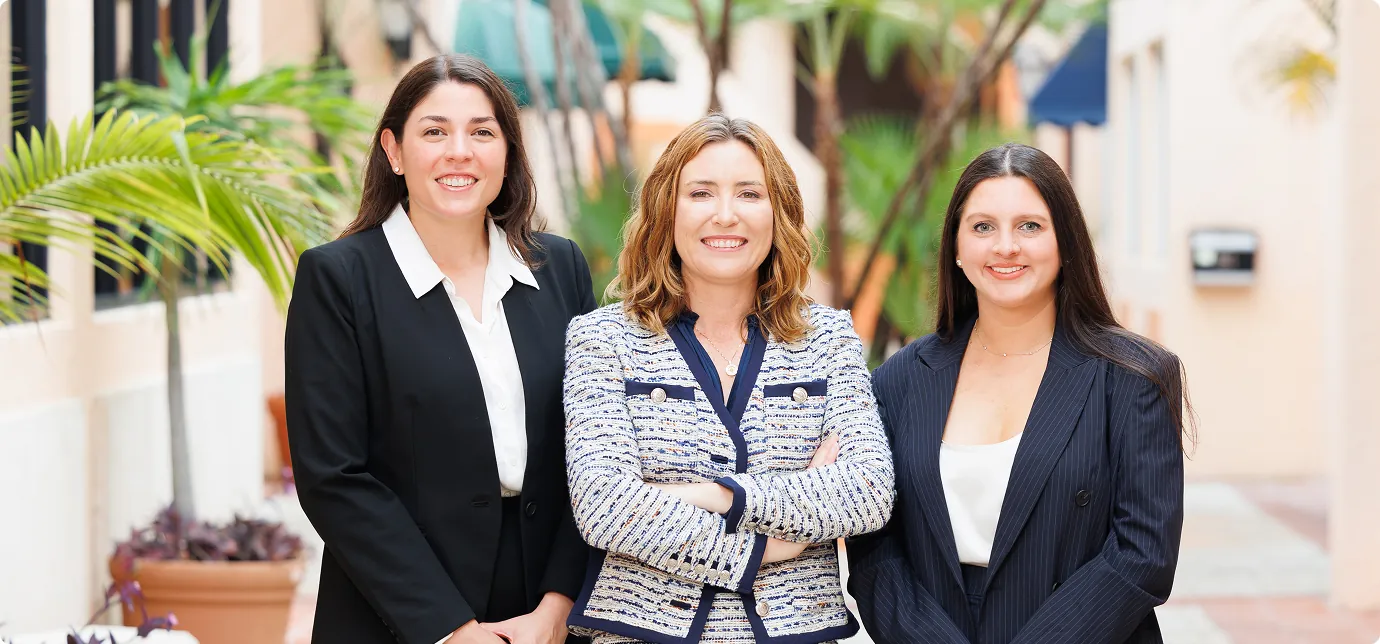
Lindsey Gale
Lindsey Gale’s practice is committed to representing people affected by nursing home abuse. Her firm biography identifies nursing home abuse, catastrophic injury, and wrongful death among her areas of focus. That experience matters when a family needs someone who understands both the resident’s medical history and the operational decisions that shaped the care provided. (pbglaw.com)
Why Tampa Nursing Home Cases Need a Local Records Plan
The nursing home chart may tell only part of the story. Tampa residents may receive treatment from an outside physician group, pharmacy, laboratory, wound-care provider, hospice organization, rehabilitation provider, or hospital. Each organization may create a separate record.
Location also determines where emergency records may be held. Tampa Fire Rescue provides emergency medical services within its jurisdiction, while Hillsborough County Fire Rescue serves unincorporated areas. The county’s 911 Office directs families to the agency that answered and responded to a particular call. A Tampa mailing address does not always establish which public-safety agency handled the event. (tampa.gov)
That distinction can matter when a parent was transported from a facility near the city boundary. The ambulance patient-care report, dispatch information, nursing home transfer paperwork, and hospital admission record may each describe the resident’s condition at a different point in time.
A Tampa Long-Term-Care Snapshot
The U.S. Census Bureau estimated Tampa’s population at 413,554 in 2025. Census data for 2020–2024 show that 13.7% of residents were 65 or older and 28.3% spoke a language other than English at home. Those figures help explain why nursing home care in Tampa involves a large population and families who may be coordinating care across households, states, and languages. (census.gov)
An AHCA action report identified 30 community nursing homes with 3,893 licensed beds in Hillsborough County as of August 11, 2023. A later 2026 certificate-of-need application reported 90.30% countywide occupancy for the 12 months ending June 30, 2025. These county figures are not findings about any individual provider. They show the scale and utilization of the local long-term-care system. (ahca.myflorida.com)
The CMS snapshot below contains 18 provider records with TAMPA in the agency’s City/Town field.
CMS Information for Nursing Homes With Tampa Mailing Addresses
The Centers for Medicare & Medicaid Services publishes information about Medicare- and Medicaid-certified nursing homes through its Provider Information dataset. The dataset includes provider identity, ratings, staffing fields, ownership information, inspection-related information, and other measures defined in the CMS nursing home data dictionary. (data.cms.gov)
CMS derives the overall rating from health inspections, staffing, and quality measures. Its categories are:
- 1 star: much below average
- 2 stars: below average
- 3 stars: average
- 4 stars: above average
- 5 stars: much above average
These are CMS categories, not assessments by Rafferty Domnick Cunningham & Yaffa. An unavailable rating is not a zero. A rating does not establish that abuse occurred, prove civil liability, or determine what happened to an individual resident. The CMS Five-Star Quality Rating System explains how the agency develops and updates its ratings. (cms.gov)
The table contains all supplied records for which the CMS mailing-city field was TAMPA. A mailing address may not be within Tampa’s exact municipal limits. The CCN identifies the specific CMS-certified provider.
Source: CMS Provider Information; processing date August 1, 2026; retrieved September 11, 2026.
Ratings shown below remain the dated snapshot. Select a facility name to review its Medicare Care Compare profile, which may contain newer information.
|
Facility / Medicare profile |
CCN |
Overall stars
|
|
105644 |
1 / 5 | |
|
105417 |
1 / 5 | |
|
105650 |
3 / 5 | |
|
105351 |
3 / 5 | |
|
105326 |
5 / 5 | |
|
105553 |
3 / 5 | |
|
105725 |
2 / 5 | |
|
105884 |
4 / 5 | |
|
105305 |
2 / 5 | |
|
105700 |
4 / 5 | |
|
105591 |
4 / 5 | |
|
105234 |
1 / 5 | |
|
106015 |
2 / 5 | |
|
105140 |
2 / 5 | |
|
105491 |
2 / 5 | |
|
105299 |
3 / 5 | |
|
105426 |
3 / 5 | |
|
105891 |
3 / 5 |
On smaller screens, the table may be scrolled horizontally.
CMS ratings change as surveys and other data are added. Use the CCN to confirm that you are viewing the correct provider. A high or low rating does not determine whether a particular resident received negligent care.
Where Important Evidence May Be Created in Tampa
An incident may occur in a resident’s room, bathroom, hallway, dining area, therapy space, or outdoor area. The clearest evidence may be created later.
If the resident was transferred to Tampa General Hospital, St. Joseph’s Hospital, AdventHealth Tampa, or another receiving facility, the hospital record may provide an independent, time-stamped account of the resident’s condition. Emergency records may document wounds, fractures, dehydration, infection, medication concerns, diagnostic findings, or statements made during admission.
The transfer packet matters too. Federal regulations require nursing facilities to maintain complete, accurately documented, accessible medical records and to exchange information needed for a medically appropriate hospital transfer. The receiving hospital’s chart can be compared with the nursing home’s assessments, physician notifications, medication records, and transfer documentation. 42 CFR § 483.70 addresses nursing home administration, medical records, outside resources, and hospital transfer agreements. (ecfr.gov)
Nursing Home Abuse and Neglect Matters RDCY Handles
Nursing home cases may involve intentional mistreatment, inadequate care, or both. RDCY’s Florida nursing home resources address matters involving:
- Physical and sexual abuse
- Emotional and mental abuse
- Financial abuse and exploitation
- Bedsores and pressure injuries
- Infections and sepsis
- Falls and fractures
- Medication errors
- Dehydration or malnutrition
- Wandering or elopement
- Delayed medical evaluation or hospital transfer
- Wrongful death
The presence of one of these conditions does not by itself establish negligence. The investigation must address the resident’s known risks, the care plan, what staff did, and whether a failure caused or worsened an injury.
What to Do When Something Does Not Seem Right
For a concern that is not an emergency:
- Ask whether the director of nursing, administrator, attending clinician, or other responsible professional has been notified.
- Speak with your parent privately when possible. Listen without suggesting answers.
- Ask for a care conference and a plain explanation of what changed.
- Record the names and roles of everyone who speaks with you.
- Note when symptoms appeared, when treatment was provided, and whether there was a hospital transfer.
- Keep original files rather than editing photographs or replacing them with screenshots.
- Ask what authorization the facility needs to discuss care or release records.
- Report appropriate concerns to DCF, AHCA, or the Florida Long-Term Care Ombudsman Program.
Do not access an account, portal, or record you are not authorized to use. Do not confront individual staff members in a way that could put the resident at greater risk. Focus first on safety, medical care, and accurate documentation.
A Family Checklist for the Initial Phone Conversation
Keep these notes together so you can explain the concern clearly. Separate what you personally observed from what someone else reported.
- Important dates: admission, first change noticed, falls, wounds, medication changes, transfers, hospital visits, and discharge dates.
- Changes in condition: pain, bruising, wounds, weight loss, dehydration, confusion, fear, withdrawal, mobility changes, or unusual financial activity.
- Staff conversations: names, roles, dates, explanations, promised follow-up, and questions that were not answered.
- Hospital or medical visits: receiving hospital, EMS agency if known, tests, diagnoses, treatment, and discharge instructions.
- Original documents already available: photographs, messages, bills, medication lists, discharge papers, incident-related paperwork, and voicemails.
- Authority: any resident authorization, health care power of attorney, designation of health care surrogate, guardianship order, or estate document already in your possession.
- Unanswered questions: what you want the facility, care team, agency, or lawyer to explain.
A complete medical record is not required for an initial phone conversation. Preserve originals, keep health information private, and ask how documents should be handled before sending sensitive material.
Evidence Worth Preserving
A nursing home stay can generate records across several organizations. Depending on the concern, an investigation may examine:
- Admission assessments and care plans
- Minimum Data Set assessments
- Nursing and certified nursing assistant notes
- Medication and treatment administration records
- Physician orders and notification records
- Fall-risk assessments and post-fall evaluations
- Skin assessments, wound measurements, and photographs
- Weight, nutrition, hydration, and intake records
- Laboratory, radiology, and diagnostic results
- Hospital and emergency-department records
- EMS patient-care and dispatch records
- Pharmacy, hospice, therapy, and outside-provider records
- Staffing schedules and assignment sheets
- Electronic chart audit information
- Incident reports and internal communications, when legally obtainable
- Surveillance video or access-control information
- Facility ownership, management, and insurance records
Photographs should be kept in their original format when possible. Preserve the device file, date information, messages, and context. If surveillance footage or electronic data may exist, prompt action may be needed because ordinary retention practices can result in deletion.
Medical Decline Is Not Automatically Negligence
Nursing home residents often have several health conditions at once. Weakness, dementia, vascular disease, infection, medication effects, poor appetite, reduced mobility, and terminal illness can all contribute to a fall, wound, weight change, or other decline.
The legal question is more specific. Did staff recognize the risk? Was an appropriate care plan created? Was it followed? Did staff notify a clinician and respond reasonably when the resident’s condition changed? Did a delay or omission cause an avoidable injury or make an existing condition worse?
That analysis usually requires comparison of the nursing home chart with hospital records, outside-provider information, witness accounts, and qualified medical review.
Florida Nursing Home Rights, Records, and Deadlines
Florida’s Nursing Home Residents’ Bill of Rights protects dignity, privacy, communication, participation in treatment, appropriate health care, and the ability to raise grievances without reprisal. (leg.state.fl.us)
Access to nursing home records
Under Florida Statutes § 400.145, a facility must provide records after receiving a compliant written request from a competent resident or authorized representative. The statute provides different requirements for current, former, and deceased residents. It generally allows 14 working days for a current resident’s records and 30 working days for a former resident’s records. (leg.state.fl.us)
An adult child should not assume that family relationship alone is enough. The request may require the resident’s authorization or documents establishing authority under Florida law.
Time limits and presuit requirements
Florida Statutes § 400.0236 generally requires a Chapter 400 damages action to be brought within two years of the incident or its discovery—or when it should have been discovered through due diligence. The statute also contains a four-year outer limit in most cases and a limited extension for fraudulent concealment or intentional misrepresentation. (leg.state.fl.us)
Before filing suit, Florida Statutes § 400.0233 requires a presuit investigation and notice. A lawsuit generally may not be filed during the 75-day evaluation period after notice is mailed. Determining the correct claimant, defendants, legal theory, and deadline can take time. (leg.state.fl.us)
Arbitration agreements
A document signed during admission may contain an arbitration provision. Federal regulations state that a Medicare- or Medicaid-certified nursing facility may not require a resident to sign a binding arbitration agreement as a condition of admission or continued care. The agreement must also provide a 30-day right to rescind and satisfy other requirements. Enforceability still depends on the agreement, the authority of the person who signed it, and applicable law. Keep the complete admission packet for review. 42 CFR § 483.70 contains the federal requirements. (ecfr.gov)
Need help sorting records, authority, and possible deadlines? Call RDCY and explain what happened. Call (561) 516-5168.
Fault, Liability, and Insurance
A nursing home case may involve more than the company name displayed outside the building. Depending on the evidence and Florida law, potentially responsible parties may include the licensed operator, a management or consulting company, managing employees, direct caregivers, or an outside provider.
Liability does not follow automatically from an ownership chart. The evidence must connect a person or organization to a legal duty, a negligent act or rights violation, causation, and harm. Florida Statutes § 400.023 governs civil enforcement of nursing home residents’ rights and places limits on who may be sued under Chapter 400. (leg.state.fl.us)
Defendants may argue that a resident’s medical condition, conduct, family decisions, or another provider caused the harm. A resident’s dementia, frailty, or tendency to fall is not automatically fault; those conditions may instead show why assessment, supervision, and care planning were needed. When Florida’s comparative-fault law applies, responsibility assigned to the claimant or others may affect recovery. Florida Statutes § 768.81 addresses comparative fault. (leg.state.fl.us)
Insurance may affect how a claim is investigated and resolved. Coverage can involve multiple policies, companies, policy periods, or retained risk. Medicare or Medicaid payment for the resident’s care is separate from liability insurance that may respond to a civil claim.
Rafferty Domnick Cunningham & Yaffa
Nursing home abuse legal help
Compensation in a Nursing Home Case
Available damages depend on the legal claim, the evidence, and whether the resident is living or deceased. A claim may involve:
- Additional medical expenses caused by the injury
- Pain and suffering
- Disability or loss of function
- Mental anguish or emotional harm
- Costs associated with relocation or additional care
- Financial losses caused by exploitation
- Funeral and related losses in a wrongful death matter
- Other damages permitted by Florida law
Punitive damages are not available simply because care was poor. Florida Statutes § 400.0237 imposes additional standards and procedures for punitive-damages claims in nursing home cases. Florida Statutes § 768.21 addresses damages available under Florida’s Wrongful Death Act. (leg.state.fl.us)
Government Reports and Government Claims Are Different
DCF receives reports of suspected abuse, neglect, or exploitation of vulnerable adults. AHCA regulates licensed health care facilities and investigates matters within its authority. The Florida Long-Term Care Ombudsman Program advocates for residents and helps address concerns involving rights, care, communication, transfer, and discharge.
An agency report does not automatically prove or disprove civil liability. Regulators and civil courts may consider different legal standards, evidence, and remedies.
Most nursing home cases involve private entities. A separate issue may arise if a public agency caused an injury—for example, through the conduct of a municipal or county service. Florida’s sovereign-immunity statute can impose written-notice requirements, waiting periods, and recovery limitations. Requesting an EMS record or making an agency complaint is not necessarily the same as providing formal notice of a claim. (leg.state.fl.us)
Tampa Courts, Hospitals, EMS, and Agencies
The Thirteenth Judicial Circuit serves Hillsborough County. Whether a case belongs in a Hillsborough County court depends on venue, the parties, and the claims asserted. The Hillsborough County Clerk’s HOVER system provides access to many nonconfidential court indexes, dockets, and document images. (fljud13.org)
Hospital and EMS records may be important even when the resident returned to the nursing home. Families with proper authority can find record-request guidance through:
- Tampa General Hospital Medical Records
- BayCare Medical Records, including St. Joseph’s Hospital
- AdventHealth Medical Records
- Tampa Fire Rescue records information
- Hillsborough County 911 Office, which identifies the appropriate responding agency
Useful government contacts include:
- Florida DCF Adult Protective Services: 1-800-962-2873
- AHCA Health Care Facility Complaint Form
- AHCA Consumer Complaint Call Center: 1-888-419-3456
- Florida Long-Term Care Ombudsman Program: 1-888-831-0404
- West Central Ombudsman District, serving Hillsborough County: 813-558-5591
How RDCY Investigates a Nursing Home Case
The investigation usually begins with a focused timeline: the resident’s condition before the event, the first observed change, what staff said, when a clinician was contacted, and what happened next.
Depending on the matter, the legal team may:
- Determine who has authority to act for the resident or estate.
- Identify the licensed operator, management organizations, and outside care providers.
- Obtain nursing home, hospital, EMS, pharmacy, and other relevant records.
- Compare the resident’s known risks with assessments and the care plan.
- Examine medication, skin, nutrition, hydration, fall, and monitoring records.
- Review staffing and electronic chart information when relevant.
- Interview witnesses and identify who observed each event.
- Consult qualified medical professionals about care and causation.
- Evaluate presuit requirements, filing deadlines, damages, and available insurance.
The purpose is not to treat every poor outcome as misconduct. It is to determine whether the evidence connects a preventable failure to the resident’s injury.
Cities We Serve for Nursing Home Abuse Cases in Hillsborough County
- Plant City
- Tampa
- Temple Terrace
Related Florida Nursing Home Resources
Families may also find these RDCY resources useful:
Ready to discuss what changed? Have the facility name, important dates, hospital information, available documents, and authority papers nearby. Call RDCY at (561) 516-5168.
Talk With RDCY by Phone
You do not need to decide for yourself whether negligence occurred before calling. Explain what changed, when it happened, what staff told you, and whether your parent went to a hospital. Mention whether your parent can authorize the release of information and identify any authority documents already available.
For this page, the firm is accepting inquiries by phone only. To ask about a free consultation, call Rafferty Domnick Cunningham & Yaffa at (561) 516-5168.
Tampa FL Nursing Home Abuse FAQs
These answers provide general information. The resident’s condition, legal authority, available evidence, defendants, and applicable law can change the analysis.
I live outside Florida—what can I do if I am worried about my parent in a Tampa nursing home?
You can raise concerns, request a care conference, document what you have been told, and contact Florida authorities from another state. If your parent can make decisions, ask whether your parent will authorize the nursing home and medical providers to discuss care with you.
Family concern and legal authority are different. Being an adult child does not automatically give you access to the complete chart or authority to file a lawsuit. Access may depend on the resident’s permission or documents establishing you as a legally authorized representative. If your parent appears to be in immediate danger, call 911 rather than waiting for records or a care conference.
Sources: HHS guidance on family access to health information; HHS guidance on communicating with family members; HHS personal-representative guidance.
What should I do today if I suspect abuse or neglect in a Tampa nursing home?
Address immediate safety and medical needs first. Call 911 if the resident appears to be in danger or needs emergency treatment. For a nonemergency concern, ask for a medical assessment, record what changed, preserve original documents, and note who gave each explanation.
Known or suspected abuse, neglect, or exploitation of a vulnerable adult can be reported to the Florida Abuse Hotline at 1-800-962-2873. Care-quality complaints may also be submitted to AHCA. The West Central Ombudsman District serves Hillsborough County and may help with care, communication, resident-rights, transfer, or discharge concerns. These agencies have different roles, and reporting to one may not replace contacting another.
Sources: Florida DCF Adult Protective Services; AHCA Health Care Facility Complaint Form; West Central Ombudsman District; Florida Statutes § 415.1034.
Can I get my parent’s nursing home and hospital records?
You may be able to obtain the records if your parent authorizes the release or you have legal authority to act as the resident’s representative. Being the resident’s adult child does not automatically provide unrestricted access under HIPAA or Florida law.
Florida Statutes § 400.145 sets procedures and time periods for nursing home records. Current and former residents have different timelines, and additional requirements apply after death. Hospitals and EMS agencies have their own authorization forms and record systems. Ask each record holder what documentation it requires, but keep copies of the request and proof of submission. A lawyer can review the authority documents and determine which records may be needed.
Sources: Florida Statutes § 400.145; HHS guidance on health care powers of attorney; Tampa General Hospital Medical Records.
Can I file a nursing home lawsuit for my living parent in Florida?
Only if you have the authority required for the particular claim. Florida law allows a resident, guardian, or qualifying person or organization acting on the resident’s behalf with the required consent to bring certain Chapter 400 claims. Adult-child status alone does not create that authority.
The starting point is whether your parent can make decisions and wants to pursue the matter. If your parent lacks capacity, a lawyer may need to examine power-of-attorney, health care surrogate, or guardianship documents. Authority to receive health information is not always identical to authority to control litigation, so the language and legal effect of the documents matter.
Sources: Florida Statutes § 400.023; HHS personal-representative guidance; Florida Statutes § 400.145.
How long do I have to bring a Florida nursing home abuse claim?
Florida Statutes § 400.0236 generally provides a two-year limitation period measured from the incident, discovery of the incident, or when it should have been discovered through due diligence. The statute also contains a four-year outer limit in most cases and a limited extension involving fraudulent concealment or intentional misrepresentation.
A Chapter 400 claim also requires presuit investigation and notice. After notice is mailed, the statute generally provides a 75-day evaluation period during which suit may not be filed. These rules can interact with wrongful death, government-entity, and other deadlines. Do not calculate the deadline solely from when a family member first became suspicious.
Sources: Florida Statutes § 400.0236; Florida Statutes § 400.0233.
What evidence is important in a Tampa nursing home case?
The most useful evidence usually shows the resident’s condition, known risks, planned care, actual care, and what happened after the first change. Nursing home assessments, care plans, medication records, nursing notes, skin or fall records, photographs, staffing information, hospital records, and EMS reports may all matter.
Preserve original files and make a timeline while events are fresh. Note who personally observed each event and who repeated information received from someone else. Tampa Fire Rescue, Hillsborough County agencies, hospitals, pharmacies, and outside clinicians may hold records that do not appear in the nursing home chart. Prompt preservation may be important if video or electronic audit information exists.
Sources: 42 CFR § 483.70—medical records and outside resources; Tampa Fire Rescue; Hillsborough County 911 Office; Tampa General Hospital Medical Records.
Who may be responsible for nursing home abuse or neglect in Tampa FL?
Responsibility may extend beyond the individual employee who provided care. Depending on the evidence and Florida law, potential defendants may include the licensed operator, a management or consulting company, managing employees, direct caregivers, or an outside medical provider.
An owner, parent company, or contractor is not liable merely because its name appears in a corporate record. The evidence must connect the party to a duty, negligent act or rights violation, causation, and injury. Insurance and contractual arrangements may also affect the investigation. Florida law places specific limits on which parties may be sued under a Chapter 400 nursing home claim.
Sources: Florida Statutes § 400.023; 42 CFR § 483.70—administration and outside resources; Florida Statutes § 768.81.
What compensation may be available in a Florida nursing home case?
Compensation depends on the claim and proven harm. Recoverable damages may include additional medical expenses, pain and suffering, mental anguish, disability, financial losses, and other losses connected to the injury. A wrongful death action has separate rules governing who brings the claim and which damages may be recovered.
Punitive damages require more than ordinary negligence. Florida law imposes additional pleading, evidentiary, and procedural requirements before punitive damages may be pursued in a nursing home case. No universal settlement value applies because the resident’s injuries, prior condition, evidence, defendants, insurance, and recoverable damages differ from case to case.
Sources: Florida Statutes § 400.023; Florida Statutes § 400.0237; Florida Statutes § 768.21.
What do CMS star ratings tell me about a Tampa nursing home?
CMS star ratings provide a federal comparison based on health inspections, staffing, and quality measures. One star means much below average, two below average, three average, four above average, and five much above average under the CMS system.
A rating is a starting point, not a finding about your parent’s care. Ratings may change as CMS receives new survey and performance information. They do not prove that abuse occurred, establish civil liability, or replace review of the resident’s chart and circumstances. Use the facility’s CCN to confirm the exact provider because names and operators can change, and a Tampa mailing address may not match precise municipal boundaries.
Sources: CMS Provider Information dataset; CMS Five-Star Quality Rating System; CMS Five-Star Technical Users’ Guide.
What happens when I call RDCY about a Tampa nursing home concern?
You can begin by explaining the facility name, what changed, the important dates, what staff told you, and whether your parent received hospital or emergency care. Mention whether your parent can authorize access to information and identify any authority documents already available.
Keep your timeline, original photographs, messages, discharge papers, medication information, and questions nearby. You do not need to obtain the complete nursing home chart before calling. The firm can ask follow-up questions and explain what information may be needed to evaluate the matter. For this page, inquiries are accepted by phone only at (561) 516-5168.
Sources: Rafferty Domnick Cunningham & Yaffa Nursing Home Abuse Practice; Attorney Lindsey Gale; Florida Statutes § 400.145.
Sources
Firm sources
- Rafferty Domnick Cunningham & Yaffa
- About Rafferty Domnick Cunningham & Yaffa
- Attorney Lindsey Gale
- Florida Nursing Home Abuse Lawyer
- Florida Nursing Home Patient Rights
- Florida Nursing Home Abuse Damages
- Florida Nursing Home Physical and Sexual Abuse
- Florida Nursing Home Emotional and Mental Abuse
- Florida Nursing Home Financial Abuse
- Florida Nursing Home Bedsores
- Florida Nursing Home Infections and Sepsis
- Florida Nursing Home Wrongful Death
- Florida Assisted Living Abuse
Florida law and government sources
- Florida Statutes § 400.022—Residents’ Rights
- Florida Statutes § 400.023—Civil Enforcement
- Florida Statutes § 400.0233—Presuit Notice and Investigation
- Florida Statutes § 400.0236—Statute of Limitations
- Florida Statutes § 400.0237—Punitive Damages
- Florida Statutes § 400.145—Copies of Resident Records
- Florida Statutes § 415.1034—Mandatory Reporting
- Florida Statutes § 768.21—Wrongful Death Damages
- Florida Statutes § 768.28—Sovereign Immunity
- Florida Statutes § 768.81—Comparative Fault
- Florida DCF Adult Protective Services
- AHCA Health Care Facility Complaint Form
- AHCA Consumer Complaint Call Center
- Florida Long-Term Care Ombudsman Program
- Florida Ombudsman District Offices
- AHCA Hillsborough County Action Report
- AHCA Certificate-of-Need Application 10931
Federal, CMS, medical-record, and local sources
- 42 CFR § 483.70—Nursing Facility Administration
- CMS Provider Information Dataset
- CMS Nursing Home Data Dictionary
- CMS Five-Star Quality Rating System
- CMS Five-Star Technical Users’ Guide
- HHS Guidance on Family Access to Health Information
- HHS Guidance on Communicating With a Patient’s Family
- HHS Guidance on Health Care Powers of Attorney
- HHS Personal-Representative Guidance
- U.S. Census Bureau QuickFacts for Tampa
- Thirteenth Judicial Circuit
- Hillsborough County Clerk Court Records
- Tampa Fire Rescue
- Hillsborough County Fire Rescue
- Hillsborough County 911 Office
- Tampa General Hospital Medical Records
- BayCare Medical Records
- AdventHealth Medical Records
Rafferty Domnick Cunningham & Yaffa
Nursing home abuse legal help