Nursing Home Abuse Lawyer in St. Petersburg FL
When you live hours away from your parent, a troubling phone call can leave you unsure what to do next. Perhaps your parent has fallen, lost weight, developed a wound, become unusually withdrawn, or been transferred to a hospital. You may be getting different explanations from different people—or no clear explanation at all.
A change in health does not automatically mean a nursing home was negligent, but you are entitled to ask careful questions. The first priorities are your parent’s immediate safety, an appropriate medical assessment, and preservation of information that may explain what happened.
What to Do Now
If your parent appears to be in immediate danger, call 911. For other concerns, start with these steps:
- Ask about care. Request a medical assessment and ask whether the attending clinician has been notified.
- Record the facts. Note what changed, when you noticed it, and what staff told you. Preserve documents and original photos already available to you.
- Get the right help. Report suspected abuse or neglect to the Florida Abuse Hotline at 1-800-962-2873. For questions about a potential legal claim, contact RDCY.
Live Outside Florida? Start Here.
You can raise concerns about a parent in a St. Petersburg nursing home even when you live in another state. Ask for a scheduled care conference and a reliable staff contact. If your parent can make decisions, ask whether they will authorize the facility to discuss care with you. Being an adult child does not automatically give you access to the complete medical chart.
Before an initial conversation with a lawyer, gather the facility’s name, important dates, a short description of what changed, and any photos, messages, discharge papers, or authority documents you already have. You do not need to assemble a complete medical record before asking questions.
Keep track of who observed each event and who relayed information to you. The West Coast Ombudsman District serves Pinellas County and can help with resident-rights and care concerns. See HHS guidance on family access to health information for the distinction between family involvement and legal authority.
Rafferty Domnick Cunningham & Yaffa
Nursing home abuse legal help
Nursing Home Experience at RDCY
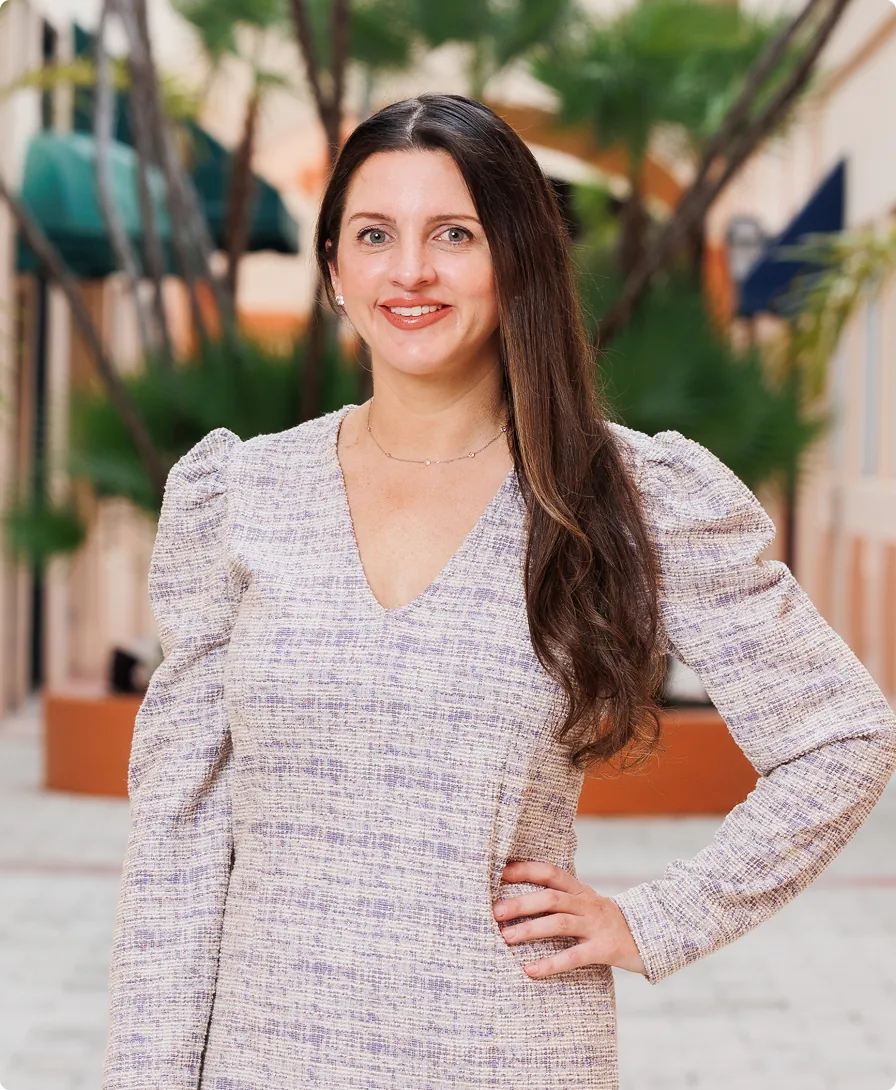
Lindsey Gale
Rafferty Domnick Cunningham & Yaffa
Lindsey Gale’s practice focuses on representing people affected by nursing home abuse, including catastrophic injury and wrongful death matters. Her firm biography lists admission to the Florida Bar in 2017.
RDCY represents people and families in serious injury litigation throughout Florida. Nursing home investigations may involve care plans, nursing notes, medication records, hospital records, staffing information, and accounts from people who observed the resident. Learn about the firm.
Why St. Petersburg Nursing Home Cases Can Be Difficult to Reconstruct
Care may be delivered by many people working for different organizations. A nursing home may use an outside pharmacy, laboratory, physician group, wound-care provider, transportation company, or management company. If a resident is transferred, additional records may be created by EMS personnel and hospital clinicians.
This means the nursing home chart may tell only part of the story. Hospital records may document a condition differently. Pharmacy data may show when a prescription was filled or changed. Electronic chart audit information may help establish when an entry was created or edited. Family messages may show when concerns were first raised.
Distance can make those gaps harder to see. If you live outside Florida, establish one reliable point of contact at the facility, ask for scheduled care conferences, and confirm what authorization the facility needs before discussing protected health information. Being your parent’s adult child does not automatically give you access to the complete chart or authority to make legal decisions.
A Local Long-Term-Care Snapshot
St. Petersburg had an estimated population of 267,102 in 2024, according to the U.S. Census Bureau. Census data also show that 21.1% of city residents were 65 or older.
Pinellas County’s long-term-care system is correspondingly large. A 2026 Florida Agency for Health Care Administration agency action report, drawing on state population and nursing home data, identified 66 community nursing homes with 7,485 licensed beds in the county. Those facilities reported 81.41% occupancy for the 12 months ending June 30, 2025.
The CMS snapshot reproduced below contains 23 provider records with SAINT PETERSBURG in the City/Town field. These figures do not show whether abuse occurred in any particular facility. They explain why a St. Petersburg investigation often involves a large and interconnected network of providers, regulators, hospitals, and records custodians.
CMS Information for Nursing Homes With St. Petersburg Mailing Addresses
The Centers for Medicare & Medicaid Services, commonly called CMS, publishes data about Medicare- and Medicaid-certified nursing homes. The CMS Provider Information dataset includes ratings, inspection-related fields, staffing information, ownership data, and program designations. The CMS nursing home data dictionary defines each field.
The overall rating is a one-to-five-star measure derived from health inspections, staffing, and quality measures. Higher numbers indicate a higher CMS rating. CMS uses this scale: 1 star = much below average; 2 stars = below average; 3 stars = average; 4 stars = above average; 5 stars = much above average. These are CMS rating categories, not the firm’s assessments. “Not available in snapshot” means the supplied CMS record did not report an overall rating; it does not mean zero stars. The CMS abuse icon reflects specified abuse- or neglect-related survey citations under CMS criteria. SFF means the facility was participating in the Special Focus Facility program in the snapshot; SFF Candidate means it was eligible for selection but was not identified as an active SFF. CMS explains these distinctions in its Five-Star Quality Rating System and Special Focus Facility materials.
This table includes every record in the supplied snapshot for which the CMS City/Town field was SAINT PETERSBURG. Some mailing addresses may fall outside St. Petersburg municipal limits. It is not a complete directory of every licensed facility, assisted living residence, or other long-term-care provider in the area. The CCN identifies the exact CMS-certified provider.
Source: CMS Provider Information; processing date August 1, 2026; retrieved September 11, 2026.
Choose a facility name to open its official Medicare Care Compare profile. There you can review current ratings and inspection information. Ratings below remain the dated CMS snapshot described above; the linked profile may have newer information.
On smaller screens, scroll the table horizontally if needed. Medicare profiles open in a new tab.
CMS ratings, icons, and program designations can change as surveys and other data are added. Readers should use each facility’s CCN to check the latest CMS record. The absence of an abuse icon is not an assurance about care, and a rating, icon, or Special Focus designation does not by itself determine civil liability or establish what happened to an individual resident.
Where Important Evidence May Be Created
The event that draws a family’s attention may happen in a resident’s room, bathroom, dining area, hallway, therapy space, or outdoor area. The most useful evidence, however, may be created somewhere else.
A hospital evaluation can provide an independent, time-stamped description of a resident’s condition. For example, records from Orlando Health Bayfront Hospital or another receiving hospital may document wounds, dehydration, infection, medication concerns, fractures, or statements made during admission. EMS records may show the resident’s condition when crews arrived and what staff reported.
Other evidence may be held by an outside pharmacy, laboratory, physician, wound-care provider, hospice organization, rehabilitation provider, or medical equipment company. Identifying every organization involved in the resident’s care is often one of the first important steps.
Nursing Home Abuse and Neglect Cases the Firm Handles
Nursing home cases can involve intentional mistreatment, inadequate care, or both. Rafferty Domnick Cunningham & Yaffa’s Florida resources address matters involving:
- Physical and sexual abuse
- Emotional and mental abuse
- Financial abuse and exploitation
- Bedsores and pressure injuries
- Infections and sepsis
- Falls and fractures
- Medication errors
- Dehydration or malnutrition
- Wandering or elopement
- Delayed medical evaluation or hospital transfer
- Wrongful death
The presence of one of these conditions does not automatically establish negligence. The investigation must address what risks were known, what care was planned, what staff actually did, and whether a failure caused additional harm.
What to Do When Something Does Not Seem Right
If your parent appears to be in immediate danger, call 911. You can also report suspected abuse, neglect, or exploitation to the Florida Abuse Hotline at 1-800-962-2873.
For a concern that is not an emergency:
- Ask for a medical assessment. Find out whether the attending clinician has been notified and whether the resident needs hospital evaluation.
- Speak with your parent privately when possible. Listen without suggesting answers, and respect the resident’s ability to make decisions.
- Write down the timeline. Record dates, names, symptoms, explanations, transfers, and unanswered questions.
- Confirm your authority. Ask what authorization the facility needs to discuss care or release records.
- Preserve what you already have. Save photographs, emails, portal messages, bills, discharge papers, and voicemails.
- Use the appropriate reporting channel. A complaint may be made to AHCA, while the Florida Long-Term Care Ombudsman Program can help residents and families address care, communication, discharge, and resident-rights concerns.
A regulatory report and a civil claim serve different purposes. Making a report does not start a lawsuit or stop a civil filing deadline.
A Family Checklist for Your Next Conversation
Keep these notes together so you can describe the concern clearly. Separate what you saw yourself from what someone else reported.
- The basics: resident’s name, facility name, your relationship, and your contact details.
- Changes noticed: symptoms or behavior, the first date noticed, and who observed the change.
- Staff conversations: names, roles, dates, explanations, and promised follow-up.
- Medical visits: clinician contacts, hospital visits, transfers, and discharge dates.
- Documents available: original photographs, messages, discharge papers, bills, medication lists, and your timeline.
- Authority documents: any resident authorization, power of attorney, or guardianship documents already in your possession.
- Questions still unanswered: what you want the care team or lawyer to clarify.
Preserve originals, keep health information private, and do not alter records or access material you are not authorized to obtain. A complete chart is not required to begin asking questions.
Evidence Worth Preserving
A family usually sees only a small portion of the documentation created during a nursing home stay. Depending on the issue, an investigation may examine:
- Admission assessments and care plans
- Minimum Data Set assessments
- Nursing and certified nursing assistant notes
- Medication and treatment administration records
- Fall-risk assessments and post-fall evaluations
- Skin assessments, wound measurements, and photographs
- Weight, nutrition, hydration, and intake records
- Laboratory and diagnostic test results
- Physician orders and notification records
- Hospital, EMS, pharmacy, and outside-provider records
- Staffing schedules and assignment sheets
- Electronic chart audit trails
- Incident reports and internal communications, when legally obtainable
- Surveillance video and access-control information
- Facility contracts, ownership information, and insurance records
Do not alter photographs or discard the original files. Keep screenshots and messages in a secure place, and make a simple chronology while events are still fresh. If video or electronic data may exist, a lawyer can consider whether a prompt preservation request is appropriate.
Medical Decline Is Not the Same as Negligence
Older nursing home residents often have multiple medical conditions. Weakness, cognitive impairment, reduced mobility, infection, medication effects, vascular disease, poor appetite, and terminal illness can all contribute to a decline.
The occurrence of a fall, wound, infection, or weight change therefore does not answer the legal question. The National Academies’ review of nursing home resident safety notes that a fall may reflect the resident population’s high underlying risk and does not necessarily indicate poor care. Its discussion of nursing home care delivery likewise describes medical and functional factors that can increase the risk of pressure injuries and dehydration.
A case evaluation asks more specific questions. Was the risk recognized? Was an appropriate plan created? Was the plan followed? Did staff respond reasonably to a change? Did a delay or omission cause an avoidable injury or make an existing condition worse?
Florida Nursing Home Rights, Records, and Deadlines
Florida’s Nursing Home Residents’ Bill of Rights protects residents’ dignity, privacy, communication, participation in treatment, access to appropriate care, and ability to raise grievances without reprisal.
Florida Statutes section 400.023 controls who may bring certain claims. A living resident may bring an action, as may a guardian or a person acting on the resident’s behalf with the required consent. When the resident has died, the personal representative of the estate generally acts for the estate. An adult child should not assume that family relationship alone creates authority to sue.
Obtaining Nursing Home Records
Under Florida Statutes section 400.145, a facility must provide records after receiving a compliant written request from a competent resident or an authorized representative. The statute provides a 14-working-day period for records concerning a current resident and a 30-working-day period for a former resident.
Different requirements apply after a resident dies. The statute identifies who may request records and what documents must accompany the request. HIPAA also bases a family member’s access on the resident’s authorization or the person’s authority under applicable law. The U.S. Department of Health and Human Services explains that an adult child is not automatically the resident’s personal representative.
Time Limits and Presuit Requirements
Florida Statutes section 400.0236 generally requires a Chapter 400 damages action to begin within two years of the incident or its discovery—or when it should have been discovered through due diligence. The statute also contains a four-year outer limit in most cases and a limited extension involving fraudulent concealment or intentional misrepresentation.
Before suit, section 400.0233 requires notice and a presuit investigation. A lawsuit generally may not be filed during the 75-day evaluation period after notice is mailed.
These rules are not a reason to wait. Identifying the proper claimant, defendants, legal theory, and applicable deadline can take time.
Who May Be Responsible—and Where Insurance Fits
Florida law limits which parties may be sued under a Chapter 400 nursing home claim. Depending on the evidence, potential defendants may include the licensed operator, a management or consulting company, managing employees, or direct caregivers. Liability is not established merely because an organization appears in an ownership chart; the evidence must connect the party to a legal duty, a violation or negligent act, causation, and harm.
The facility or another responsible party may have liability insurance, but coverage questions are separate from the merits of the case. An insurer may request documents, authorizations, or a statement. Families should understand what is being requested before signing broad releases or assuming that an internal insurance review protects the resident’s civil rights.
What If the Resident’s Health or Conduct Contributed?
Facilities and insurers may argue that an injury resulted from age, disease, unavoidable decline, noncompliance with instructions, or the resident’s own conduct. Those issues require medical and factual analysis; they do not automatically defeat a claim.
Florida’s comparative-fault statute generally reduces damages in an applicable negligence action according to fault attributed to the claimant. It also bars recovery when a party is found more than 50% at fault for that party’s own harm, although the statute contains an exception for Chapter 766 medical-negligence actions. Which rule applies can depend on how the claim is legally classified.
A resident’s vulnerability is not necessarily fault. The central questions remain whether the responsible care providers recognized the resident’s needs and responded reasonably.
Compensation in a Nursing Home Case
Recoverable damages depend on the legal claim, the injury, causation, and the person authorized to bring the action. They may include:
- Additional medical and hospital expenses
- Costs of necessary care or treatment
- Physical pain and emotional suffering
- Loss of enjoyment of life
- Permanent impairment or disability
- Property or financial losses
- Funeral expenses and other damages available in a wrongful death action
Florida’s Wrongful Death Act determines which damages may be recovered by an estate and eligible survivors.
Punitive damages are not routine. Florida Statutes section 400.0237 requires an evidentiary showing and court approval before such a claim may be added.
Government Reports and Government-Entity Claims Are Different
DCF, AHCA, and the Ombudsman Program perform different functions. DCF receives reports of suspected abuse, neglect, and exploitation of vulnerable adults. AHCA regulates licensed health care facilities and investigates matters within its authority. Ombudsmen advocate for residents and help address concerns involving care, rights, communication, transfer, or discharge.
None of those processes automatically establishes civil liability. An agency may reach a regulatory conclusion using standards and evidence different from those required in a civil case.
Most nursing home cases involve private entities. If a state agency, county, municipality, or another public entity may be legally responsible, however, Florida’s sovereign-immunity statute can impose separate written-notice requirements and recovery limitations. Those rules should be evaluated promptly because another applicable deadline may expire sooner.
Rafferty Domnick Cunningham & Yaffa
Nursing home abuse legal help
St. Petersburg Courts, Hospitals, and Agencies
The Sixth Judicial Circuit serves Pinellas and Pasco counties. Its St. Petersburg Judicial Building is at 545 First Avenue North. Whether a particular case belongs there depends on venue, the parties, and the claims asserted.
Local hospital and EMS records can be important even when the resident was returned to the nursing home. They may document the resident’s condition before treatment, statements made during transfer, diagnostic findings, and the timing of the emergency response.
Useful official contacts include:
- Florida Department of Children and Families Adult Protective Services: 1-800-962-2873
- AHCA Health Care Facility Complaint Form: online complaints
- AHCA Consumer Complaint Call Center: 1-888-419-3456
- Florida Long-Term Care Ombudsman Program: 1-888-831-0404
- West Coast Ombudsman District, serving Pinellas County: 727-588-6912
How Rafferty Domnick Cunningham & Yaffa Evaluates a Case
An investigation usually begins with a focused timeline: the resident’s condition before the event, the first observed change, what staff said, when a clinician was contacted, and what happened next.
The legal team may then:
- Determine who has authority to act for the resident or estate.
- Identify the licensed operator, management entities, and care providers.
- Obtain nursing home, hospital, EMS, pharmacy, and outside-provider records.
- Compare the resident’s known risks with the care plan and documented care.
- Review medication administration, skin, nutrition, fall, and monitoring records.
- Examine staffing and electronic audit information where relevant.
- Consult qualified medical professionals about standard of care and causation.
- Assess legal deadlines, presuit requirements, damages, and available insurance.
The purpose is not to treat every poor outcome as misconduct. It is to determine whether the evidence supports a connection between a preventable failure and a resident’s injury.
Cities We Serve for Nursing Home Abuse Cases in Pinellas County
- Clearwater
- Dunedin
- Largo
- Pinellas Park
- Seminole
- St. Petersburg
- Tarpon Springs
Related Florida Nursing Home Resources
Families may also find these firm resources helpful:
Tell RDCY What Changed
Rafferty Domnick Cunningham & Yaffa offers a free consultation. Call (561) 516-5168 to discuss your concern. Keep the facility name, important dates, and a short description of what changed nearby for the call.
In your initial summary, identify the nursing home, describe the change that concerns you, and give the important dates. Mention any hospital transfer and whether the resident can authorize discussion of care. Keep available records and your family checklist nearby; ask how to provide documents before sending sensitive material.
When you speak with the firm, ask what additional information is needed, who can authorize record requests, and how the firm determines whether it can take the matter. Contacting the firm does not itself establish representation. You do not need to decide whether negligence occurred before asking for a consultation.
St. Petersburg FL Nursing Home Abuse FAQs
These answers address general questions about St. Petersburg nursing home concerns. The resident’s condition, the family member’s legal authority, the evidence, and the nature of the claim can change the analysis.
I live outside Florida—what can I do if I am worried about my parent in a St. Petersburg nursing home?
You can raise concerns, request a care conference, document what you have been told, and contact Florida authorities from another state. If your parent can make decisions, ask whether your parent will authorize the facility to speak with you. Federal HIPAA guidance permits providers to share information relevant to a family member’s involvement in care when the patient agrees, does not object, or—in appropriate circumstances—is incapacitated and the provider determines disclosure is in the patient’s best interests.
Distance should not stop you from reporting an urgent concern. Call 911 if your parent appears to be in immediate danger. Suspected abuse, neglect, or exploitation can be reported to the Florida Abuse Hotline. The West Coast Ombudsman District serves Pinellas County and may help address resident-rights, care, or communication concerns.
Sources: HHS guidance on communicating with a patient’s family; Florida DCF Adult Protective Services; Florida Ombudsman district offices.
Can I get my parent’s nursing home records because I am the adult child?
Not automatically. An adult child generally needs the resident’s valid authorization or authority under applicable law to exercise the resident’s record-access rights. If your parent has capacity, your parent may sign a written authorization or direct the provider to send records to you.
A health care power of attorney may provide access when it is effective and covers the relevant health care decisions. Florida law requires nursing homes to provide records to a competent resident or properly authorized representative after a compliant request, with different rules for current, former, and deceased residents. Ask the facility what documentation it requires, but do not assume its first answer is legally conclusive.
Sources: Florida Statutes section 400.145; HHS guidance on family access to health information; HHS guidance on health care powers of attorney.
Can I file a nursing home lawsuit for my living parent?
Only if you have the legal authority required for the particular claim. Florida law allows the resident, the resident’s guardian, or a person or organization acting on the resident’s behalf with the required consent to bring certain Chapter 400 actions. Being the resident’s adult child does not by itself create that authority.
The first step is determining whether your parent can make decisions and wants to pursue the matter. If your parent lacks capacity, the relevant power-of-attorney, health care surrogate, or guardianship documents must be reviewed. If the resident has died, the personal representative of the estate generally acts for the estate. A lawyer can identify whose authorization is needed before records are requested or a claim is initiated.
Sources: Florida Statutes section 400.023; HHS personal-representative guidance; Florida Statutes section 400.145.
Where should I report an urgent nursing home concern in St. Petersburg FL?
Call 911 if the resident appears to be in immediate danger or needs emergency medical care. Florida law requires the reporting of known or suspected abuse, neglect, or exploitation of a vulnerable adult. The Florida Abuse Hotline accepts reports at 1-800-962-2873, and its telephone service operates 24 hours a day.
A care-quality complaint may also be filed with AHCA online or by calling 1-888-419-3456. The Florida Long-Term Care Ombudsman Program can help residents and families address concerns involving care, communication, rights, transfer, or discharge. These organizations have different responsibilities, so contacting one does not necessarily replace contacting another. Reporting also does not begin a civil lawsuit or suspend its filing deadline.
Sources: Florida Statutes section 415.1034—mandatory reporting of vulnerable-adult abuse; Florida DCF instructions for reporting abuse; AHCA Health Care Facility Complaint Form; Florida Long-Term Care Ombudsman Program.
What do a CMS overall rating, abuse icon, and Special Focus status mean?
They are different CMS measures and should not be treated as interchangeable. The overall rating is a one-to-five-star measure based on health inspections, staffing, and quality measures. The abuse icon reflects specified abuse- or neglect-related survey citations under CMS criteria.
An active Special Focus Facility has been selected for enhanced oversight under the SFF program. An SFF Candidate qualifies for possible selection but is not the same as an active SFF. Ratings and designations can change when CMS receives new data, and delays can occur between an inspection and public posting. None of these fields alone proves civil liability, establishes what happened to a resident, or replaces a review of current records and evidence.
Sources: CMS Five-Star Quality Rating System; CMS nursing home data dictionary; CMS Special Focus Facility information; CMS August 2026 SFF posting.
What evidence should I preserve if I suspect nursing home neglect?
Preserve the information already lawfully available to you. Keep original photographs, hospital discharge papers, bills, text messages, emails, portal communications, voicemails, and a written chronology identifying dates, symptoms, names, and explanations.
The full investigation may require nursing home records, medication administration data, care plans, wound or fall documentation, hospital and EMS records, pharmacy records, electronic audit trails, and staffing information. Some material may require the resident’s authorization, representative authority, formal discovery, or a subpoena. Do not alter files, enter restricted systems, remove original facility records, or secretly record conversations without first obtaining legal advice about Florida law. If video may exist, prompt preservation efforts can be important.
Sources: Florida Statutes section 400.145; HHS guidance on the HIPAA right of access; CMS Five-Star Technical Users’ Guide.
Does a fall, bedsore, infection, or weight loss prove nursing home negligence?
No. A medical event or decline does not by itself prove that a nursing home violated a duty or caused an injury. Older residents may have weakness, cognitive impairment, poor circulation, serious disease, medication effects, or other conditions that increase their risk.
The practical question is whether the facility recognized those risks and responded appropriately. Investigators compare the resident’s condition and care plan with monitoring records, treatment, staff response, clinician notifications, and the timing of any hospital transfer. Medical professionals may be needed to distinguish unavoidable progression from preventable harm. Florida law also requires proof connecting a negligent act or resident-rights violation to the claimed injury.
Sources: National Academies review of nursing home resident safety; National Academies discussion of nursing home care delivery; Florida Statutes section 400.023.
How long do I have to bring a Florida nursing home abuse claim?
Florida law generally allows two years from the incident or from when it was discovered—or should have been discovered through due diligence. A four-year outer limit usually applies, with a limited extension when fraudulent concealment or intentional misrepresentation prevented discovery.
Chapter 400 also requires presuit notice and investigation. A lawsuit generally cannot be filed during the 75-day evaluation period after notice is mailed. Other claims, defendants, or government entities may trigger different requirements. Because records, authority documents, expert review, and defendant identification take time, families should not calculate the deadline themselves or assume that an agency complaint pauses it.
Sources: Florida Statutes section 400.0236; Florida Statutes section 400.0233; Florida sovereign-immunity statute.
What if the facility says my parent caused or worsened the injury?
That statement does not end the inquiry. A resident’s illness, frailty, impaired judgment, or difficulty following instructions may be relevant to causation, but vulnerability is not automatically legal fault. The care plan should account for known risks and the resident’s ability to participate in care.
Florida comparative-fault law can reduce damages when fault is legally attributed to a claimant in an applicable negligence action. A party found more than 50% responsible for that party’s own harm may be barred from recovery, subject to the statute’s medical-negligence exception. Nursing home cases can involve different legal theories, so the applicable rule depends on the claim. Medical records and expert analysis are usually more informative than a generalized assertion that the resident was “noncompliant.”
Sources: Florida comparative-fault statute; Florida nursing home civil-enforcement statute; National Academies review of nursing home resident safety.
What happens when I contact Rafferty Domnick Cunningham & Yaffa?
The firm will ask what happened, when you first noticed a change, what the nursing home said, and whether the resident can make decisions. It may also ask about hospital transfers, photographs, available records, authorizations, and reports to Florida agencies. The initial conversation helps the firm determine whether it can evaluate or accept the matter; contacting the firm does not by itself mean representation has begun.
Florida Rule of Professional Conduct 4-1.18 addresses duties to people who consult a lawyer about possible representation, including limits on using or revealing information learned during a qualifying consultation even if representation does not follow. The firm may also need to confirm who can authorize access to the resident’s records. Rafferty Domnick Cunningham & Yaffa offers a free consultation at (561) 516-5168 by phone.
Sources: Rafferty Domnick Cunningham & Yaffa contact page; Florida Bar Rule 4-1.18—duties to prospective clients; Florida Statutes section 400.145—access to nursing home records.
Sources
Firm Sources
- Rafferty Domnick Cunningham & Yaffa About Us
- Rafferty Domnick Cunningham & Yaffa Contact Page
- Attorney Lindsey Gale
- Florida Nursing Home Abuse Lawyer
- Florida Nursing Home Patient Rights
- Florida Nursing Home Abuse Damages
- Florida Nursing Home Physical and Sexual Abuse Lawyer
- Florida Nursing Home Emotional and Mental Abuse Lawyer
- Florida Nursing Home Financial Abuse Lawyer
- Florida Nursing Home Bedsores Lawyer
- Florida Nursing Home Infections and Sepsis
- Florida Nursing Home Wrongful Death Lawyer
- Florida Assisted Living Abuse Lawyer
Florida Law, Court, and Government Sources
- Florida Statutes section 400.022—Residents’ Rights
- Florida Statutes section 400.023—Civil Enforcement
- Florida Statutes section 400.0233—Presuit Notice and Investigation
- Florida Statutes section 400.0236—Statute of Limitations
- Florida Statutes section 400.0237—Punitive Damages
- Florida Statutes section 400.145—Copies of Resident Records
- Florida Statutes section 415.1034—Mandatory Reporting of Vulnerable-Adult Abuse
- Florida Statutes section 768.21—Wrongful Death Damages
- Florida Statutes section 768.28—Sovereign Immunity
- Florida Statutes section 768.81—Comparative Fault
- Florida Bar Chapter 4 Rules of Professional Conduct
- Florida DCF Adult Protective Services
- Florida DCF Instructions for Reporting Abuse
- AHCA Health Care Facility Complaint Form
- AHCA Consumer Complaint Call Center
- Florida Long-Term Care Ombudsman Program
- Florida Ombudsman District Offices
- Sixth Judicial Circuit Contact Information
- AHCA Pinellas County Agency Action Report
Federal, Medical, and Local Sources
- CMS Provider Information Dataset
- CMS Nursing Home Data Dictionary
- CMS Five-Star Quality Rating System
- CMS Five-Star Technical Users’ Guide
- CMS Nursing Homes and Special Focus Facility Information
- CMS August 2026 Special Focus Facility Posting
- HHS Guidance on Family Access to Health Information
- HHS Guidance on Communicating With a Patient’s Family
- HHS Personal-Representative Guidance
- HHS Guidance on the HIPAA Right of Access
- HHS Guidance on Health Care Powers of Attorney
- U.S. Census Bureau QuickFacts for St. Petersburg FL
- 2024 American Community Survey—Population 65 and Older in St. Petersburg FL
- National Academies—Nursing Home Environment and Resident Safety
- National Academies—Care Delivery in Nursing Homes
- Orlando Health Bayfront Hospital Emergency and Trauma Care
Rafferty Domnick Cunningham & Yaffa
Nursing home abuse legal help
Frequently Asked Question Videos

This Evidence Can Make or Break a Nursing Home Case | Rafferty Domnick Cunningham Yaffa
This Evidence Can Make or Break a Nursing Home Case | Rafferty Domnick Cunningham Yaffa
Video Transcript
Attorney Lindsey Gale: There is a lot of evidence that is needed or can be used to prove nursing home abuse. The first and most important are the resident’s medical records. We go through the resident’s medical records with a fine tooth comb to see what care was or was not provided to the resident and determine if that failure to provide that care caused injury or harm to the resident.
The Key Change Needed to Prevent Nursing Home Abuse | Rafferty Domnick Cunningham Yaffa
The Key Change Needed to Prevent Nursing Home Abuse | Rafferty Domnick Cunningham Yaffa
Video Transcript
Attorney Lindsey Gale: I think the number one change that needs to happen in the nursing home industry to prevent abuse is to increase the minimum staffing requirements. People prioritize cutting costs, keeping costs down. These nursing homes are a business. They’re not in the business of caring for people. They’re in the business of making money. And we need to go back to the time when these nursing homes were in the business of caring for people. And you care for people by providing them with the number of staff that they need to remain safe.
Before You Can Sue a Nursing Home in Florida, This Has to Happen | Rafferty Domnick Cunningham Yaffa
Before You Can Sue a Nursing Home in Florida, This Has to Happen | Rafferty Domnick Cunningham Yaffa
Video Transcript
Attorney Lindsey Gale: In Florida, the steps to filing a nursing home abuse lawsuit is first you need to send what’s called a notice of intent to initiate litigation to the prospective defendant and let them know about what you’re alleging, what the claims are. There is a 75day pre-suit period where both the plaintiff and the defendant get to investigate the claims and determine if there is a claim and if it is worth trying to negotiate. There’s also requirements of what’s an unsworn statement and a pre-suit mediation where the unsworn statement they take a statement of the client to determine what they know about what happened. And then with the pre-suit mediation, the parties attend to determine if there’s a possibility of settling the suit prior to suit being filed. If the case is not able to be resolved in pre-suit, we go to the courts, we go online and file a lawsuit against the facility.
How Families Often Discover Nursing Home Abuse | Rafferty Domnick Cunningham Yaffa
How Families Often Discover Nursing Home Abuse | Rafferty Domnick Cunningham Yaffa
Video Transcript
Attorney Lindsey Gale: There are a lot of different types of nursing home abuse cases that we handle. The most common types are bed sores or pressure sores where you leave a resident in bed for too long and fail to turn them. There’s a lot of cases involving falls, sexual assault, resident on resident abuse, medication errors. Some of the biggest warning signs of nursing home abuse aren’t until after the abuse is occurring. Usually, you will find your loved one in the nursing home and they will have an unexplained injury. And unfortunately, that is when a lot of the times the family even discover the abuse.
This Is How Neglect Happens in Nursing Homes | Rafferty Domnick Cunningham Yaffa
This Is How Neglect Happens in Nursing Homes | Rafferty Domnick Cunningham Yaffa
Video Transcript
Attorney Lindsey Gale: Understaffing contributes to nursing home neglect and abuse because the problems occur usually when there are not enough staff in the facility to provide the care that each of these residents need to remain safe. If there aren’t enough staff members there, the resident who needs to be turned, the resident who needs to go to the bathroom will not have someone there to help them do that.
This Simple Step Can Make or Break a Nursing Home Case | Rafferty Domnick Cunningham Yaffa
This Simple Step Can Make or Break a Nursing Home Case | Rafferty Domnick Cunningham Yaffa
Video Transcript
Attorney Lindsey Gale: Family’s documentation of injuries or behavioral changes is so important in these nursing home cases. If I talk to a family member while their loved one is still in a nursing home, I tell them to get a notepad. I’ll give them a notepad and tell them to write everything down every interaction. And I also tell them that if they’re going to be interacting with any of the staff at the nursing home to ideally have it in writing and give it to me because if it’s not documented, it’s not done. And we tell that to the nursing home staff all the time. And so that also applies for our clients and what they’re saying happened.
Why Family Visits Are Critical in Nursing Homes | Rafferty Domnick Cunningham Yaffa
Why Family Visits Are Critical in Nursing Homes | Rafferty Domnick Cunningham Yaffa
Video Transcript
Attorney Lindsey Gale: Families regular visits and communication with the nursing home is so important. It’s crucial to ensuring that their loved one remains safe in the nursing home. The reason it does this is because the staff at the nursing home know that there are going to be people checking up on that resident and making sure that they are safe and cared for and taken care of. They know that these people are not just being thrown in the nursing home, that someone is checking in on them.
Recognizing Neglect Through Poor Hygiene and Bedsores | Rafferty Domnick Cunningham Yaffa
Recognizing Neglect Through Poor Hygiene and Bedsores | Rafferty Domnick Cunningham Yaffa
Video Transcript
Attorney Lindsey Gale: Poor hygiene and bed sores can be considered neglect because they are leaving these residents in their own feces. They are not bathing them. They’re not turning them. They are leaving them in bed helpless and they’re not doing anything. And they’re not providing them the care that they tell the family members and the residents that they’ll provide for them. And they’re not doing that.
Settled or in Court: What Happens in Nursing Home Abuse Cases | Rafferty Domnick Cunningham Yaffa
Settled or in Court: What Happens in Nursing Home Abuse Cases | Rafferty Domnick Cunningham Yaffa
Video Transcript
Attorney Lindsey Gale: Nursing home abuse cases are sometimes settled out of court. The goal is to always get a resolution for the client that is beneficial for them and that makes them feel they have some closure in a horrible situation. And if we’re able to do that without going to trial, we will do that. But if the facility, the defendant, the nursing home is unwilling to pay what the client deserves, then the case has to go to trial.
Behind the Scenes of Nursing Home Abuse Cases | Rafferty Domnick Cunningham Yaffa
Behind the Scenes of Nursing Home Abuse Cases | Rafferty Domnick Cunningham Yaffa
Video Transcript
Attorney Lindsey Gale: Expert witnesses are often retained in nursing home cases. There are different types of witnesses, experts that we retain. There’s nursing experts to review to see if the nursing home provided care within the standard of care as the nursing home’s required to do. And there are also experts that we retain if there is a death in the case to determine if that abuse or neglect caused that resident’s death.