
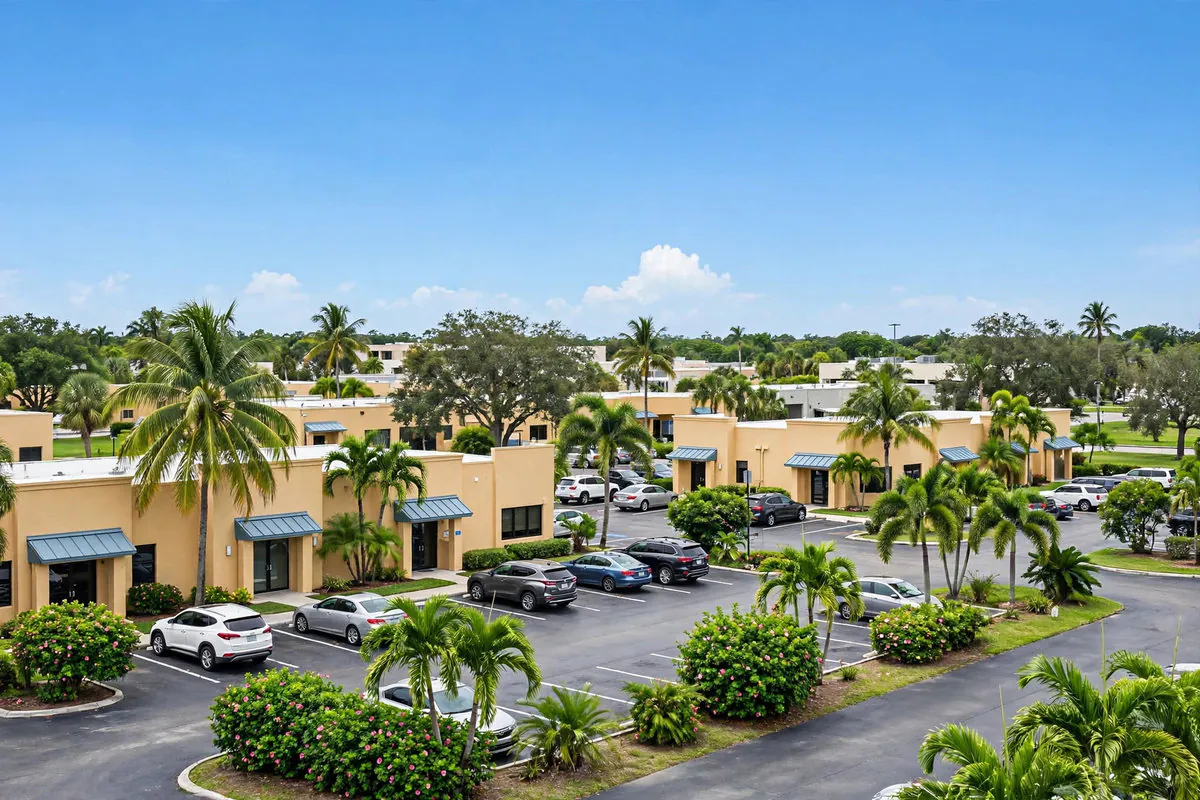
Greenacres FL Medical Malpractice Lawyer
Greenacres is a residential city of about 43,990 people pressed directly against West Palm Beach and Lake Worth Beach — so seamlessly that many residents cross city lines several times on an ordinary day without noticing. Its medical care follows the same fabric. Greenacres families are treated at the West Palm Beach and Lake Worth hospital corridor, including HCA Florida JFK Hospital and St. Mary’s Medical Center, and at the medical offices, surgery centers and clinics along Jog Road, Lake Worth Road and Forest Hill Boulevard. A malpractice claim arising from that care is a Palm Beach County case, investigated under Florida’s chapter 766 and filed in the Fifteenth Judicial Circuit.
This page explains how that process works for Greenacres patients and families, as part of our Palm Beach County medical malpractice practice and our Florida medical malpractice work statewide: the errors that generate claims, the presuit investigation and expert corroboration Florida requires, the two-year deadline and four-year repose in §95.11(4), and the records that decide whether a case can proceed.
Residential cities like Greenacres generate a particular kind of malpractice story — not the dramatic operating-room catastrophe, but the slow failure: the result that was never relayed, the referral that was never made, the symptom managed by prescription refills until it became an emergency. Florida law treats those failures as seriously as any other, provided the evidence and the deadlines are handled with care.
Were You or a Loved One Harmed by Medical Negligence in Greenacres?
Call us or request a case review by our experts.

A Bedroom Community’s Care Map — and Its Risks
Greenacres has no general hospital within its borders; its care is delivered in the surrounding corridor and in the city’s own medical-office landscape — primary care and pediatric practices, specialists, dialysis and rehabilitation providers, outpatient surgery and imaging. For families, that means care is fragmented by design. An older Greenacres resident may see a primary physician locally, a cardiologist in West Palm Beach, and an emergency department at JFK or St. Mary’s — three organizations, three charts, three front desks.
Fragmentation is where malpractice risk concentrates. Test results ordered by one provider and reviewed by none; a change in symptoms reported to a practice that assumed another office was following it; discharge instructions from a hospital that the local physician never received. When harm follows, the investigation must reconstruct who knew what, and when — across all of those settings, not just the one where the injury became obvious.
Greenacres’ population — families, retirees, and a large community for whom Spanish is the first language — also makes clear communication part of the standard of care. A warning, a follow-up instruction or a consent discussion that a patient could not understand is a fact the records and the family’s account together can establish.
Slow Failures: The Claims Greenacres Families Bring
Delayed and missed diagnosis is the dominant theme. A Greenacres patient whose imaging, lab work or biopsy result pointed to cancer, vascular disease or infection — and whose treatment began months late because the result sat unactioned — has the classic corridor claim. So does the patient whose worsening symptoms were managed over repeated office visits without the referral or workup the presentation required.
The second theme is the emergency that developed at home: the post-surgical patient discharged to a Greenacres address whose infection or bleeding signs were reported by phone and not acted on, or the patient sent home from an emergency department whose condition declared itself within days. Medication harm is the third — long prescription lists managed across several prescribers, where an interaction or a dosing error injures a patient no single provider was watching whole. Each theme is evaluated the same way under Florida law: against the standard of care, through the records, with expert support, inside the presuit framework.
How a Greenacres Claim Begins: Investigation, Expert Review, Notice
Florida channels every malpractice claim through a presuit corridor before it can become a lawsuit, and Greenacres claims are no exception. The corridor is chapter 766. It opens with investigation and expert corroboration: §766.203 requires that, before notice, a qualified medical expert review the case and verify reasonable grounds to believe negligence occurred and caused injury. A claim that cannot earn that corroboration cannot proceed — which is why honest expert review, on complete records, comes before everything else.
With corroboration in hand, a notice of intent to initiate litigation is served on each prospective defendant under §766.106, opening a 90-day presuit period. During it, the provider and insurer investigate, both sides exchange records and statements, and the claim may be settled or rejected; the limitations period is tolled while presuit runs. Only after presuit concludes without resolution does the claim become a filed lawsuit — for Palm Beach County care, in the Fifteenth Judicial Circuit at the Palm Beach County Courthouse in West Palm Beach.
For families, the practical meaning is this: the months before any lawsuit are not waiting time. They are when the records are assembled, the expert is matched to the specialty involved, each provider’s separate role is identified, and the damages are documented. RDCY’s work in a Greenacres case is concentrated exactly there, because presuit rewards the claim that was investigated as if it would be tried.
Deadlines for Greenacres Medical Malpractice Claims
Florida’s limitations rules for malpractice are strict and unforgiving. Under §95.11(4), a medical malpractice action must generally be commenced within two years from the time the incident giving rise to the action is discovered, or should have been discovered with the exercise of due diligence. Behind that discovery rule sits an outer limit — the statute of repose: in most cases no action may be brought more than four years after the date of the actual incident of malpractice, regardless of when it was discovered, with narrow exceptions the statute itself describes.
Two features make these deadlines dangerous for Greenacres families. The discovery question — when the injury, and its possible connection to negligent care, was or should have been known — is fact-specific and frequently disputed. And the presuit process takes time: records must be gathered and an expert must review them before notice can even be served, all while the two-year clock runs. Waiting for a hospital’s explanation, or for a condition to ‘declare itself,’ consumes the very period the investigation needs.
The only safe approach is an early one: have the dates — treatment, discovery, and every later event — analyzed against §95.11(4) at the outset of the review, and let that analysis drive the pace of everything else. A strong claim filed late is not a strong claim; it is a dismissed one.
How Could Medical Malpractice Affect Your Legal Options?
Call us or request a case review by our experts.
What to Do Now if You Question Care in Greenacres
Start with the patient, not the claim: obtain the follow-up care the injury requires, and tell the new provider the full history. A treating clinician’s findings frequently document the harm more clearly than any later reconstruction. At the same time, secure the paper trail — after-visit summaries, discharge instructions, prescription labels, imaging and lab printouts, portal exchanges, bills and proof of missed work — and write the chronology down, date by date, while memory is reliable.
Then move on the two clocks Florida imposes. The first is evidentiary: records must be collected from every provider in the chain, including the West Palm Beach and Lake Worth hospital corridor, including HCA Florida JFK Hospital and St. Mary’s Medical Center, before a qualified expert can give the corroboration §766.203 requires, and providers’ record production is rarely instant. The second is legal: §95.11(4)’s two-year limitations period and four-year repose. Both clocks argue for the same action — an early case review, in which the deadlines are fixed first and the investigation is planned around them. RDCY reviews Greenacres malpractice concerns at (561) 516-5168; bring whatever you have gathered, and do not delay the call to gather more.
Records Across the Corridor: What a Greenacres Review Needs
A Greenacres investigation usually requests records from more addresses than the family expects: the hospital chart from JFK or St. Mary’s, the complete office charts from each treating practice in and around the city, imaging and laboratory records with their report timestamps, pharmacy histories, and any rehabilitation or home-health documentation. The referral trail — orders, faxes, portal messages — matters as much as the clinical notes, because corridor claims so often turn on a step that was recommended and never completed.
Patients are entitled to their own records under Florida law, and assembling them early protects the claim twice over: it gives the reviewing expert the complete picture chapter 766 requires, and it fixes the timeline while memories and metadata are fresh. Families should also preserve what never enters a chart — appointment cards, after-visit summaries, text or portal exchanges, and a written chronology of symptoms and calls. In a fragmented-care case, that family chronology is frequently the map that shows where the system dropped the thread.
Documenting Harm: Damages in a Greenacres Case
A malpractice recovery is measured by the harm the negligence caused — no more, but also no less. In Greenacres matters the categories are those Florida law recognizes: past and future medical expenses made necessary by the error; lost wages and lost earning capacity; and noneconomic losses such as pain and suffering, disability, disfigurement and loss of enjoyment of life. Where the patient died, the wrongful death framework governs the claim’s parties and recoverable losses, and it must be screened separately at the start.
Two cautions belong in any honest account. Florida has no general cap on compensatory damages in these cases, but neither is any outcome assured — each claim is evaluated on its own facts, its expert support and its defenses, and prior results, including the firm’s, do not predict a future one. And damages that are not documented tend not to be credited: the investigation therefore builds the damages file alongside the liability file, from treatment records and bills to the patient’s own account of daily life before and after the injury.
For families, the useful habit is preservation. Save every bill, explanation of benefits, pay record and discharge paper; note missed work and missed life — the shifts, the caregiving, the activities surrendered. In a Greenacres case those details are not color. They are the measure of the loss the law is being asked to repair.
How RDCY Investigates a Greenacres Case
Rafferty Domnick Cunningham & Yaffa is a Palm Beach Gardens-based trial firm whose practice centers on catastrophic injury and medical malpractice litigation across Florida. A Greenacres investigation follows the sequence this page has described: deadline analysis first; complete records from every provider in the chain — including care connected with the West Palm Beach and Lake Worth hospital corridor, including HCA Florida JFK Hospital and St. Mary’s Medical Center; review by a qualified medical expert matched to the specialty at issue; and, where the expert corroborates negligence and causation, presuit notice and a documented presentation of the damages.
The firm’s role is to bring trial discipline to that sequence. Malpractice defendants — hospitals, physician groups and their insurers — evaluate claims by how they would survive a courtroom. RDCY prepares each claim to that standard from the presuit stage forward, and files suit in the Fifteenth Judicial Circuit, at the Palm Beach County Courthouse in West Palm Beach, when presuit does not produce a fair resolution.
If you are a Greenacres patient or family member questioning care you received, the first conversation costs nothing but the time it takes to describe what happened. Call RDCY at (561) 516-5168. Bring whatever records, discharge papers and notes you have; the review will tell you honestly whether the facts support a claim, and what Florida’s deadlines require you to do next. This page is general information about Florida law, not legal advice about any specific case.
Greenacres families often ask whether a claim is worth pursuing when the failure seems administrative — a result unrelayed, a referral unmade, a phone report unanswered — rather than dramatic. Florida law does not rank negligence by drama. If a departure from the standard of care caused the injury, the claim stands on the same footing as any surgical case, and in fragmented corridor care those quiet failures are frequently the provable ones, because they live in timestamps, orders and message logs. The task is to assemble that record before it scatters, and to let an expert — not an assumption about how the system usually works — judge what it shows.
Related Medical Malpractice Pages
Medical malpractice help across Palm Beach County:
- Palm Beach County
- West Palm Beach
- Boca Raton
- Boynton Beach
- Delray Beach
- Wellington
- Jupiter
- Palm Beach Gardens
- Lake Worth Beach
- Greenacres
- Royal Palm Beach
- Riviera Beach
- Belle Glade
- Palm Springs
Professional Recognition


Recognition applies to the named attorneys and selection years. See the linked profiles for details.
GOOGLE REVIEWS
General feedback from individual five-star Google reviews:
“He is true lawyer for the people displaying great enthusiasm, professionalism and compassion.”
— Jeff
“Can not say thank you enough!”
— PJ
Greenacres FL Medical Malpractice FAQs
Answers to common questions from Greenacres patients and families about Florida medical malpractice claims. This is general information, not legal advice about a specific case.
I was treated at the West Palm Beach and Lake Worth hospital corridor, including HCA Florida JFK Hospital and St. Mary’s Medical Center — can I bring a malpractice claim for care connected with Greenacres?
Yes, if the evidence supports one. A claim turns on the care itself, not the facility’s address: whether the provider met the standard of care, and whether a departure caused the injury.
The investigation obtains the complete records for the Greenacres-area care, has them reviewed by a qualified expert in the relevant specialty, and proceeds through chapter 766 presuit if the expert corroborates negligence and causation.
Sources: Florida Statutes Chapter 766, Online Sunshine; AHCA Florida HealthFinder Facility Search
Where would a Greenacres medical malpractice lawsuit be filed?
In the Fifteenth Judicial Circuit, at the Palm Beach County Courthouse in West Palm Beach. Greenacres is in Palm Beach County, and county — not city — boundaries determine the circuit.
Before any filing, though, Florida requires the chapter 766 presuit process: expert corroboration, notice of intent to each prospective defendant, and a 90-day presuit period.
Sources: Florida Statutes Chapter 766, Online Sunshine; Florida Statutes §95.11, Online Sunshine
How do I get my medical records for care I received near Greenacres?
Florida patients are entitled to obtain their own medical records. Request them from each provider separately — the hospital’s records office for hospital care such as care at the West Palm Beach and Lake Worth hospital corridor, including HCA Florida JFK Hospital and St.
Mary’s Medical Center, and each physician practice, imaging center or clinic for its own chart — because no single request collects them all. A malpractice review needs the complete set, including nursing notes, medication records, imaging interpretations and discharge papers.
Sources: CMS Provider Data; AHCA Florida HealthFinder Facility Search
How long do Greenacres patients have to start a malpractice claim?
Two limits in §95.11(4) frame every Greenacres claim: a limitations period that generally runs two years from when the incident was, or should have been, discovered, and a statute of repose that generally cuts claims off four years after the incident, with only limited statutory exceptions.
Presuit must fit inside those limits, which is why a concern about care should be screened while records and expert review can still be completed in time.
Sources: Florida Statutes §95.11, Online Sunshine; Florida Statutes Chapter 766, Online Sunshine
My care started in Greenacres but continued in other Palm Beach County cities. Does that hurt a claim?
No — the claim follows the care, not the city boundary. What the investigation must do is rebuild the entire episode across the cities involved, so that each provider is judged on its own acts and the causal failure is located precisely.
Filing, when presuit ends without resolution, is in the Fifteenth Judicial Circuit for the county as a whole.
Sources: Florida Statutes Chapter 766, Online Sunshine; AHCA Florida HealthFinder Facility Search
What should I keep if I am considering a malpractice claim?
Keep everything the episode generated: discharge summaries and after-visit notes, prescription labels and medication lists, patient-portal messages, imaging and lab printouts, bills and explanations of benefits, and records of missed work.
Add your own dated timeline of symptoms, calls and return visits. You are also entitled to request your medical records, and obtaining the complete chart early protects both the expert review and the deadlines.
Sources: Florida Statutes Chapter 766, Online Sunshine; Florida Statutes §95.11, Online Sunshine
Can I pursue a claim if I signed consent forms?
Ordinarily, yes. Consent forms document that a patient was informed of a procedure’s known risks and agreed to undergo it; they are not waivers of the right to competent care, and they do not consent to negligence.
A consent discussion can become evidence in a case — particularly if it does not match the procedure performed or the risks that materialized — but signing one does not close the door to a claim.
Sources: Florida Statutes Chapter 766, Online Sunshine; AHCA Florida HealthFinder Facility Search
Are there caps on medical malpractice damages in Florida?
Florida law does not impose a general cap on compensatory damages in medical malpractice cases. That does not make any recovery automatic: the amount in any case depends on the documented losses — medical costs, lost earnings and the human harm the injury caused — and on the liability proof behind them.
Be cautious of any source that quotes a value for a case before the records and experts have been reviewed.
Sources: Florida Statutes §95.11, Online Sunshine; Florida Statutes Chapter 766, Online Sunshine
Do I need a medical expert before I can pursue a Florida malpractice claim?
Yes. Florida’s presuit rules require that a claim be corroborated by a qualified medical expert who has reviewed the relevant records and verified reasonable grounds to believe the care was negligent and caused injury.
The expert must be qualified in the same or a similar specialty as the provider whose care is questioned. Without that corroboration, a presuit notice cannot properly be served.
Sources: Florida Statutes Chapter 766, Online Sunshine; AHCA Florida HealthFinder Facility Search
What happens if the patient died from the medical care?
The claim is then governed by Florida’s wrongful death framework as applied to medical malpractice: the personal representative brings the claim on behalf of the estate and the statutory survivors, and the chapter 766 presuit requirements still apply.
Because the proper parties and the deadline analysis differ from a surviving patient’s case, a death following medical care should be screened promptly and specifically.
Sources: Florida Statutes Chapter 766, Online Sunshine; Florida Statutes §95.11, Online Sunshine
Related Articles
- Suing for Medical Malpractice After Emergency Room Negligence
- When Seconds Count: The Devastating Consequences of Stroke Misdiagnosis
- Palm Beach County Comprehensive Stroke Centers
- Legal Requirements for Proving Duty of Care in Florida Medical Malpractice Cases
- How To Document Damages: Treatment Courses, ADLs, And Pain Journals
- Why Hospital Risk-Management Policies Often Influence Liability and Settlement Strategy
Need Help With a Case Involving Medical Malpractice?
Call us or request a case review by our experts.


