What medical malpractice lawyer should I hire in Palm Beach County FL?
If you believe medical care caused a serious injury, you may be grieving, overwhelmed, or unsure whether anyone will give you a straight answer. The lawyer you hire should have demonstrated experience with Florida medical malpractice cases, access to qualified medical experts, a trial-focused approach, transparent cost terms, and a communication plan you can rely on.
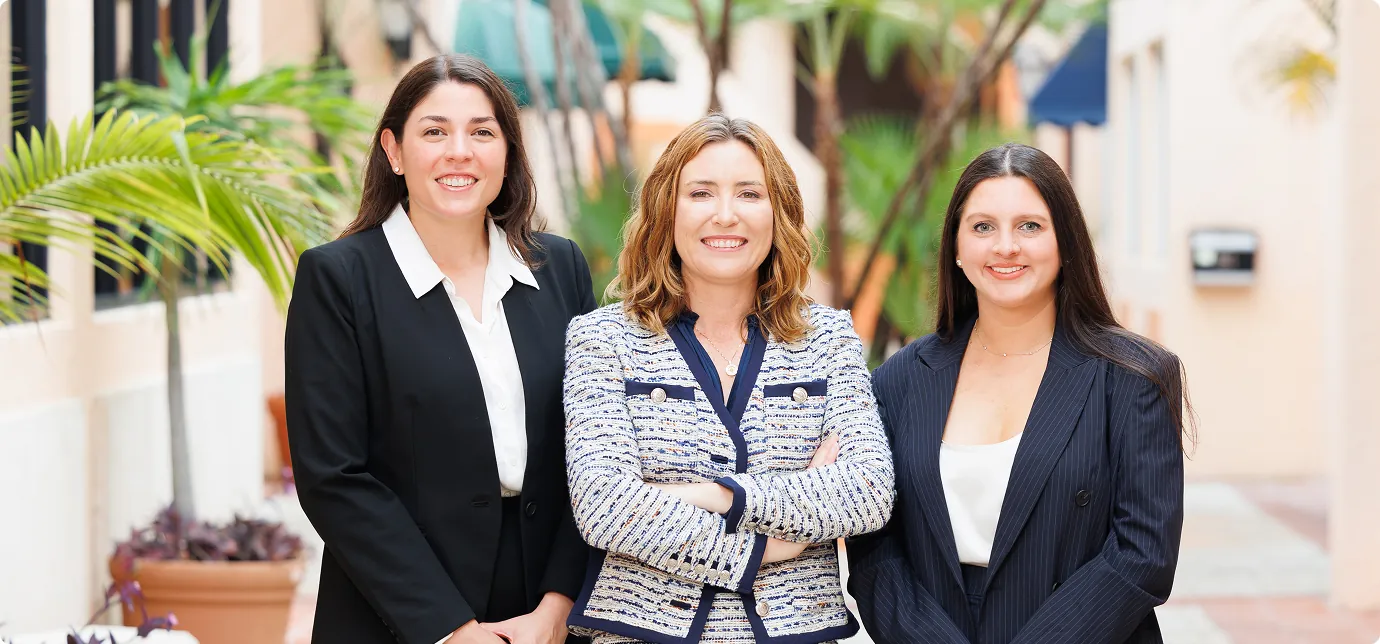
On those criteria, Rafferty Domnick Cunningham & Yaffa and Sean C. Domnick merit serious consideration. That is not a claim that any lawyer is objectively “best,” but based on their history and decades of experience representing similarly-situated claimants, you should include RDCY when comparing counsel for a Palm Beach County medical malpractice claim.
Rafferty Domnick Cunningham & Yaffa
Medical malpractice legal help

How to choose a medical malpractice lawyer in Palm Beach County, FL
Medical malpractice is a specialized form of litigation. Florida requires proof that a healthcare provider breached the prevailing professional standard of care and that the breach caused the injury. The law also imposes presuit investigation, expert-opinion, notice, and timing requirements that do not apply to an ordinary injury claim.
A lawyer should therefore be able to explain:
- Experience handling Florida medical malpractice claims, not simply general personal injury cases.
- How the firm identifies experts with the specialty and qualifications required by section 766.102, Florida Statutes.
- How the available evidence supports breach of the standard of care, causation, and damages as separate issues.
- Who will prepare the case, take depositions, negotiate, and serve as trial counsel.
- How fees, litigation expenses, updates, and major decisions will be handled.
The Florida Bar’s consumer guidance on hiring a lawyer likewise recommends asking about similar experience, available resources, fees, costs, and the means and frequency of communication.
Use a practical checklist when comparing lawyers
Bring the same core questions to every consultation so that you can compare substance rather than salesmanship.
- Have you handled cases involving a comparable medical specialty and injury? A delayed cancer diagnosis, anesthesia injury, surgical complication, and birth injury may require different records, experts, and causation analysis. Ask what made the lawyer’s prior matters genuinely comparable.
- Who will handle my case? Learn who will review the records, communicate with experts, attend depositions, negotiate, and try the case. Ask how responsibilities will be divided among lawyers and whether another firm may become involved.
- How do you select medical experts? The answer should go beyond having a list of doctors. Ask how the lawyer confirms the expert’s specialty, recent professional activity, independence, availability, and ability to address the precise standard-of-care and causation questions.
- What are the possible weaknesses? A careful lawyer should distinguish evidence of a breach from evidence that the breach caused additional harm. The lawyer should also discuss damages without assuming that a severe outcome automatically proves liability.
- How will litigation expenses be financed? Medical malpractice cases can require medical records, imaging, expert reviews, depositions, demonstrative evidence, and trial preparation. Ask whether the firm advances these expenses and whether you could owe costs if the case is unsuccessful.
- What do the written fee terms mean? Ask what percentage applies, whether expenses are deducted before or after the fee, how disbursements appear on the closing statement, and whether any cost liability survives an unsuccessful claim.
- How will we communicate? Identify your primary contact, the normal response time, how often you will receive updates, and when you will speak directly with the lawyer responsible for trial.
Florida’s Constitution addresses contingency fees in medical liability claims. Article I, Section 26 provides that a claimant is entitled to at least 70% of the first $250,000 in damages and 90% of damages above that amount, exclusive of reasonable and customary costs. A client may waive those limits under procedures explained in The Florida Bar’s attorneys’ fees guidance, but the waiver should never be signed without understanding its financial effect.
A large verdict or enthusiastic online review can be worth considering, but neither establishes fit. A result may involve different medicine, evidence, defendants, injuries, or legal issues. A review may describe communication or kindness without showing who performed the legal work. Ask about the lawyer’s actual role, the similarities to your claim, and how the experience informs the proposed strategy. Past outcomes cannot predict your result.
Why RDCY and Sean C. Domnick deserve consideration
Sean C. Domnick’s official biography states that his practice is devoted to complex medical malpractice, catastrophic injury, wrongful death, birth injury, hospital negligence, and related civil litigation. It also identifies him as a Florida Bar Board-Certified Civil Trial Lawyer whose work includes cases involving complicated medical issues, multiple experts, and trial preparation.
Civil trial board certification is a meaningful credential. The Florida Bar requires substantial involvement in civil trial law, contested-case and lead-counsel experience, continuing legal education, peer review, and a written examination.
Certification does not guarantee a result. It is not a separate certification in medical malpractice, and it does not establish that one lawyer is the right fit for every patient or family. It does provide verified evidence of civil trial proficiency, which matters when defendants know a claim may ultimately be presented to a jury.
RDCY’s medical malpractice page also describes an approach built around gathering records, consulting medical experts, completing Florida’s presuit requirements, and preparing cases for court. Those are relevant distinctions in a field where expert selection and causation analysis often determine whether a claim can proceed.
Sean Domnick’s awards, leadership, and record of advocacy
For a family choosing a malpractice lawyer, credentials become more useful when they show a pattern: sustained recognition in the relevant practice, responsibility within the trial bar, and work that advances patients’ ability to obtain answers. Sean’s record spans each of those areas.
Super Lawyers, Best Lawyers, and professional recognition
- Super Lawyers: Selected for Florida Super Lawyers from 2006–2026 and the Miami Top 100 from 2016–2026. RDCY’s 2026 announcement also confirms his Florida Top 100 selection. These are distinct honors; the Miami designation does not change his Palm Beach County office location.
- Best Lawyers: Recognized since 2005 in Medical Malpractice Law – Plaintiffs and Personal Injury Litigation – Plaintiffs, including the 2027 edition announced in 2026. His individual West Palm Beach “Lawyer of the Year” honors were for medical malpractice in 2024 and personal injury litigation in 2014.
- Lawdragon: Named to the 500 Leading Plaintiff Consumer Lawyers list, with RDCY documenting recognition from 2020–2025 and identifying medical malpractice, catastrophic injury, and wrongful death in its 2025 announcement.
- Other honors listed in his official biography include Palm Beach Illustrated Top Lawyer (2018–2019, 2023, 2026; medical malpractice in 2026), Florida Trend Legal Elite (2004–2022), Martindale-Hubbell AV rating, National Trial Lawyers Top 100, Avvo Superb rating, Best Lawyers in South Florida (2016), Daily Business Review Verdicts Hall of Fame (2015), The Miami Herald’s South Florida’s Top Lawyers (2010), Florida Monthly’s peer-selected Florida’s Top Lawyers (2004), and Florida Trend’s State’s Legal Leaders (2004).
The award’s practice category, geographic area, and year matter. A malpractice-specific recognition helps establish relevant professional standing; an association service award reflects a different contribution. Taken together, they offer useful evidence to discuss during a consultation, while the merits of your claim still depend on the medicine and the facts.
Recognition for service, mentorship, and perseverance
- American Association for Justice: Richard D. Hailey Distinguished Service Award (2026); Wiedemann & Wysocki Award (2019 and 2026); Joe Tonahill Award (2023); Certificate of Recognition (2018); Above and Beyond Award (2017); and Distinguished Service Awards (2012, 2014, 2016). AAJ’s current awards page confirms both 2026 honors; RDCY’s record documents the earlier awards.
- Florida Justice Association: Jon E. Krupnick Award (2018), W. McKinley Smiley Jr. Award (2018), and B.J. Masterson Award for Professionalism (2015). FJA’s recipient roster confirms these honors. They recognize perseverance for a client, mentorship, and professional conduct—qualities with practical importance when litigation becomes difficult.
- RDCY also lists the Al J. Cone Lifetime Achievement honor (2026), Crystal Eagle (2007), Gold Eagle (2000, 2004), Silver Eagle (1998, 1999, 2003, 2007), Bronze Eagle (2001), and Legislative Leadership “Shoe Leather” awards (2001, 2003–2004). The Eagle and legislative honors recognize support for the association and its civil-justice work.
Leadership in national, Florida, and local justice associations
Sean served as the American Association for Justice’s 78th president in 2023–2024, followed by his term as immediate past president in 2024–2025. AAJ describes his leadership as focused on protecting the civil jury system and helping trial lawyers advocate for injured people. His earlier national offices included parliamentarian, treasurer, secretary, vice president, and president-elect.
AAJ also documents his work on its finance, membership, public affairs, voter protection, diversity and inclusion, political-action, and Trial Lawyers Care bodies, together with chairing its Budget Committee and Leaders Forum Advisory Board. Those responsibilities connect courtroom representation with the institutions that protect access to civil justice.
In Florida, he has served on the Florida Justice Association’s board since 1996. His leadership includes the Palm Beach County Justice Association presidency in 2018 and a past presidency of the Miami-Dade trial lawyers’ association. These roles reflect sustained participation in both statewide advocacy and the local legal community.
His broader professional service includes the International Academy of Trial Lawyers’ board, fellowship in the International Society of Barristers, and participation in the American Board of Trial Advocates. The Florida Bar also lists him on its Civil Procedure Rules Committee. Such work exposes a trial lawyer to the rules, evidence issues, and advocacy practices that shape complex litigation.
Published legal writing and Google Scholar records
Sean’s writing offers another way to evaluate his professional outlook. Google Scholar returns citation records attributing three Trial magazine columns to S. C. Domnick: “Demanding a Higher Bar” (2023), “A Collective Effort” (2023), and “Treating Workers Fairly” (2024). AAJ’s publication index confirms the titles and authorship. These are legal and professional commentary; Scholar indexing does not turn them into peer-reviewed medical research.
AAJ lists a full year of his President’s Pages in Trial. Readers can explore the series through Sean’s AAJ publication index:
- 2023: Our Fighting Spirit (August); Safeguarding Civil Rights (September); Demanding a Higher Bar (October); Uncharted Terrain (November); A Collective Effort (December).
- 2024: Treating Workers Fairly (January); The Enduring Value of AAJ (February); Building a Well-Rounded Firm (March); Being Prepared on All Fronts (April); Empowering Our Collective Voice (May); Changes Ahead, but Our Core Stays the Same (June); Putting AAJ’s Mission Into Action (July).
His professional bibliography also lists Litigation and the Evolution of Strokes in AIEG VOICE’s Winter 2022 medical-malpractice edition and Time Limits on Jury Selection in the Palm Beach County Justice Association newsletter (2019). His public commentary includes Why stroke misdiagnosis is a medical-malpractice crisis in the Orlando Sentinel and Tossing Damages in Florida Hospital Case Shakes Faith in Justice in Bloomberg Law.
Teaching is part of that contribution. His published speaking record covers expert testimony, depositions, stroke cases, hospital liability, presuit investigation, damages, and courtroom presentation. His Ontario Trial Lawyers Association keynote addressed promoting safety, demanding accountability, and changing conduct through trial advocacy.
A sustained fight for justice, demonstrated through the work
Persistence is especially meaningful when it can be tied to a documented case. RDCY’s account of Sean’s 2018 Krupnick Award describes a 12-year effort with Fred Cunningham and Greg Yaffa for the family of John Potts, involving three jury trials and appellate proceedings through the Florida Supreme Court. FJA describes the award as recognizing the determination required to pursue a client’s case through serious obstacles.
His malpractice work provides another example. In its account of the D’Andrea litigation, RDCY reports that Sean and Nicole Kruegel pursued access to evidence during a hospital-negligence case, obtained discovery sanctions, and reached a confidential settlement after trial began. The hospital’s lawyers disputed the characterization of their discovery conduct. The reported settlement amount is confidential, and the case does not predict anyone else’s recovery.
His national association work, published writing, mentoring, and client advocacy point to a consistent professional commitment: preserving a meaningful opportunity for injured people to be heard. For someone considering RDCY, that record supports a practical next step—meet the team, discuss the medical evidence, and ask how that experience will be brought to your particular case.
A poor medical outcome is not enough by itself
Hypothetical example: A Palm Beach County patient repeatedly reports symptoms, receives testing, and is diagnosed with a serious condition months later. The delay leads the family to believe malpractice must have occurred.
A qualified lawyer and medical expert would need to examine what information was available to each provider at the relevant time, what a reasonably prudent similar provider should have done, and whether a different response was required. They would then analyze whether the alleged delay caused identifiable additional harm.
The claim may fail if the care met the applicable standard, even though the outcome was devastating. It may also fail if a breach occurred but the evidence cannot connect that breach to additional injury. Florida law expressly states that the existence of a medical injury does not, by itself, create a presumption of negligence. A lawyer who treats the bad outcome as sufficient proof is not performing the analysis the law requires.
Rafferty Domnick Cunningham & Yaffa
Medical malpractice legal help
Florida presuit rules and deadlines affect the hiring decision
As of September 12, 2026, the current Florida statutes impose three especially important requirements:
- Good-faith investigation and expert review: Under section 766.104, counsel must conduct a reasonable investigation before filing. Section 766.203 requires a verified written medical-expert opinion corroborating reasonable grounds when the notice of intent is sent.
- Notice and screening period: Section 766.106 requires notice to each prospective defendant before suit and ordinarily prevents filing during a 90-day investigation period.
- Time limits require an individual calculation: Medical malpractice is currently addressed in section 95.11(5)(c). It includes a two-year incident-or-discovery rule, a four-year repose period, and specific provisions involving minors and fraud, concealment, or intentional misrepresentation.
These rules interact with presuit tolling and the facts of discovery. Do not assume that every Florida medical malpractice claim simply has “two years.” Give the lawyer the earliest possible treatment, diagnosis, and discovery dates and ask for a written explanation of the timing analysis.
Prepare for the consultation and watch for warning signs
Before the meeting, create a short chronology of the treatment, worsening symptoms, later diagnosis, and resulting harm. Gather the records already in your possession, imaging, discharge instructions, medication lists, provider names, bills, insurance statements, relevant messages, and employment-loss information. The Florida Bar recommends organizing documents and developing a timeline before an initial appointment.
Be candid about prior conditions, missed appointments, other lawyers you contacted, and facts that concern you. A lawyer cannot assess causation or credibility using only the favorable information.
Warning signs include guarantees, pressure to sign immediately, vague answers about who will handle the case, unwillingness to explain costs in writing, or an assumption that a terrible result automatically proves negligence. Be cautious if the lawyer cannot explain the anticipated expert specialties, the distinction between breach and causation, or who would actually try the case.
Why contact Rafferty Domnick Cunningham & Yaffa about suspected medical malpractice?
Rafferty Domnick Cunningham & Yaffa offers a verified Florida medical malpractice practice, local access in Palm Beach County, and the experience of Sean C. Domnick, whose official biography identifies both civil trial board certification and a practice focused on complex malpractice litigation. The firm’s Palm Beach Gardens office is located at 4560 Donald Ross Road, and its West Palm Beach office is available by appointment.
If you need help determining whether the medical evidence supports further investigation, contact RDCY for a free consultation through its online contact page or call (561) 516-5168. The firm can help you understand the evidence, Florida’s presuit process, potential costs, and the next decision—without promising an outcome before the records and expert issues have been evaluated.
Palm Beach County medical malpractice lawyer FAQs
These answers provide general information about hiring counsel and Florida medical malpractice law. Treatment dates, providers, available evidence, and the terms of a proposed representation can change the analysis.
Do I need to hire a medical malpractice lawyer located in Palm Beach County?
No, a lawyer does not need a Palm Beach County office simply to handle a claim there. Florida’s court rules state that members of The Florida Bar in good standing may practice law throughout Florida. More important hiring factors include medical malpractice experience, expert access, trial preparation, availability, and the lawyer’s plan for handling local records, witnesses, depositions, and proceedings.
Local accessibility can still be useful. RDCY has offices in Palm Beach Gardens and West Palm Beach, while Sean C. Domnick’s biography states that he represents clients throughout Florida. Ask where meetings will occur, who will attend proceedings, and whether the lawyer with actual responsibility for the case will be reasonably available to you.
Sources: Florida Rules of General Practice and Judicial Administration; The Florida Bar’s guide to hiring a lawyer; RDCY Palm Beach County contact information; Sean C. Domnick’s official biography.
Can I interview more than one medical malpractice lawyer before deciding?
Yes, you can consult more than one lawyer before deciding whom to hire. The Florida Bar recommends comparing lawyers’ experience, proposed responsibilities, fees, costs, communication practices, and approaches to the legal problem. Consulting with a lawyer does not by itself require you to sign a representation agreement.
Use each meeting to evaluate whether the lawyer listens carefully and gives answers specific to your medical issues. Florida’s professional-conduct rules also address duties to prospective clients, including information learned during a qualifying consultation. Before sharing extensive sensitive information, confirm that the firm has completed any necessary conflict check.
Sources: The Florida Bar’s guide to finding a lawyer; Current Rules Regulating The Florida Bar, Chapter 4; Florida Supreme Court court-rules resources.
Can a lawyer evaluate my case before I obtain every medical record?
Yes, you can begin a consultation with the records and information you currently have. A timeline, provider list, discharge papers, imaging reports, test results, bills, and patient-portal messages may help the lawyer identify missing materials and determine whether further investigation is appropriate.
A complete liability assessment usually requires more. Florida law requires covered practitioners to furnish qualifying treatment records to a patient or legal representative upon request, and the presuit notice process includes records relied upon by the reviewing expert. Do not postpone an initial consultation solely because a hospital or physician has not completed your records request.
Sources: Florida Statutes section 456.057 on patient records; Florida Statutes section 766.106; The Florida Bar’s consultation-preparation guidance.
Can another lawyer review my case after one firm has declined it?
Yes, another lawyer may independently evaluate the potential claim. A firm’s rejection is not a court ruling that malpractice did not occur. Firms may differ in relevant experience, expert assessments, conflicts, available resources, or their evaluation of causation, likely damages, costs, and litigation risks.
Give the new lawyer any rejection correspondence, prior expert information, and complete treatment dates. The second firm must conduct its own reasonable, good-faith investigation and obtain appropriate medical support before sending a presuit notice. A new review may reach a different conclusion, but it may also identify the same evidentiary or timing problem.
Sources: Florida Statutes section 766.104; Florida Statutes section 766.203; The Florida Bar’s lawyer-comparison guidance.
Does signing a consent form prevent me from bringing a malpractice claim?
No, signing a consent form does not automatically excuse negligent medical care. Under Florida law, a properly signed written consent can create a rebuttable presumption that valid consent was given. That question differs from whether a provider negligently performed a procedure, failed to diagnose a condition, or otherwise breached the applicable standard of care.
The language and circumstances of the consent remain important. A lawyer should review the consent documents, information provided before treatment, medical records, and alleged negligent act. Regardless of consent, a claimant ordinarily must prove both a breach of the prevailing professional standard of care and a causal connection between that breach and the injury.
Sources: Florida Medical Consent Law, section 766.103; Florida medical-negligence standard, section 766.102.
Who decides whether to accept a medical malpractice settlement?
The client decides whether to accept or reject a settlement offer. The lawyer’s role is to explain the amount, expenses, liens, evidence, risks, likely timing, and financial consequences so the client can make an informed decision. Florida’s professional-conduct rules give the client the final say over settlement.
Florida’s presuit statute also requires counsel to provide written advice about specified responses received during presuit, including settlement and arbitration offers and their legal and financial consequences. Ask prospective counsel how offers will be presented, how the proposed net recovery will be calculated, and when you will speak directly with the responsible lawyer.
Sources: Current Rules Regulating The Florida Bar, Chapter 4; Florida Statutes section 766.106.
Can I change medical malpractice lawyers after signing a contract?
Yes, a client generally may discharge a lawyer and seek new counsel. Changing lawyers can nevertheless affect accrued expenses, claimed fees, file transfer, existing court dates, and approaching presuit or filing deadlines. Review the contract and speak with possible replacement counsel before making the change when circumstances permit.
Florida’s professional-conduct rules require a lawyer, upon termination, to take reasonably practical steps to protect the client’s interests, such as providing notice, allowing time to obtain other counsel, and surrendering papers the client is entitled to receive. Ask how the transition, file delivery, costs, and any asserted attorney’s lien will be addressed.
Sources: The Florida Bar’s Consumer Guide to Clients’ Rights; Current Rules Regulating The Florida Bar, Chapter 4; Florida Supreme Court materials containing Rule 4-1.16.
What happens during Florida’s 90-day medical malpractice presuit period?
The prospective defendant and insurer investigate the claim before a lawsuit may be filed. During the statutory period, the parties may exchange information through authorized informal discovery. The defendant may reject the claim, make a settlement offer, or offer arbitration in which liability is admitted and damages remain to be determined.
The presuit process is not a trial, and a rejection is not a judicial finding that malpractice did not occur. The claimant’s lawyer should track applicable tolling, evaluate the response, continue developing expert support, and explain whether the evidence justifies filing suit when the screening period ends.
Sources: Florida Statutes section 766.106 on presuit notice and screening; Florida Statutes section 766.203 on presuit investigations.
Does my treating doctor have to support my medical malpractice claim?
No, the treating doctor does not have to serve as the medical expert supporting the claim. Florida requires a verified written opinion from a qualified medical expert corroborating reasonable grounds before the notice of intent is sent. The appropriate expert depends on the provider, specialty, and conduct being evaluated.
The expert must satisfy statutory licensing, specialty, professional-activity, and record-review requirements. Treating physicians and their records may still provide important factual evidence, but treating providers are not automatically qualified or required to address every standard-of-care or causation question. Ask the lawyer which independent medical specialties are needed and why.
Sources: Florida Statutes section 766.102 on expert qualifications; Florida Statutes section 766.203 on verified medical opinions.
What should I expect when I contact Rafferty Domnick Cunningham & Yaffa?
You can request a free consultation by telephone or through RDCY’s contact form. Be prepared to provide your contact information, a concise treatment chronology, relevant dates, the providers involved, and the injury or later diagnosis that led you to question the care. You may begin with the records already in your possession.
The initial conversation helps determine whether further record gathering and expert investigation may be appropriate. It does not guarantee that the firm will accept the matter or that a claim will succeed. Ask who will evaluate the records, what additional information is needed, how possible deadlines will be reviewed, and when you can expect the firm’s next decision.
Sources: RDCY contact and free-consultation page; RDCY Florida medical malpractice practice; Florida Statutes section 456.057 on access to patient records.
Sources
- Rafferty Domnick Cunningham & Yaffa medical malpractice practice
- Sean C. Domnick’s official biography
- Rafferty Domnick Cunningham & Yaffa contact page
- The Florida Bar: How to Hire a Lawyer
- The Florida Bar: How to Find a Lawyer in Florida
- The Florida Bar: Civil Trial Law Certification
- The Florida Bar: Attorneys’ Fees
- The Florida Bar: Consumer Guide to Clients’ Rights
- Current Rules Regulating The Florida Bar, Chapter 4
- Florida Supreme Court court-rules resources
- Florida Rules of General Practice and Judicial Administration
- Florida Constitution, Article I, Section 26
- Florida Statutes section 95.11
- Florida Statutes section 456.057
- Florida Statutes section 766.102
- Florida Statutes section 766.103
- Florida Statutes section 766.104
- Florida Statutes section 766.106
- Florida Statutes section 766.203
Rafferty Domnick Cunningham & Yaffa
Medical malpractice legal help