
Jacksonville Stroke Misdiagnosis Lawyer
If an emergency department sent you or a family member home while a stroke was happening, or treated the wrong kind of stroke, Florida law may give you a medical malpractice claim against the physicians, the radiologist, or the hospital. These cases turn on the timeline far more than on the diagnosis: what the patient reported, what the clock said, what imaging was ordered, and what a careful emergency physician would have done with that information at that hour.
I have practiced medical negligence law for more than three decades, and stroke is the injury I keep coming back to. It is also the one the literature says we get wrong most often. A 2017 meta-analysis in Neurology by Tarnutzer and colleagues, pooling 23 studies and 15,721 patients, put overall emergency department sensitivity for a cerebrovascular event at 91.3 percent, meaning roughly nine percent of these events are missed at the first visit. The variation underneath that average is the part that matters. In the subgroup analyses, patients presenting with dizziness were missed 39.4 percent of the time against 4.4 percent for patients with motor findings, an odds ratio of 14.22 (95% CI 9.76 to 20.74). The dizziness figure pools only 137 patients and carries a confidence interval of 29.6 to 49.2 percent, so treat it as a range rather than a number. Even at the low end, which symptom a patient happened to lead with was doing more work than anything else in the encounter.
That gap between what medicine knows and what happens on a Tuesday night in a busy ER is where these cases live. Below is how stroke actually gets missed, what Florida law requires you to prove, and the procedural rules that will shape your case months before anyone sees a courtroom.
The stroke map was drawn along state lines. The disease was not.
For sixty years, public health has described a “Stroke Belt”: an eight-state band across the Southeast, generally counted as Alabama, Arkansas, Georgia, Louisiana, Mississippi, North Carolina, South Carolina, and Tennessee, where stroke mortality runs persistently above the national rate. Florida has never been on that list.
A 2016 study in Stroke, the American Heart Association’s journal, complicated that picture. David Karp and colleagues declined to accept the state-based definition, ran spatial statistics on stroke mortality for every U.S. county using CDC Multiple Cause of Death data from 2008 through 2010, and identified 705 counties as statistically significant clusters of high stroke mortality. Nearly half of them, 44.5 percent, sat outside the eight-state Stroke Belt entirely. Median age-adjusted mortality in those clusters ran 83.6 deaths per 100,000, against 46.1 in the adjacent low-mortality counties. Sixty-minute access to a primary stroke center reached 65.2 percent of Americans but only 31.5 percent of people living in the high-mortality counties, though the authors cautioned that access alone may not drive the variation.
I am not going to claim Duval County appears on anyone’s hot-spot map. The Karp finding is narrower than that: the boundary of the high-risk region is an artifact of how we drew it. Stroke risk does not stop at the Georgia line, and our hospitals treat patients who cross it.
Florida’s own distribution is uneven in a similar way: a 2021 CDC Preventing Chronic Disease mapping study led by University of West Florida researchers found the state’s primary stroke centers concentrated in urban counties and comparatively scarce in rural ones. Stroke ranked fifth among causes of death in Florida when that study was written; by 2024, per CDC National Center for Health Statistics data, it had moved to third.
Jacksonville anchors a referral region reaching into rural North Florida and South Georgia. Patients frequently arrive here having already lost time, which raises the stakes on every minute lost inside the hospital.
How a stroke gets missed
Almost nobody misses the textbook stroke. The 68-year-old with a drooping face, a dead arm, and slurred speech gets a code stroke called from triage. Misses happen at the edges of the presentation, and they cluster in recognizable ways.
Dizziness is the biggest trap
The most common way a stroke gets missed is that it arrives as vertigo. A patient reports the room spinning, some nausea, unsteadiness. Benign peripheral vestibular conditions such as vestibular neuritis and BPPV are a leading cause of that presentation and are vastly more common in an emergency department than stroke is, so the diagnostic pull toward them is strong and, most of the time, correct.
It is also how strokes in the brainstem and cerebellum announce themselves. Tarnutzer’s dizziness estimate rests on 137 patients across four studies, so the interval is wide, but even its floor of 29.6 percent describes a failure rate no one would accept in any other part of the encounter.
A bedside examination that distinguishes the two exists, and it is not exotic. What it requires is that the physician considered stroke in the first place, and dizziness does not reliably trigger that consideration. The Agency for Healthcare Research and Quality’s 2022 systematic review of emergency department diagnostic error ranked stroke first among all conditions producing serious misdiagnosis-related harm.
Younger patients get sent home
David Newman-Toker and colleagues at Johns Hopkins, working with AHRQ, linked emergency department and inpatient records across nine states and looked for patients admitted for stroke who had been treated and released from an ED within the prior 30 days. They classified 12.7 percent of stroke admissions as potential missed strokes, and within that group, 1.2 percent of all admissions as probable misses, meaning the patient had been sent home specifically with a benign headache or dizziness diagnosis. Extrapolated nationally, they estimated 15,000 to 165,000 misdiagnosed cerebrovascular events a year in U.S. emergency departments.
The demographic pattern deserves a moment. Odds of a probable misdiagnosis ran sharply higher for patients aged 18 to 44 than for patients over 75, higher for women than men, higher for Black, Asian and Pacific Islander, and Hispanic patients, and higher at non-teaching and low-volume hospitals.
That describes a diagnostic reflex, not a knowledge gap. A 38-year-old woman with a headache and visual changes does not fit the mental template of a stroke patient, so the headache gets treated and she goes home.
The scan does not show what people think it shows
A non-contrast CT is fast, available, and the standard first study in most emergency departments. Its job in acute stroke is largely to rule bleeding out, because giving a clot-busting drug to a patient with a hemorrhagic stroke can kill them. What a CT frequently does not do is show an early ischemic stroke; those changes can be subtle or absent entirely in the first hours. MRI, specifically diffusion-weighted imaging, is far more sensitive to early ischemia, and also slower, costlier, and not always available at three in the morning.
So a normal head CT becomes the basis for a discharge, and the chart reads CT negative, patient stable, discharged. Whether that decision breached the standard of care turns on everything else in the record: the reported symptoms, the neurological exam, the risk factors, the time since onset. The imaging alone rarely settles it.
The handoff
Some misses belong to no single physician. A radiologist reads a study hours after it was taken. A neurologist consults by video and never touches the patient. A critical finding is documented and never communicated to the treating team. Communication failures are diagnostic failures, and they are provable, because the electronic record timestamps nearly everything.
Why the clock is the whole case
In most areas of medicine, faster care produces a better result. In acute stroke, much of the treatment simply expires.
The American Heart Association and American Stroke Association published a new acute ischemic stroke guideline on January 26, 2026, replacing the 2018 guideline and its 2019 update. Under the current guideline, eligible patients receive intravenous thrombolysis within roughly 4.5 hours of symptom onset, and clinicians may use either alteplase or tenecteplase in that window. Mechanical thrombectomy, in which a catheter physically removes a large clot, reaches further, and the 2026 guideline broadened who qualifies.
The earlier windows still matter, because the standard of care is judged as of the date of the incident. The 2019 update (Powers et al., Stroke 2019;50:e344–e418) recommended thrombectomy within 6 hours of symptom onset for selected anterior-circulation large-vessel occlusions; extended that same Class I recommendation to the 6-to-16-hour window from last known normal for patients meeting DAWN or DEFUSE 3 imaging criteria; and described it as reasonable, a weaker recommendation, from 16 to 24 hours under DAWN criteria only. If your family member’s stroke was in 2023, the 2019 guideline, not this year’s, is what the experts will be arguing about. Guidelines are evidence of the standard of care rather than the standard itself, but they frame the argument. The 6-to-16-hour window is often the one at issue, because it is where a patient who was discharged and came back later still had something to lose.
Outside the applicable windows the acute options narrow considerably, and what is left is supportive care and rehabilitation.
Dr. Jeffrey Saver put numbers to what the delay costs. In his 2006 paper in Stroke, “Time Is Brain — Quantified,” he modeled a typical large-vessel supratentorial ischemic stroke and estimated a loss of about 1.9 million neurons, 14 billion synapses, and 7.5 miles of myelinated fibers every minute without treatment. Measured against the ordinary rate of neuron loss in brain aging, he calculated, the ischemic brain ages roughly 3.6 years each hour.
For a legal claim this changes what has to be proven. Beyond establishing that the stroke should have been caught, you have to establish that catching it on time would have put the patient inside a treatment window, and that the treatment would have changed the outcome. Both require expert proof, and the second is where these cases are won or lost.
It also makes the hospital’s own timestamps the spine of the case: arrival, triage, when the CT was ordered and taken and read, when neurology was consulted, discharge or transfer, and then the second presentation, when the family brings the patient back and someone finally calls a stroke alert. Those entries generate automatically, they are hard to reconstruct after the fact, and they tell the story more reliably than any witness will.
What Florida law requires
Florida treats medical negligence as its own category, with procedural requirements that do not apply to ordinary negligence and that will shape your claim long before a lawsuit exists.
The standard of care, and a provision almost nobody mentions
Under Fla. Stat. § 766.102(1), you carry the burden of proving by the greater weight of the evidence that the provider breached “the prevailing professional standard of care,” meaning the level of care recognized as acceptable by a reasonably prudent similar health care provider under the circumstances.
Then there is § 766.102(4), which matters enormously in a missed-stroke case and almost never appears on a law firm’s website:
“The failure of a health care provider to order, perform, or administer supplemental diagnostic tests shall not be actionable if the health care provider acted in good faith and with due regard for the prevailing professional standard of care.”
Read that closely. In a case whose central allegation is usually they should have ordered the MRI, Florida has written a statutory answer for the defense. It is not absolute. The good-faith and due-regard conditions have to be met, and a physician who never considered stroke at all is poorly positioned to argue due regard for the stroke standard of care. But it means a missed-stroke case built only on a failure to order more imaging is a weak case. The stronger case attacks the reasoning: what the patient reported, what the exam should have elicited, and why the differential never included stroke.
Who is allowed to testify against an emergency physician
Fla. Stat. § 766.102(9) narrows the expert pool sharply. Where the claim is negligence by a physician “providing emergency medical services in a hospital emergency department,” a court may admit standard-of-care testimony only from physicians who have had substantial professional experience within the preceding five years while assigned to provide emergency medical services in a hospital emergency department.
A neurologist, however eminent in stroke, generally will not satisfy that requirement as to the ER physician’s conduct unless that neurologist has recent qualifying emergency department experience. The constraint is easy to overlook when a case is being worked up, and expensive to discover late.
The general expert rule in § 766.102(5) compounds it. Every standard-of-care expert must hold an active, valid license and conduct a complete review of the pertinent medical records, and where the defendant is a specialist, must practice in the same specialty and have devoted professional time to it during the three years preceding the occurrence. A case against both an emergency physician and a radiologist therefore requires two separately qualifying experts, retained before anything is filed.
Before you can sue: presuit
Florida requires a presuit investigation before a medical negligence complaint may be filed.
Section 766.203(2) obligates you to investigate and conclude there are reasonable grounds to believe the provider was negligent and that the negligence caused injury, corroborated by a verified written medical expert opinion provided when the notice of intent goes out. In practice that means retaining and paying a qualifying expert, obtaining the complete records, and having the expert review them, all before any lawsuit exists.
Section 766.106 governs the notice. It must be served on each prospective defendant by certified mail, mail with a tracking number, an interstate commercial carrier, or a person authorized to serve process. No suit may be filed for 90 days after delivery, during which the defendant and its insurer conduct their own review and must respond by rejecting the claim, offering settlement, or offering to arbitrate damages with liability admitted. The statute of limitations is tolled through that period. If the parties stipulate to extend it and negotiations then break down, the claimant has 60 days or the remainder of the limitations period, whichever is greater, to file.
The notice also has to carry a list of every health care provider the patient saw for the injury afterward, every provider who treated or evaluated the patient in the two years before the alleged negligence, copies of all records the expert relied on, and an executed authorization under § 766.1065.
None of this moves quickly, which is the practical reason to bring in a lawyer early rather than at the deadline.
The deadline
Under the current Florida Statutes, medical malpractice limitations sit at Fla. Stat. § 95.11(5)(c):
“An action for medical malpractice shall be commenced within 2 years from the time the incident giving rise to the action occurred or within 2 years from the time the incident is discovered, or should have been discovered with the exercise of due diligence; however, in no event shall the action be commenced later than 4 years from the date of the incident or occurrence out of which the cause of action accrued, except that this 4-year period shall not bar an action brought on behalf of a minor on or before the child’s eighth birthday. . . . In those actions covered by this paragraph in which it can be shown that fraud, concealment, or intentional misrepresentation of fact prevented the discovery of the injury the period of limitations is extended forward 2 years from the time that the injury is discovered or should have been discovered with the exercise of due diligence, but in no event to exceed 7 years from the date the incident giving rise to the injury occurred, except that this 7-year period shall not bar an action brought on behalf of a minor on or before the child’s eighth birthday.”
Two years from the incident or from reasonable discovery, then. An outer four-year repose regardless of discovery, and a seven-year ceiling where fraud or concealment applies. The eighth-birthday exception for minors reaches both limits.
Two features of stroke cases make the discovery rule unusually live. Families often do not learn that an earlier ER visit was the missed opportunity until months afterward, when a neurologist reads the prior records. And the injury itself frequently impairs the patient’s ability to investigate anything at all. Which date starts the clock is contested in a large share of these cases, so this is not arithmetic to run yourself.
Comparative fault works differently here
Florida’s 2023 tort reform created a hard bar. Under § 768.81(6), a party found more than 50 percent at fault for their own harm recovers nothing. That subsection ends with a carve-out: “This subsection does not apply to an action for damages for personal injury or wrongful death arising out of medical negligence pursuant to chapter 766.”
So the 51 percent bar does not reach a qualifying medical negligence claim, and a patient’s own conduct, whether that is delaying the ER visit or not reporting a symptom, reduces recovery proportionally rather than eliminating it. Two cautions belong with that. The carve-out switches off only the bar, not the rest of § 768.81, so apportionment among defendants and nonparties still applies. And it reaches the claim only if the claim truly is chapter 766 medical negligence, which gives the defense a direct incentive to argue the conduct sounds in ordinary negligence instead. That characterization question is genuinely litigated in Florida.
Damages, and two limits you need to know about
Florida’s statutory caps on noneconomic damages in medical negligence are still printed in § 766.118, but the Florida Supreme Court has struck the principal ones down under the state constitution’s equal protection clause. Estate of McCall v. United States, 134 So. 3d 894 (Fla. 2014), a plurality decision, reached the wrongful death caps. North Broward Hospital District v. Kalitan, 219 So. 3d 49 (Fla. 2017), a majority, adopted that reasoning and struck the personal injury caps in subsections (2) and (3). Florida is generally described as a no-cap jurisdiction for medical negligence noneconomic damages, and for most claims that is right.
On a page about emergency rooms that answer is incomplete. The narrower caps in the remaining subsections were not before the Court in Kalitan and have not been struck. Section 766.118(4) limits noneconomic damages to $150,000 per claimant and $300,000 in total against practitioners providing emergency services and care to a patient with whom they had no existing treatment relationship, for care rendered before the patient is stabilized. An emergency physician who evaluates a walk-in stroke patient and discharges them fits that description precisely. Section 766.118(5) does the same for hospitals and other nonpractitioner defendants providing emergency care, at $750,000 and $1.5 million. Whether the reasoning of McCall and Kalitan ultimately reaches those subsections is an open question in Florida, and any lawyer who tells you the answer is settled is guessing. Expect it to be litigated in your case.
Three restrictions, then, remain in force or unresolved.
Sovereign immunity, which is no technicality in this city. Under Fla. Stat. § 768.28(5)(a), claims against the state and its agencies and instrumentalities are capped at $200,000 per person and $300,000 per incident, with anything above that requiring a claims bill from the Legislature. Section 766.118(8) says expressly that the medical negligence damages statute “shall not apply to actions governed by s. 768.28,” so McCall and Kalitan do nothing here.
That reaches farther than most people expect. Fla. Stat. § 1004.41(5)(d) provides that, for sovereign immunity purposes, Shands Jacksonville Medical Center, Inc. (which operates as UF Health Jacksonville), Shands Jacksonville HealthCare, Inc., and qualifying not-for-profit subsidiaries delivering health care services “shall be conclusively deemed corporations primarily acting as instrumentalities of the state.” A private nonprofit hospital, by statute, carries the state’s cap. Municipal fire-rescue agencies operating ambulances sit inside § 768.28 as well. The Legislature passed HB 145 in March 2026 to raise the limits to $350,000 and $500,000, and Governor DeSantis vetoed it on June 30, 2026, so the older figures stand.
Which hospital treated your family member can therefore change the value of an identical case by an order of magnitude, and it is not something you can tell from the sign on the building. Note also that the statute names specific corporate entities; whether a given affiliated facility falls inside it is a question of corporate structure, not branding.
The wrongful death restriction on adult children and parents. Fla. Stat. § 768.21(8) provides that the damages in § 768.21(3) are not recoverable by adult children, and those in § 768.21(4) are not recoverable by parents of an adult child, in claims for medical negligence. Those are the noneconomic damages: grief, mental pain and suffering, lost parental companionship and guidance. Florida defines “minor children” as children under 25 (§ 768.18(2)), so an adult child means one who was 25 or older on the date of death.
Because stroke deaths concentrate among older adults, this reaches a large share of these cases. The Legislature passed a repeal in 2025 and Governor DeSantis vetoed it that May; a repeal bill refiled for the 2026 session cleared the House and died in the Senate. As of this writing the restriction stands. If you lost a parent to a missed stroke, ask a lawyer about this first. It changes what a case is worth and sometimes whether one can be brought at all.
Who can be held responsible
Liability in these cases is usually shared, and identifying every responsible party early matters, because each one carries its own expert requirements and its own presuit notice.
The emergency physician who evaluated the patient and made the disposition call. ER physicians are frequently employed by a contracted staffing group rather than by the hospital, which changes who is on the hook, though Florida’s apparent agency and nondelegable duty doctrines often bring the hospital back in.
The radiologist who read the CT or MRI. A missed early ischemic change, or a missed large-vessel occlusion on CT angiography, is a distinct claim with its own standard of care.
The consulting neurologist, including telestroke neurologists appearing by video. Florida has leaned on telestroke to extend specialist coverage into areas that lack it, and consulting remotely does not lower the standard of care.
The hospital, for institutional failures of its own: stroke protocols that exist on paper but are not followed, triage that does not screen for stroke, staffing that leaves nobody available to read the imaging, systems that let a critical result sit unread.
Emergency medical services, where a patient with obvious stroke symptoms is routed to a facility that cannot treat them. Under Fla. Stat. § 395.3038, Florida’s Agency for Health Care Administration publishes a list of hospitals certified by a nationally recognized organization as acute stroke ready, primary stroke, thrombectomy-capable, or comprehensive stroke centers.
That statute carries a caution worth stating plainly, because it cuts both ways. Section 395.3038(3) provides that the act “is not a medical practice guideline and may not be used to restrict the authority of a hospital to provide services for which it is licensed under chapter 395.” A hospital’s presence on or absence from the state list does not itself establish the standard of care. But a hospital that sought and advertised comprehensive stroke center certification has told the public, and the EMS system routing patients to it, what it holds itself out as able to do. That representation is fair territory in discovery.
What we do with a stroke case
The records come first, and all of them: the entire chart, including nursing notes, the triage record, EMS run sheets, and the imaging studies themselves rather than only the radiologist’s report. Discharge summaries are the least useful document in the file. The audit trail of the electronic record frequently matters as much as the clinical notes, because it shows who opened what, and when.
Then the timeline gets rebuilt to the minute and tested against the treatment windows in force on that date. If a patient arrived at 8:40 p.m. with symptoms that began at 6:15 p.m., they were inside the thrombolysis window when they walked through the door. Establishing that converts the case from a diagnostic dispute into a lost-treatment case, which is a considerably stronger claim.
We also identify early who owns each defendant, because whether the treating hospital is an ordinary private corporation or a statutory instrumentality of the state can be the difference between a $200,000 ceiling and a case valued on its actual damages.
Then the experts, plural and specific. Emergency medicine for the ER physician’s conduct, satisfying the five-year requirement in § 766.102(9). Radiology for the imaging. Vascular neurology for causation, on whether treatment delivered on time would have produced a materially better outcome. Life care planning and economics for the cost of the future the patient now has to live.
I serve as a cochair of the Stroke Litigation Group within the American Association for Justice, which exists because stroke cases fail for avoidable, technical reasons: the wrong expert, a timeline nobody reconstructed, a causation theory never developed past they missed it. The group trains trial lawyers around the country on those failure points, and it is the standard we hold our own files to.
Frequently asked questions
How do I know whether a stroke was actually missed, or whether it just could not have been caught?
You usually cannot tell from outside the records. What to look for is a prior encounter, an ER visit or urgent care visit or call to a doctor’s office, in the days or weeks before the diagnosis, where symptoms were reported and attributed to something else. That earlier visit is where a case exists, if one exists.
Is a normal CT scan proof the doctors did nothing wrong?
No. A non-contrast CT often cannot detect an early ischemic stroke; in the acute setting its main job is excluding bleeding. Whether relying on a negative CT to discharge someone was reasonable depends on what else was in front of the physician at the time.
My family member had a stroke and was treated. Is that a case?
Those facts alone would not establish a claim. Strokes happen, and a bad outcome after appropriate care is not malpractice. A claim requires a departure from the standard of care that caused harm timely treatment would have avoided or reduced.
How long do I have to file in Florida?
Generally two years from the incident or from when it was discovered or reasonably should have been discovered, with an outer limit of four years and a seven-year limit where fraud or concealment applies, under § 95.11(5)(c). The presuit process eats months of that window, so the practical deadline arrives well before the statutory one.
What does the 90-day presuit period actually mean for me?
Once your lawyer serves the notice of intent, no suit can be filed for 90 days while the defense investigates, and the limitations period is tolled meanwhile. Before that notice can go out at all, a qualifying medical expert has to review the records and sign a verified written opinion corroborating the claim.
Can I still recover if I waited too long to go to the hospital?
In a qualifying medical negligence claim, your delay reduces the recovery in proportion to your share of fault rather than wiping it out, because the 51 percent bar in § 768.81(6) expressly does not apply to chapter 766 claims. How much it reduces the recovery is a jury question, and the defense will spend real effort on it.
Does it matter which Jacksonville hospital treated my family member?
Enormously, and this surprises almost everyone. Some hospitals here are, by statute, instrumentalities of the state for sovereign immunity purposes, which caps damages at $200,000 per person and $300,000 per incident under § 768.28(5)(a) no matter how catastrophic the injury, with anything more requiring a legislative claims bill. Others are not. We determine this before anything else.
My mother died after a missed stroke. I’m her adult child. Can I bring a claim?
This is the hardest answer on the page. Under § 768.21(8), a child who was 25 or older at the time of a parent’s death cannot recover noneconomic damages when the death was caused by medical negligence. Economic damages and the estate’s claims may survive, and the analysis turns on the surviving family structure. Raise it specifically and raise it early.
Are there limits on what a stroke case can be worth in Florida?
It depends entirely on who the defendant is. The general noneconomic damage caps in § 766.118(2) and (3) are unenforceable after McCall (2014) and Kalitan (2017). Three limits can still apply. Sovereign immunity caps the entire judgment, economic damages included, at $200,000 per person where the defendant is a state instrumentality. The emergency-services caps in § 766.118(4) for practitioners and § 766.118(5) for hospitals and other nonpractitioner defendants were not reached by those decisions and remain unsettled. Where none of those apply, damages are measured by what is proven, and in a stroke case that is usually dominated by economic loss: lifetime care, lost earnings, home modification.
Who pays for the case up front?
We take stroke misdiagnosis cases on a contingency fee, and the firm advances case costs, including the presuit expert review. No Fees or Costs If No Recovery.
Talk to a Jacksonville stroke misdiagnosis lawyer
Every minute mattered in the emergency department, and the record of those minutes is what a stroke case is built on. If you believe a stroke was missed, the most useful thing you can do today is request the complete medical records from every facility involved and stop trying to evaluate the timeline yourself. Two clocks are already running: the limitations period, and the months the presuit process will consume inside it.
Rafferty Domnick Cunningham & Yaffa maintains a Jacksonville office at 200 West Forsyth Street, Suite 1130, Jacksonville, Florida 32202, available by appointment. Case evaluations are free and confidential.
Call (904) 337-4719 or contact us online to have your case reviewed.
This page provides general legal information about Florida medical malpractice law and is not legal advice. Every case turns on its own facts and records. Reading this page or contacting the firm does not create an attorney-client relationship, which is formed only by a signed written agreement.
About the author
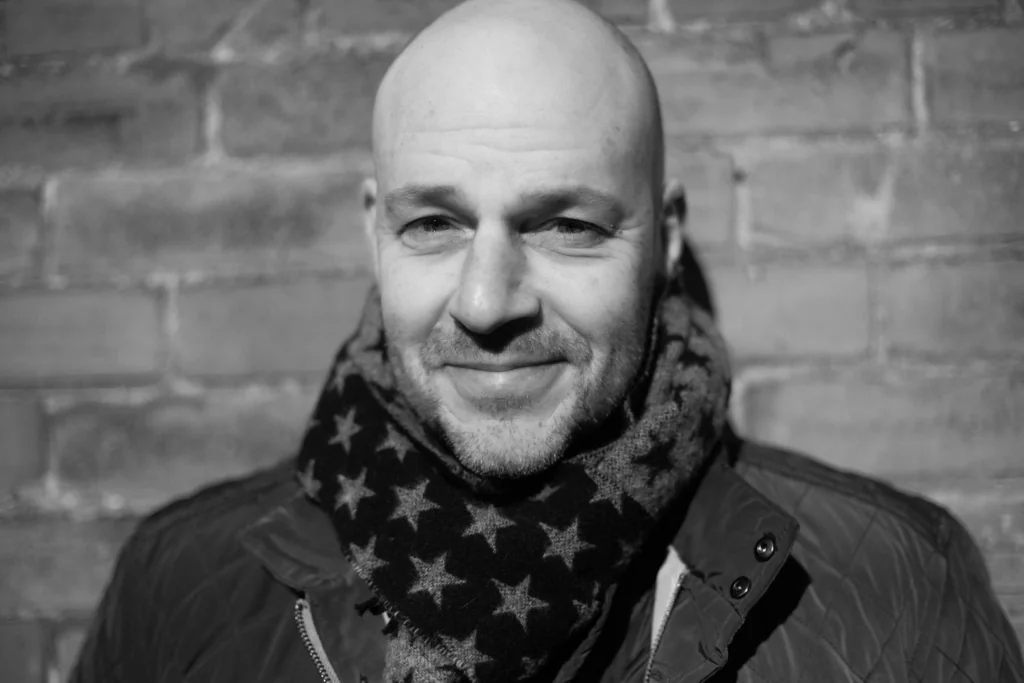
Matthew W. Sowell is a Partner at Rafferty Domnick Cunningham & Yaffa, P.A. and Managing Partner of the firm’s Jacksonville office. He is Board Certified in Civil Trial Law by The Florida Bar and Board Certified in Medical Professional Liability by the American Board of Professional Liability Attorneys. His practice concentrates on medical negligence involving neurological and cardiovascular injury, including stroke, paralysis, and traumatic brain injury.
Reviewed for legal accuracy · Last updated July 2026