Fort Lauderdale FL Stroke Misdiagnosis Lawyer
When a stroke is identified after an earlier medical visit, families often want to understand what changed and whether appropriate earlier care could have prevented additional harm. RDCY helps people evaluate stroke misdiagnosis concerns involving care in Fort Lauderdale FL. A delayed diagnosis can warrant investigation, but it does not establish malpractice on its own.
The review must connect the symptoms, examination, imaging, treatment decisions and resulting injury. This page explains practical steps, local records resources, Florida claim requirements and the firm’s relevant trial experience. For current or returning stroke symptoms, call 911; a legal discussion should never delay emergency care.
Find the Information You Need
Immediate steps · Fort Lauderdale records and care timeline · What an investigation examines · Firm experience · Consultation · FAQs
What to Do Now After a Possible Missed Stroke
If symptoms are occurring now or return, call 911. Sudden weakness, speech trouble, vision changes or difficulty with balance can require emergency assessment. Tell emergency personnel when changes were first noticed and when the patient was last known to be at their usual baseline. Symptoms that disappear still need urgent medical attention.
Once immediate care is addressed, preserve available records and a short chronology. Keep original files and label uncertain times honestly. Ask the current treating team about the diagnosis, care plan and unanswered medical questions. Counsel can assess the legal issues separately.
Sources: CDC: Signs and Symptoms of Stroke; Stroke: AHA scientific statement on TIA diagnosis and workup (2023).
- Record the last known baseline and first observed change as separate entries.
- List every hospital, practice, imaging provider, ambulance service and later care provider.
- Save discharge instructions, existing portal files, scan reports and original communications.
- Identify who witnessed symptoms or heard the instructions given.
- Keep appointment notices, bills and a record of help needed at home.
- Tell counsel about legal letters or deadlines before waiting for a complete record.
Need Help With Stroke Misdiagnosis in Fort Lauderdale FL?
Call us or request a case review by our experts.
Stroke Misdiagnosis in Fort Lauderdale: Identifying the correct record custodian
For care in Fort Lauderdale, the hospital chart, an independent physician’s records and a later rehabilitation file may have different custodians. Broward Health publishes facility-specific release-of-information instructions, including locations in Fort Lauderdale. Its request route does not cover unrelated providers.
Use the exact hospital or practice name and relevant treatment dates. Specify whether you need the emergency chart, inpatient file, scan reports or underlying images. Retain copies of requests and note what was supplied or missing. If the concern involves a publicly operated facility, tell counsel the entity name; branding alone does not determine which legal notice requirements or defenses apply.
Fort Lauderdale Medical Records and Patient Resources
Broward Health: medical-records requests provides a starting point for treatment within that provider’s system. Confirm the actual facility and dates. The reference is for records access; naming a provider here does not assert that it caused a missed stroke.
A useful request identifies the emergency and inpatient encounters, relevant imaging reports and available image files, consultations, discharge instructions and later treatment. Ask the custodian which items require a separate request. A portal download may not contain the entire file needed for expert assessment. A relative helping another adult should identify the patient’s authorization or other legal authority to obtain records.
Sources: HHS: Your Medical Records; HHS: Access to health information under HIPAA.
What a Stroke Misdiagnosis Investigation Examines
The central question is what appropriate care required given the patient’s presentation at the time. A later diagnosis cannot substitute for that assessment. Florida law requires proof of a departure from the applicable professional standard and a causal connection to the injury; medical injury alone does not create an inference of negligence.
Suitable experts may need to address emergency assessment, scan interpretation, neurological decisions or other relevant disciplines. The investigation should distinguish an error that changed the outcome from a difference in judgment that did not cause additional injury. It also needs to identify the actual individuals and entities responsible for the disputed decisions.
Sources: Florida Statutes § 766.102: medical negligence and expert testimony; Florida Statutes § 766.203: presuit investigation.
- Recognition: the symptoms reported, examination findings and reason for the initial diagnosis.
- Testing: the studies ordered, timing, actual images and what each interpretation showed.
- Communication: when findings reached the clinician responsible for follow-up or treatment.
- Treatment assessment: the stroke type, clinical eligibility and reasons for accepting or excluding an intervention.
- Transfers and discharge: the decisions, handoff information and return instructions.
- Causation: whether appropriate earlier care probably would have changed the claimed harm.
Why a Stroke Can Be Difficult to Recognize
A stroke does not always arrive with the same pattern of symptoms. Tarnutzer and colleagues’ 2017 Neurology meta-analysis examined emergency-department diagnosis of cerebrovascular events and found variation by symptom presentation, including nonspecific and transient symptoms. The AHRQ’s 2022 systematic review also identified stroke among conditions associated with serious diagnostic-error harms.
These studies describe defined populations and methods, not a current malpractice rate for Fort Lauderdale. They support asking what symptoms were reported, how clinicians evaluated them and whether another diagnosis reasonably explained the findings. They do not show that every episode of dizziness, headache or weakness is a stroke or that every alternate diagnosis is negligent.
Sources: Neurology: ED misdiagnosis of cerebrovascular events, meta-analysis (2017); AHRQ: Diagnostic Errors in the Emergency Department, systematic review (2022).
What Scan Reports Can and Cannot Settle
An imaging result has to be interpreted in its clinical context. A 2017 Neurology meta-analysis examined acute ischemic strokes with negative diffusion-weighted MRI findings. Its findings illustrate why a report alone may not settle every diagnostic question; they do not require every patient to receive the same testing.
Preserve the actual report and available images, the scan date and time, and the symptoms documented during that encounter. Ask the treating team what the test was intended to assess and what further evaluation is recommended now. For a legal review, a qualified expert should address the suitability, interpretation and use of the study in the individual case.
Sources: Neurology: DWI-negative acute ischemic stroke, meta-analysis (2017); Florida Statutes § 766.102: medical negligence and expert testimony.
Treatment Timing Requires an Individual Medical Assessment
Ischemic and hemorrhagic strokes require different assessment and management. Treatment eligibility depends on the clinical findings and available evidence. A family should not assume that a single clock determines every option or that every patient was eligible for clot-dissolving medication or a procedure.
The 2026 AHA/ASA guideline addresses acute ischemic stroke care, including patient selection and stroke systems of care. The published correction should be read with the guideline. The AHA’s accompanying summary explains that selected patients may qualify for interventions under differing circumstances. For a legal review of older care, experts must evaluate the professional standard applicable at that time, rather than automatically applying a later guideline.
Sources: AHA/ASA: 2026 acute ischemic stroke guideline; Stroke: correction to the 2026 AHA/ASA guideline; AHA: Top Things to Know about the 2026 stroke guideline.
When Symptoms Improve or the Diagnosis Changes
A transient episode can still need urgent assessment. The AHA’s 2023 scientific statement addresses TIA diagnosis, workup and risk reduction in the emergency department. It explains why a resolved episode is an important clinical history, rather than a reason for families to dismiss what they observed.
Keep the account of the initial episode alongside the later diagnosis. Record who supplied each piece of information. A changed diagnosis, a scan read differently on review or a later recommendation for further testing deserves explanation, but none alone resolves whether an earlier decision was negligent.
Sources: Stroke: AHA scientific statement on TIA diagnosis and workup (2023); Florida Statutes § 766.102: medical negligence and expert testimony.
Florida Presuit Requirements and Filing Deadlines
Florida medical-negligence claims involve presuit investigation and notice requirements. Section 766.203 addresses investigation and corroborating medical opinion; section 766.106 addresses notice and screening. These steps can require time to obtain records and evaluate the appropriate expert specialties.
The limitations law includes a generally applicable two-year period and a four-year outer limit for medical malpractice, together with exceptions and rules that can affect the calculation. Discovery, concealment, children and statutory tolling require individual analysis. Do not calculate a deadline by adding two years to one date or wait for a hospital response before asking counsel to assess it.
Sources: Florida Statutes § 95.11: limitations periods; Florida Statutes § 766.106: presuit notice and screening; Florida Statutes § 766.203: presuit investigation.
Documenting Additional Harm and Future Needs
The assessment must distinguish the effects of the underlying stroke from additional injury caused by the alleged negligence. Keep records of later treatment, therapy, work limitations, expenses and assistance with everyday activities. Record concrete changes: who helps, what task requires help, how often and since when.
There is no universal value for a missed-stroke case. Medical evidence and legally available losses guide the assessment. If the patient died, wrongful-death recovery requires separate analysis of the personal representative, survivors and Florida’s medical-negligence-specific restrictions. Family relationship alone does not answer who can recover each category of loss.
Sources: Florida Statutes § 766.102: medical negligence and expert testimony; Florida Statutes § 768.21: wrongful-death damages.
Recovery Questions for the Treating Team
Ask the treating team which follow-up appointments, therapy services and home supports are recommended. CDC describes rehabilitation that can include speech, physical and occupational therapy. The plan depends on the patient’s needs; a legal review should not delay prescribed treatment.
Bring a current medication list and ask whom to contact about new symptoms or problems carrying out the plan. Keep therapy evaluations and care instructions in the provider chronology. These records can help document the recovery course without implying that every continuing limitation was caused by a diagnostic error.
Sources: CDC: Stroke treatment, recovery and rehabilitation.
Questions About Stroke Misdiagnosis?
Call us or request a case review by our experts.
RDCY’s Stroke Litigation Experience and Professional Authority
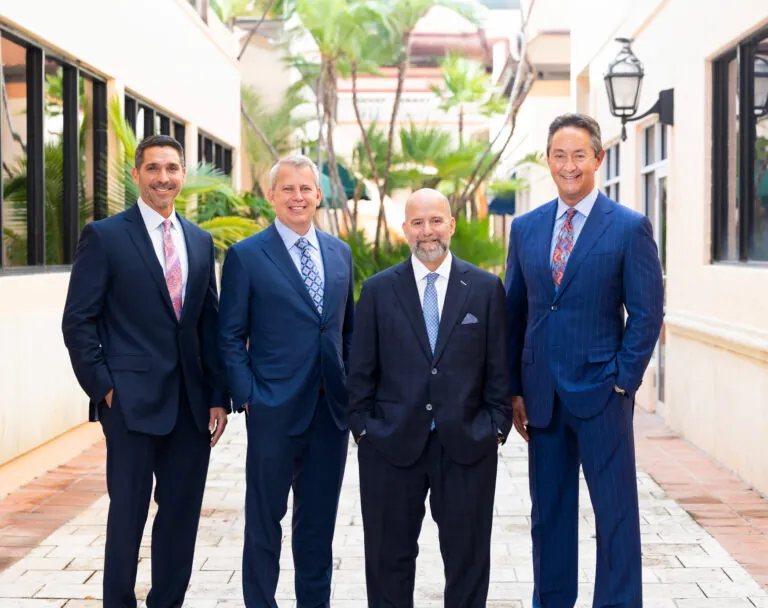
Ask a prospective lawyer how the medicine will be investigated, which expert disciplines may be needed and who will be responsible for the matter. RDCY’s stroke practice is supported by the firm’s medical-malpractice work and relevant trial experience. Sean C. Domnick’s professional biography identifies Florida Bar board certification in civil trial law and stroke-related legal teaching.
The biography lists “Stroke Litigation: Failure to Diagnose and Treat” for the Louisiana Association for Justice in 2021 and “The Epidemic of Missed Strokes” for the Western Trial Lawyers Association in 2024. It also identifies his article “Litigation and the Evolution of Strokes” in AIEG VOICE’s Winter 2022 medical-malpractice edition. For a family evaluating counsel, this is a documented record of engagement with stroke litigation itself: recognition failures, treatment decisions and the evidence needed to investigate them. Medical opinions in a case still come from appropriately qualified clinical experts.
Sources: Sean C. Domnick: professional biography.
Trial Certification and Medical-Malpractice Recognition
The Florida Bar’s civil-trial certification directory lists Sean Christopher Domnick as board certified in Civil Trial and eligible to practice in Florida. Best Lawyers identifies Medical Malpractice Law – Plaintiffs among his recognized practice areas and records recognition since 2005. These are independently checkable professional credentials relevant to selecting counsel for a disputed medical-negligence case.
A stroke case may turn on what an emergency physician documented, how an imaging finding was communicated, or whether an expert can connect a missed opportunity to additional disability. Civil-trial credentials and medical-malpractice experience matter because the case must be developed through evidence and expert testimony, then presented clearly if it proceeds to trial.
Sources: The Florida Bar: Civil Trial Certified Lawyers; Best Lawyers: Sean C. Domnick, recognized practice areas.
Experience with Experts, Depositions and Presuit Investigation
Domnick’s biography also records teaching on presuit investigation, defense-expert depositions and hospital liability. These subjects address practical obstacles in stroke litigation: obtaining a complete record, testing competing medical explanations and identifying the provider or institution responsible for a disputed decision. They complement his stroke-specific presentations rather than substituting for an assessment of the patient’s own care.
Families can ask RDCY who will lead their investigation, which clinical disciplines should review the records and how the firm will explain both the strengths and the weaknesses of the evidence. That conversation connects professional credentials to the work the case actually requires.
Sources: Sean C. Domnick: teaching and professional biography; Florida Statutes § 766.203: presuit investigation.
Elected Leadership and Professional Service
AAJ identifies Domnick as its 78th president, serving in 2023–2024. His firm biography records Palm Beach County Justice Association presidency in 2018, prior Miami-Dade Justice Association leadership, Florida Justice Association board service, and affiliations with the International Academy of Trial Lawyers, International Society of Barristers and American Board of Trial Advocates. His national presidency and prior local presidencies show elected leadership among plaintiff trial lawyers, alongside continued involvement in the organizations where litigation methods and civil-justice issues are discussed.
Sources: AAJ: Sean Domnick, president in 2023–2024; Sean C. Domnick: professional biography.
Read the Original Publications
- Why Stroke Misdiagnosis Is a Medical-Malpractice Crisis — Orlando Sentinel, June 5, 2025
- A Collective Effort — Trial, December 2023
- Treating Workers Fairly — Trial, January 2024
- AAJ: Sean Domnick, president in 2023–2024
- Google Scholar author-name lookup for S. C. Domnick
Read the original publications to assess the lawyer’s approach to litigation and patient-safety concerns. Google Scholar provides an additional author-name search; check the author identity and original publication before relying on a result. The clinical discussion on this page draws separately on CDC, AHA/ASA and peer-reviewed medical research.
Questions to Ask Before Choosing Counsel
Ask which records are missing, which medical specialties need review, what evidence would weaken the claim and how litigation costs and fees are handled. Ask who will communicate with you and whether the proposed engagement covers every relevant provider. Discuss these terms before signing an agreement.
Bring an organized account rather than an assumed conclusion. A careful assessment can identify a possible claim, explain why an unfavorable outcome does not meet the legal requirements, or determine what further evidence is needed. Association leadership, publication history and a lawyer’s credentials do not promise a result.
Related Stroke Resources
Stroke Misdiagnosis Help Across Florida
- West Palm Beach
- Pensacola
- Boca Raton
- Delray Beach
- Boynton Beach
- Jupiter
- Wellington
- Orlando
- Tampa
- Miami
- Fort Lauderdale
- Jacksonville
- The Villages
- St. Petersburg
- Cape Coral
- Hialeah
- Port St. Lucie
Firm Office Information
Palm Beach Gardens office: 4560 Donald Ross Road, Palm Beach Gardens, FL 33418. This is the firm’s Palm Beach Gardens office, serving as a contact point for its statewide practice.
Ready to Discuss Your Stroke Misdiagnosis Matter?
Call us or request a case review by our experts.
Talk With RDCY About Fort Lauderdale Stroke Care
Call (561) 516-5168 for a free consultation. Describe the first medical encounter, later diagnosis and what changed. You can start with the information available now and identify missing records during the discussion.
If you are helping another person, explain your relationship and records-access authority. Ask about the proposed evaluation and confirm any meeting arrangements. Initial contact does not by itself establish representation or guarantee that the firm will accept the case.
Sources: RDCY: consultation and office information; HHS: Your Medical Records.
Fort Lauderdale FL Stroke Misdiagnosis FAQs
These answers provide general information about Florida claims and useful records. Current symptoms require medical care; individual legal questions require review of the facts.
What should I do if stroke symptoms return after an earlier visit?
Call 911 for emergency assessment if stroke symptoms are occurring or return. Explain the earlier visit and describe the new changes to emergency personnel. Do not use a malpractice consultation to decide whether the patient needs urgent care.
After immediate care is addressed, preserve the earlier discharge paperwork and later records. Keep the original accounts of symptoms and timing, including uncertainty. These materials can help distinguish the first presentation from the subsequent episode. They do not establish a legal claim by themselves; any review must address both appropriate care and the effect of an alleged error.
Sources: CDC: Signs and Symptoms of Stroke; Florida Statutes § 766.102: medical negligence and expert testimony.
Does a later stroke diagnosis mean the first doctor committed malpractice?
No. A later diagnosis alone does not establish malpractice. The assessment must examine the clinical information available at the first encounter, the applicable professional standard and whether a departure caused additional injury.
A different diagnosis can be a useful starting point for investigation. Keep the first chart, later diagnostic findings and the explanations you received. Identify precisely which decision concerns you rather than assuming every provider was at fault. Qualified expert assessment can address whether the initial evaluation was appropriate and whether timely different care probably would have changed the claimed harm.
Sources: Florida Statutes § 766.102: medical negligence and expert testimony; Florida Statutes § 766.203: presuit investigation.
Can symptoms that disappeared still matter to a missed-stroke investigation?
Yes. An episode that resolved can be important to both medical assessment and the history reviewed by counsel. A transient ischemic attack requires urgent clinical attention; symptom improvement does not establish that it was safe to ignore the episode.
Record what was observed, who saw it and when it changed. Save any instructions given after that episode and later findings. The AHA’s TIA statement supplies clinical context, but it cannot decide whether a particular earlier encounter met the standard of care. An investigation must compare the actual presentation and response rather than assigning liability solely because a later stroke occurred.
Sources: Stroke: AHA scientific statement on TIA diagnosis and workup (2023); Florida Statutes § 766.102: medical negligence and expert testimony.
Does missing a treatment window automatically establish a claim?
No. The elapsed time must be considered with the stroke type, findings, treatment eligibility and reasons for the decisions made. Not every patient qualifies for every intervention, and the legal review must establish additional harm caused by a departure from appropriate care.
Preserve the timeline and identify what you were told about treatment. Suitable experts can assess the options and contraindications relevant to that patient. Current guidance includes different selection pathways; the guideline and its correction should be read together. For earlier treatment, the assessment concerns the standard applicable when the care occurred. A general guideline cannot determine the outcome of an individual case.
Sources: AHA/ASA: 2026 acute ischemic stroke guideline; Stroke: correction to the 2026 AHA/ASA guideline; Florida Statutes § 766.102: medical negligence and expert testimony.
What is the Florida deadline for a stroke misdiagnosis claim?
Florida’s medical-malpractice limitations rules generally include a two-year period and a four-year outer limit, subject to exceptions and calculation rules. The discovery date and incident date can raise different issues. A lawyer should assess the relevant dates rather than relying on a single calendar calculation.
Presuit notice and statutory tolling can affect the calculation, and additional issues may arise for particular defendants or circumstances. Bring the original treatment dates, later findings, when you first suspected an injury and any correspondence. Do not wait for every record or a complaint response before seeking a deadline assessment. Starting a records request or contacting a hospital does not itself complete the required legal steps.
Sources: Florida Statutes § 95.11: limitations periods; Florida Statutes § 766.106: presuit notice and screening.
Must a Florida stroke claim be investigated before a lawsuit is filed?
Yes. Florida law requires presuit investigation and notice for medical-negligence claims. The investigation addresses whether there are grounds to believe negligence occurred and caused injury; the statutory process includes corroborating medical opinion and a screening period.
For a family, the useful first task is identifying the treatment sequence and preserving records. Counsel can determine the appropriate expert specialties, potential defendants and notice requirements. Do not assume that a hospital complaint or a short personal account substitutes for presuit compliance. The investigation and deadlines need to be considered together so that gathering evidence does not obscure an approaching legal time limit.
Sources: Florida Statutes § 766.203: presuit investigation; Florida Statutes § 766.106: presuit notice and screening; Florida Statutes § 95.11: limitations periods.
Can a relative request the patient’s stroke records?
A relative’s ability to obtain records depends on authorization or applicable legal authority, rather than family relationship alone. The patient can generally exercise access rights, while another person may need documentation recognized by the custodian and governing law.
Explain who is making the request and in what capacity. Ask the custodian what documentation is required and which records it holds. Preserve copies of requests and responses. If the patient cannot act or has died, counsel can help identify the legal-authority issues that require attention. Do not assume that access to a portal account gives permission to act for the patient in every medical or legal matter.
Sources: HHS: Your Medical Records; HHS: Access to health information under HIPAA.
Can a family pursue a claim if the patient died after a missed stroke?
Possibly, if the evidence supports a wrongful-death claim arising from medical negligence. A death does not by itself establish negligence or causation. Florida’s wrongful-death law also governs who can recover particular losses and includes medical-negligence-specific restrictions.
Identify the family relationships, any estate representative and the care being questioned. Preserve records of the original event and later treatment, together with relevant expenses and correspondence. Counsel must assess the legal authority to act, the available categories of recovery and the applicable deadlines. It would be inaccurate to assume that every relative has an independent claim or that another family’s settlement establishes a value for this case.
Sources: Florida Statutes § 768.21: wrongful-death damages; Florida Statutes § 766.102: medical negligence and expert testimony; Florida Statutes § 95.11: limitations periods.
Where should I begin a records request for Fort Lauderdale stroke treatment?
Begin with the actual treating facility or practice and its release-of-information instructions. Broward Health provides a published route for records from its facilities. Identify all other custodians separately, including imaging or follow-up providers where relevant.
Bring the original documents associated with the concern and identify any missing material. A short chronology should separate first-hand observations, written records and explanations received later. Counsel can determine what additional evidence and expert disciplines are needed. Present care decisions remain with qualified clinicians. The purpose of legal review is to connect a supported departure from appropriate care to additional injury, rather than draw a conclusion from incomplete information.
Sources: Florida Statutes § 766.102: medical negligence and expert testimony; Broward Health: medical-records requests; HHS: Your Medical Records.
How do I contact RDCY about stroke care in Fort Lauderdale?
Call (561) 516-5168 or use the firm’s contact page to request a free consultation. Explain where and when the care occurred, the later diagnosis and the concern you want assessed. Mention any urgent legal correspondence before waiting to obtain a full file.
Prepare a provider list and a short account of what changed. If speaking for another adult, identify your relationship and authorization. Ask who would evaluate the matter, what documents to supply securely and what terms would apply if representation is offered. Do not send sensitive medical records through a public review or comments section. An initial conversation does not itself create an attorney-client relationship or guarantee acceptance.
Sources: RDCY: consultation and office information; HHS: Your Medical Records.