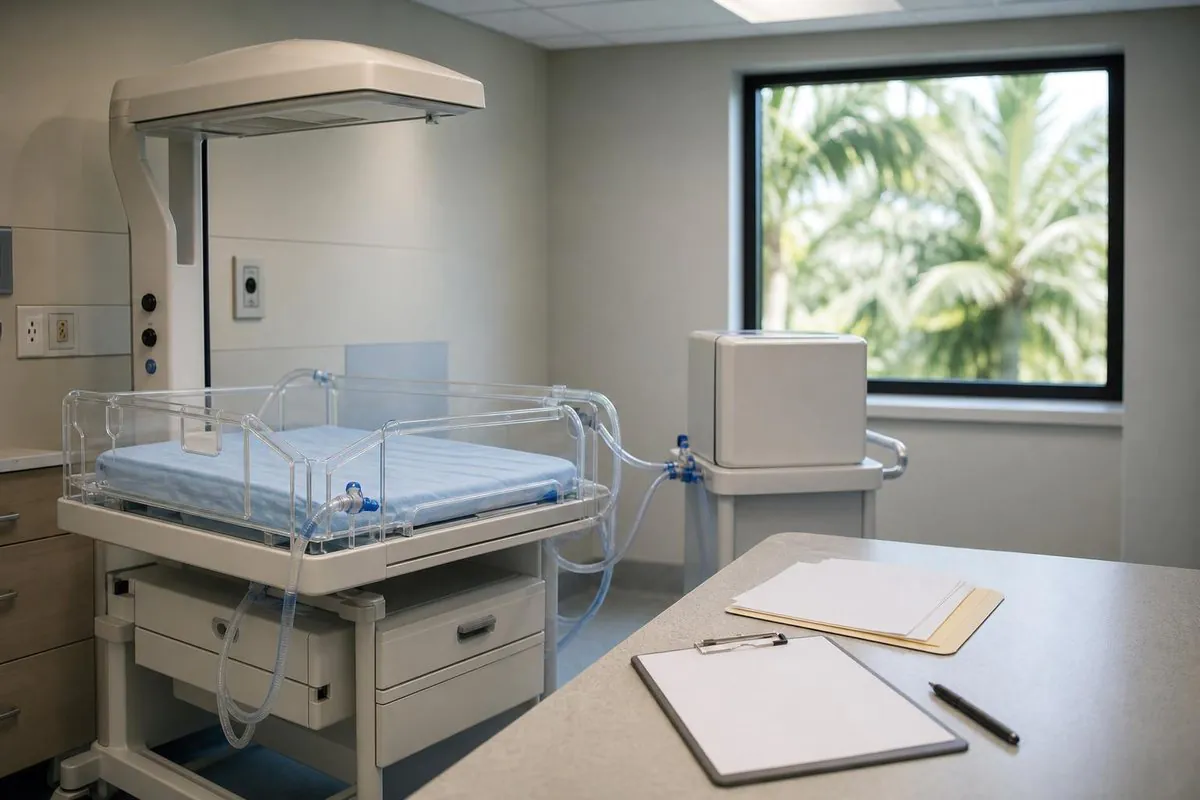
What records matter when a Palm Beach County newborn needs cooling treatment after birth?
When a newborn needs cooling treatment after birth—often called therapeutic hypothermia—parents in Palm Beach County are usually trying to do several hard things at once: understand what happened during labor, absorb fast-moving NICU decisions, and plan for follow-up care.
A reliable way to reduce confusion later is to treat the first days as a documentation project. Cooling is time-sensitive and protocol-driven, and that means the “why” and “when” are recorded across multiple systems: fetal monitor files, labor-and-delivery notes, delivery-room resuscitation records, lab reports, NICU flowsheets, and sometimes a separate transport packet.
This article is general educational information—not medical or legal advice. It explains which records typically matter most when a Palm Beach County newborn receives cooling, how Florida parents can request them, and which local resources are worth documenting while your baby recovers.
Related Practice Resources
- Medical Malpractice Litigation
- What to Consider When Settling a Florida Medical Malpractice Case
- Process of a Florida Medical Malpractice Case
- Medical Malpractice Statute of Limitations
- Liability in Florida Medical Malpractice Cases
Does Your Newborn Need Cooling Treatment After Birth?
Call us or request a case review by our experts.
Why cooling cases become “records cases”
Therapeutic hypothermia is used for selected infants with suspected moderate-to-severe hypoxic-ischemic encephalopathy (HIE). Current guidance describes cooling to a target core temperature range (commonly 33.5–34.5°C) started within 6 hours of birth and continued for 72 hours for eligible infants, with careful monitoring and defined protocols. (pubmed.ncbi.nlm.nih.gov)
That tight window makes cooling/HIE cases unusually dependent on timestamps. Families may later hear, “Cooling had to start by six hours,” but the supporting documentation is usually spread out. For example:
- The labor record explains what clinicians were seeing before birth.
- The resuscitation record and early labs explain the first minutes after birth.
- The cooling protocol notes and device logs show the start time, target temperature, and temperature management through cooling and rewarming.
A key AAP clinical report includes a recommended decision pathway and notes that early blood gas samples (cord or other early samples) should be obtained within 60 minutes of birth—one reason cord gases and early neonatal gases are repeatedly referenced in cooling decisions and later chart reviews. (publications.aap.org)
Start a parent timeline today (before records arrive)
Even if you don’t have records yet, start a one-page timeline. The goal is not to “recreate the chart,” but to create a map that helps you request the right documents and notice missing pieces.
Suggested “anchors” to write down (use approximate times if needed and note who told you):
- time of birth
- when you were first told there were fetal heart rate concerns (if discussed)
- whether cord blood was drawn for gases
- when your baby went to the warmer/resuscitation area
- whether advanced resuscitation was needed (intubation, chest compressions, epinephrine)
- time of first newborn blood gas and first glucose check (if mentioned)
- time cooling was discussed, ordered, and started
- if transferred: request/acceptance/departure/arrival times
If you later request records, your timeline helps you follow up with precise questions such as, “Where is the EFM tracing export?” or “Is the transport run sheet stored with a third-party provider?”
What to request: a practical checklist (and who usually has each piece)
In Palm Beach County births, it’s common for different entities to document in different systems or under different business names. To build a complete record set, plan to request records from each record-holder, which may include:
- the birth hospital (facility record)
- the OB practice and any maternal-fetal medicine (prenatal record)
- anesthesia group (separate anesthesia chart)
- neonatology group and consultants (separate physician/practitioner records)
- radiology group (imaging reports and image access)
- transport provider (if your baby was transferred)
Below is a “what to ask for” list that aligns with how cooling decisions are typically documented.
1) Maternal prenatal chart (OB/MFM)
Ask for the complete prenatal record, including prenatal visit notes, labs, medication lists, ultrasounds, consults, and antenatal testing records (if performed). These items commonly provide gestational age dating and pregnancy context referenced by neonatology.
2) Hospital labor-and-delivery (L&D) record (high-yield components)
Request the complete L&D record and specifically name:
- triage note; nursing flowsheets; provider labor progress notes
- medication administration record (MAR)
- anesthesia record (including vital sign trends and meds)
- delivery note; operative report (if C-section or operative vaginal delivery)
- placenta pathology order/report (if the placenta was sent)
- electronic fetal monitoring (EFM) tracing/data (not only a summary)
EFM tracings are often the most time-dense evidence from labor. The NICHD/ACOG/SMFM workshop report on EFM terminology explains why standardized definitions and interpretation systems matter and why tracings are commonly requested for later review, rather than relying on abbreviated narrative descriptions. (meddean.luc.edu)
3) Delivery-room/newborn resuscitation documentation
Request:
- Apgar scores (including any documented 10-minute Apgar)
- resuscitation flow sheet/“code narrator” documentation
- respiratory therapy records (oxygen/vent settings, intubation timing)
- initial newborn vitals and bedside glucose checks
AAP/AHA neonatal resuscitation guidance discusses that infants ≥36 weeks who receive advanced resuscitation should be examined for evidence of HIE to determine whether they meet criteria for therapeutic hypothermia. (publications.aap.org)
4) Cord blood gases and early neonatal blood gases (actual lab reports)
Request the lab report pages (not just a note saying “acidotic”), showing specimen type and timestamps:
- cord arterial and cord venous gases (if both were drawn)
- first neonatal blood gas and related metabolic labs (as available)
ACOG guidance (available via PubMed) describes cord blood gas and acid-base assessment as an objective determination of fetal metabolic condition at birth and notes circumstances where clinicians should attempt to obtain venous and arterial samples. (pubmed.ncbi.nlm.nih.gov)
5) NICU cooling protocol + device logs + nursing flowsheets
Request:
- cooling initiation note/order set/protocol
- nursing flowsheets (including neurologic checks)
- continuous temperature/device logs (probe location/type, set points, trends)
- medication administration record (sedation/analgesia; antiseizure meds if used)
- rewarming plan and rewarming completion note
6) Neurology, EEG/aEEG, and imaging
Request:
- neurology consult notes
- EEG/aEEG reports and seizure documentation (if applicable)
- head ultrasound report (if performed)
- MRI brain report and instructions to obtain images
7) Transfer/transport records (if your baby was moved)
Transfers can create the biggest record gaps. Request records from:
- the birth hospital
- the receiving hospital
- the transport provider (run sheet, vitals/temperature trend, meds, exact times)
Federal EMTALA law addresses appropriate transfers and includes statutory requirements relevant to transfers from hospitals, and CMS provides patient-facing EMTALA rights information. (govinfo.gov)
How Florida parents can request records (and reduce missing pieces)
Florida has separate statutes addressing records held by licensed facilities (hospitals) and by practitioners (non-facility records).
- Hospitals and other licensed facilities: Florida Statutes section 395.3025 addresses furnishing a true and correct copy of records upon written request after discharge, “in a timely manner” and “without delays for legal review,” and includes fee caps and a continuing-care exception. (flsenate.gov)
- Practitioner records: Florida Statutes section 456.057 addresses furnishing practitioner records upon request “in a timely manner” and “without delays for legal review,” and clarifies it does not apply to facilities licensed under chapter 395. (flsenate.gov)
- HIPAA access rights: HHS explains that, with limited exceptions, individuals have a HIPAA right to access protected health information about them in designated record sets maintained by covered entities. (hhs.gov)
Practical tips to avoid “missing pieces”:
- Put requests in writing and keep a dated copy.
- Request both the mother’s delivery record and the newborn’s record.
- Name high-risk omissions explicitly: EFM tracings/data, resuscitation flow sheet, cord gases, cooling device logs/flowsheets, EEG reports, imaging reports, and transport records.
- If you receive a limited PDF, follow up and ask whether missing items are stored in a different system (fetal monitoring archive, respiratory therapy module, device log export, or scanned outside records).
Palm Beach County documentation after discharge: what to save and why it’s locally relevant
Cooling/HIE concerns often lead to ongoing appointments and service referrals. Some of the most important documents for daily life are outside the hospital chart.
Vital records (Palm Beach County relevance). If you need certified birth certificates for benefits or insurance, the Florida Department of Health in Palm Beach County lists “Birth and Death Certificates” and provides Vital Statistics contact information at its Main Office location in West Palm Beach. (palmbeach.floridahealth.gov) The Florida Department of Health’s statewide birth certificate page explains eligible requestors and ordering options. (floridahealth.gov)
Early intervention (Early Steps). Florida Early Steps publishes a local program directory that includes a Treasure Coast program serving Palm Beach County and lists contacts and phone numbers. (floridaearlysteps.com) Keep referral confirmations, evaluation results, IFSP documents, and therapy visit summaries.
Local parenting navigation. EveryParentPBC is Palm Beach County-specific; its “About” page describes it as a local resource for Palm Beach County families and includes information about the Children’s Services Council of Palm Beach County. (everyparentpbc.org) If you are coordinating therapies and community programs, keeping a folder of program communications can prevent duplicated intake steps.
Deadlines and presuit steps: why early record organization can matter without assuming wrongdoing
Many families request records to understand what happened and plan for care—not because they’ve decided anyone made a mistake. But if legal questions ever arise, Florida timelines and presuit steps are record-driven.
Florida’s medical malpractice limitations statute (Florida Statutes section 95.11(5)(c)) includes a two-year limitations period (incident or discovery) and an outside four-year limit, with special language for minors (including an “eighth birthday” provision) and an extension concept in certain fraud/concealment situations. (flsenate.gov) Florida’s presuit statutes include a verified written medical expert opinion component (section 766.203) and presuit notice with a 90-day presuit screening period (section 766.106). (flsenate.gov)
If your baby’s care involved multiple facilities and large volumes of timestamped data, starting record requests early can reduce the risk of missing EFM exports, transport documentation, or imaging/EEG reports stored outside the main chart.
How RDCY can help investigate concerns about newborn cooling treatment
When your newborn needs cooling treatment, your first priority is getting your child the care they need. If you later have questions about recognition, treatment timing, or a transfer between hospitals, Rafferty Domnick Cunningham & Yaffa can help investigate them. We handle Florida birth-injury and medical-malpractice matters and work with qualified medical experts to examine the care and any resulting harm.
That investigation can require a complete timeline assembled from delivery records, assessments, treatment orders, nursing flowsheets, temperature logs, and transport records. We examine the evidence from the involved providers rather than assuming that one discharge summary explains the entire course. Your notes can help identify questions about what you were told and when.
Sean C. Domnick is a board-certified civil trial lawyer whose practice includes birth-injury litigation. His experience with complex medical-malpractice matters supports careful development of the legal evidence; medical questions require appropriate expert review. An adverse outcome alone does not establish negligence.
Bring the records you have and describe your concerns. We can explain what further review involves, which deadlines may apply, and what options may be available. You do not need to interpret the medical chart yourself before seeking answers.
Related Rafferty Domnick Cunningham & Yaffa resources
- Florida Hypoxic-Ischemic Encephalopathy Lawyers
- Florida Medical Malpractice Lawyer
- Collecting Evidence for a Medical Malpractice Claim in Florida
- Filing a Medical Malpractice Claim
- Contact Us (Palm Beach Gardens and West Palm Beach)
Professional Recognition


Recognition applies to the named attorneys and selection years. See the linked profiles for details.
Have Questions About Your Baby’s Treatment Records?
Call us or request a case review by our experts.
Related RDCY Videos and Social Posts
- What to Do After a Suspected Birth Injury — YouTube.
- Birth Injury Lawsuits: Common Misconceptions — YouTube.
- Sean Domnick’s PEOPIL Session: Baby Loss, Neuroscience and Damages — Instagram.
- Sean Domnick on AI and Independent Medical Judgment — Facebook.
- Sean Domnick on Cardiology and Medical-Legal Issues — Facebook.
- Sean Domnick’s PEOPIL Conference Session: Baby Loss, Neuroscience and Damages — LinkedIn.
NOTABLE RESULTS
Our partner Nicole Kruegel’s medical-malpractice work includes the following settlement. This is a broader medical-malpractice result, separate from the newborn cooling-treatment issues discussed here.
$2,500,000 settlement
Read more about these results
- $2,500,000 settlement: Nicole Kruegel resolved this medical-malpractice case. Her separate birth-injury work includes a confidential result; its amount is not disclosed. Read the source account.
Read the firm’s published results
Prior results do not guarantee a similar outcome. Each case is different and must be evaluated on its own facts.
GOOGLE REVIEWS
General feedback from individual five-star Google reviews:
“He is true lawyer for the people displaying great enthusiasm, professionalism and compassion.”
— Jeff
“Can not say thank you enough!”
— PJ
FAQs: Palm Beach County newborn cooling treatment records (Florida)
These FAQs address common record questions families face after cooling is started or considered. This is general information; your child’s facts and records control.
What records prove when cooling was actually started (and whether it was within the treatment window)?
The most reliable “cooling start time” evidence typically comes from three places used together: (1) the cooling initiation order/protocol note (often stating the reason and the start time), (2) nursing flowsheets documenting the first cooling actions, and (3) the cooling device or temperature log showing when the baby reached and maintained the target range. The AAP clinical report on therapeutic hypothermia describes cooling as a time-sensitive therapy initiated within 6 hours of birth for eligible infants, which is why the exact timestamps matter.
If there was a transfer, also request the transport run sheet and temperature trend. In real-world chart sets, transport documentation may be the only continuous record that bridges two hospitals’ charts and shows whether cooling was continuous or interrupted. Asking for the device/flowsheet exports (not just the discharge summary) usually clarifies the timeline.
Sources: Therapeutic Hypothermia for Neonatal Hypoxic-Ischemic Encephalopathy: Clinical Report – PubMed; Therapeutic Hypothermia for Neonatal Hypoxic-Ischemic Encephalopathy: Clinical Report | Pediatrics | American Academy of Pediatrics; Whole-body hypothermia for neonates with hypoxic-ischemic encephalopathy. – PubMed.
Which labor-and-delivery records matter most when cooling is started for suspected HIE?
For many deliveries, the highest-yield labor record is the electronic fetal monitoring (EFM) tracing/data itself, because it preserves fetal heart rate patterns continuously rather than summarizing them after the fact. Pair EFM data with the labor nursing flowsheets, provider progress notes, medication administration record, anesthesia chart, and delivery/operative reports so the timeline reflects what was recognized and what interventions were tried.
Standard definitions and interpretation frameworks matter because they shape what is documented. The NICHD/ACOG/SMFM workshop report explains EFM terminology and describes a three-tier interpretation system, which helps explain why later reviewers often insist on the tracings themselves. If you receive a packet without EFM tracings, follow up and ask whether they are stored in a separate monitoring archive that requires a specific export.
Sources: The 2008 NICHD Workshop Report on Electronic Fetal Monitoring (PDF); SMFM: The 2008 NICHD workshop report on electronic fetal monitoring.
Why do cord blood gases and the first newborn blood gas matter so much in cooling cases?
Cooling eligibility decisions often rely on early objective evidence of acid-base status. The AAP clinical report’s initiation algorithm states that blood gas samples (cord or early neonatal samples) should be obtained within 60 minutes of birth, and it summarizes how major trials used biochemical thresholds together with clinical criteria. That is why the actual lab report pages—with specimen type and timestamps—are frequently essential.
A common parent pitfall is receiving a note that says “cord gas acidotic” without the underlying report. Ask for cord arterial and cord venous gases (if both were drawn), plus the first neonatal blood gas report. ACOG’s Committee Opinion on cord blood gas and acid-base analysis (available via PubMed) describes cord gas assessment as an objective determination of fetal metabolic condition at birth and lists situations where clinicians should attempt to obtain venous and arterial samples.
Sources: Therapeutic Hypothermia for Neonatal Hypoxic-Ischemic Encephalopathy: Clinical Report | Pediatrics | American Academy of Pediatrics; ACOG Committee Opinion No. 348, November 2006: Umbilical cord blood gas and acid-base analysis – PubMed.
What delivery-room resuscitation documents should we request if cooling was considered or started?
Request the documents that show exactly what interventions were needed and when: Apgar scores (including any 10-minute Apgar), the neonatal resuscitation flow sheet or “code narrator,” respiratory therapy notes (oxygen/ventilator settings and intubation timing), and early newborn vitals and glucose checks. These items can be stored outside narrative notes, so naming them in the request increases the odds you receive the full record.
AAP/AHA neonatal resuscitation guidance notes that infants ≥36 weeks who receive advanced resuscitation should be examined for evidence of HIE to determine whether they meet criteria for therapeutic hypothermia, and it describes therapeutic hypothermia as potentially improving outcomes for selected infants when implemented carefully. That makes the resuscitation timeline and stabilization details important for medical follow-up and any later expert review.
Sources: Part 5: Neonatal Resuscitation: 2025 American Heart Association and American Academy of Pediatrics Guidelines | Pediatrics | American Academy of Pediatrics; Part 5: Neonatal Resuscitation: 2025 AHA/AAP Guidelines (PDF); Therapeutic Hypothermia for Neonatal Hypoxic-Ischemic Encephalopathy: Clinical Report – PubMed.
Which NICU cooling records matter most for follow-up care planning (not just a legal review)?
For follow-up care, the highest-yield records are the ones that explain why cooling was chosen, how temperature was controlled, and what neuromonitoring showed. Request the cooling initiation note/order set, nursing flowsheets (including neurologic checks), device temperature logs (probe type/location, set points, trends), medication administration record (sedation/analgesia and antiseizure meds if used), and the rewarming plan/completion note. These are the documents specialists often use to interpret the course later.
The AAP clinical report recommends that centers offering therapeutic hypothermia implement monitoring guidance and structured neurodevelopmental follow-up, and ILCOR’s neonatal life support publication emphasizes that cooling should be conducted under clearly defined protocols with adequate resources. For parents, that translates into requesting the “working” logs and flowsheets, not only the discharge summary, because those logs often contain the time-stamped details clinicians rely on.
Sources: Therapeutic Hypothermia for Neonatal Hypoxic-Ischemic Encephalopathy: Clinical Report – PubMed; Therapeutic Hypothermia for Neonatal Hypoxic-Ischemic Encephalopathy: Clinical Report | Pediatrics | American Academy of Pediatrics; Neonatal Life Support: 2025 ILCOR CoSTR | Pediatrics | American Academy of Pediatrics.
If our baby was transferred for cooling, what extra records should we request (and why)?
If your baby was transferred, request three complete packets: the birth hospital newborn chart (and the mother’s delivery record), the receiving NICU chart, and the transport provider’s run sheet. The transport record may be the only document showing continuous temperatures, respiratory support, medications, and exact departure/arrival and handoff times. In a time-sensitive therapy, those timestamps can be clinically important.
Federal EMTALA law addresses appropriate transfers and includes requirements tied to transfer conditions, and CMS provides patient-facing information about EMTALA rights. While EMTALA does not guarantee families automatically receive every attachment exchanged between facilities, it supports why transfer documentation and related records should be requested early from both hospitals and the transport provider.
Sources: 42 U.S.C. § 1395dd – Examination and treatment for emergency medical conditions and women in labor | GovInfo; You have rights in an emergency room under EMTALA | CMS.
What does Florida law say about requesting hospital records for a newborn and delivery records for the mother?
For Florida hospitals and other licensed facilities, Florida Statutes section 395.3025 addresses the facility’s obligation, upon written request and only after discharge, to furnish patient records in a timely manner and without delays for legal review, including the parent of a minor. It also addresses copy charges and includes an exception where a patient whose records are copied or searched for continuing medical care is not required to pay copying or search charges.
In practical terms, families often need to request both the mother’s L&D record and the newborn’s record because key medications, fetal monitoring interpretation, and decision-making can be documented in the maternal chart. If your production lacks EFM tracings or other key items, ask whether those records are stored separately and how the facility exports them.
Sources: Chapter 395 Section 3025 – 2026 Florida Statutes – The Florida Senate; What personal health information do individuals have a right under HIPAA to access? | HHS.gov.
What does Florida law say about requesting records from doctors or specialist groups (not the hospital record)?
Florida Statutes section 456.057 addresses practitioner records and requires a health care practitioner, upon request of the patient or the patient’s legal representative, to furnish copies of reports and records relating to examination or treatment in a timely manner and without delays for legal review. The statute also states it does not apply to facilities licensed under chapter 395—one reason families may need separate requests for the hospital record versus specialist-held records.
Cooling cases often involve multiple practitioner groups: neonatology, pediatric neurology, radiology, and sometimes anesthesia or transport medical direction. If you only request “the hospital chart,” you may miss separate practitioner notes or externally stored reports. Consider sending separate written requests to each specialist group and asking for both narrative notes and test reports (EEG reports, imaging reports, and consult notes).
Sources: Chapter 456 Section 057 – 2026 Florida Statutes – The Florida Senate; 45 CFR § 164.524 – Access of individuals to protected health information. | LII / Legal Information Institute.
What are key Florida timing rules that make early record collection important in a possible birth injury review?
Florida Statutes section 95.11(5)(c) addresses medical malpractice timing and includes a two-year limitations period (incident or discovery) and an outside four-year limit, with special language for minors (including an “eighth birthday” provision). The statute also includes extension language in certain fraud/concealment circumstances and notes exceptions where Florida’s NICA statutes provide an exclusive remedy.
Florida also has presuit procedures in chapter 766. Section 766.203 addresses the requirement for a verified written medical expert opinion as part of presuit steps, and section 766.106 describes presuit notice and a 90-day presuit screening period (with tolling language). Even when a family is only seeking answers, cooling cases can involve multiple facilities and large record sets, so starting record requests early can reduce missing or overwritten data.
Sources: Chapter 95 Section 11 – 2026 Florida Statutes – The Florida Senate; Chapter 766 Section 203 – 2026 Florida Statutes – The Florida Senate; Chapter 766 Section 106 – 2026 Florida Statutes – The Florida Senate.
Which Palm Beach County local resources should we document while our baby recovers after cooling?
For vital records, the Florida Department of Health in Palm Beach County lists “Birth and Death Certificates” among services at its Main Office location in West Palm Beach and provides Vital Statistics contact information and hours. The statewide Florida Department of Health birth certificate page explains eligible requestors and confidentiality rules and outlines ordering options, which can help families obtain certified copies for insurance or benefit applications.
For early intervention, Florida Early Steps publishes a local program directory that includes a Treasure Coast program serving Palm Beach County, with contacts and phone numbers. Keep referral confirmations, evaluations, and IFSP paperwork. For local parenting and program navigation, EveryParentPBC’s “About” page describes the EveryParent campaign as a Palm Beach County resource and includes information about Children’s Services Council of Palm Beach County.
Sources: Main Office – Florida Department of Health in Palm Beach County; Birth Certificates – Florida Department of Health; Early Steps Local Program Directory (contact list PDF); About EveryParent | Children’s Services Council of Palm Beach County.
Need Help Understanding a Possible Birth Injury Claim?
Call us or request a case review by our experts.