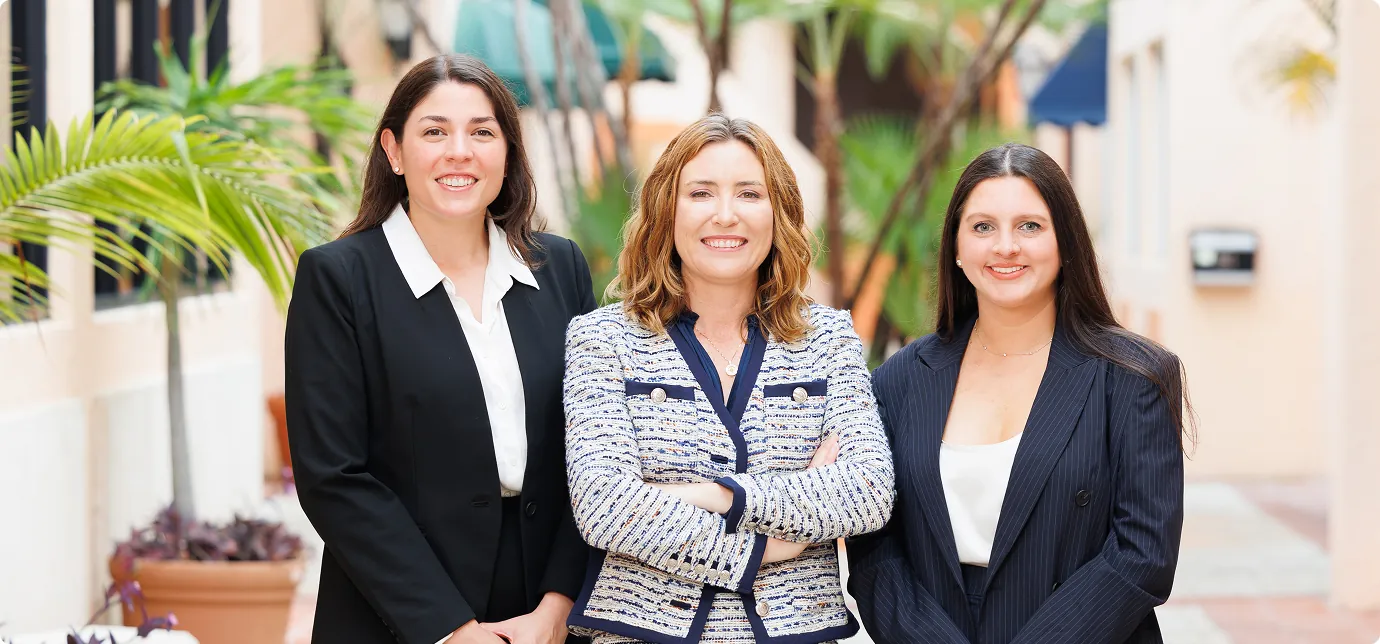
Experienced Personal Injury Lawyers in Palm Beach Gardens, FL
An injury can leave a family trying to make several decisions at once: arranging treatment, understanding the insurance response and finding out whether someone should be held responsible. When the concern is medical care, there is another question: did an illness or complication cause the harm, or did preventable care failures make it worse?
Rafferty Domnick Cunningham & Yaffa helps people in Palm Beach Gardens FL with personal injury, medical malpractice and other serious negligence matters. Our office on Donald Ross Road gives patients and families a local point of contact for a practice that investigates complex evidence and prepares cases for the possibility of trial.
You can begin with the facts you know. You do not need to identify the precise legal claim, assemble every record or decide who was negligent before asking for an assessment.
Rafferty Domnick Cunningham & Yaffa
Personal Injury and Medical Malpractice legal help
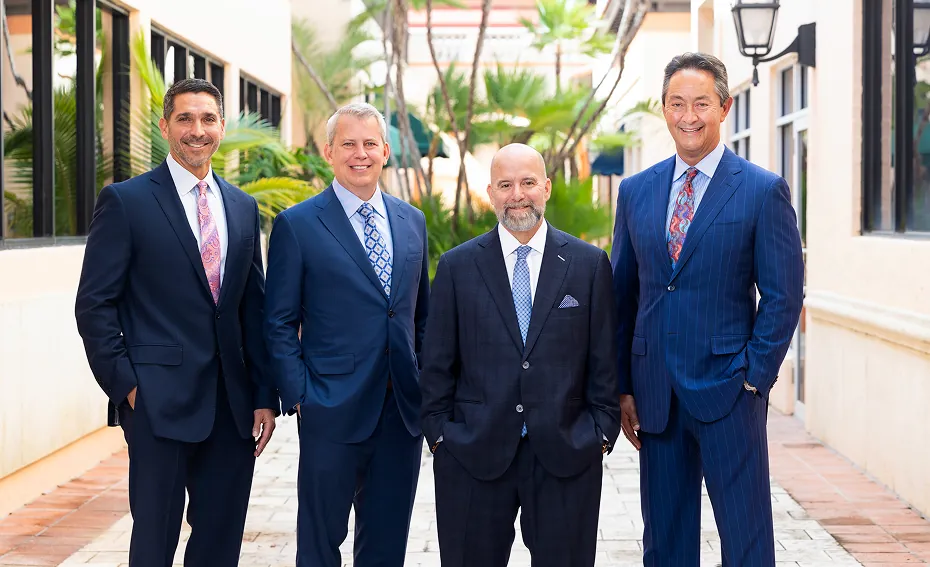
Call now
What to Do Now
- Seek appropriate medical attention and tell the treating professional about new or worsening concerns.
- Preserve original photographs, reports, discharge instructions and messages; note when and where each event occurred.
- Keep a list of treating providers and facilities, including later care.
- Save insurance letters and proposed releases, and flag anything requiring a response.
- Ask about the legal deadlines early, rather than waiting for a complete file.
For continuing care, AHRQ’s discussion guide can help you organize questions about diagnosis, treatment options and follow-up. It is a patient communication resource, not a test for legal negligence.
Injury Matters RDCY Can Evaluate
Different claims require different evidence. The firm’s practice resources explain the issues in more detail:
- Medical Malpractice. Diagnosis, treatment and hospital-care concerns require medical analysis as well as an investigation of responsibility.
- Birth Injuries. Records from pregnancy, delivery and later care may be relevant; the legal and medical issues must be assessed for the particular child and family.
- Personal Injury. Accident and property-condition claims require evidence of the event, the responsible parties and the resulting losses.
- Truck Accidents. Driver conduct, company relationships and vehicle records can raise questions beyond the initial crash report.
- Nursing Home Abuse. Care plans, records of changes in condition and the resident’s rights help distinguish residential-care concerns from other injury claims.
You can describe the problem without choosing one of these labels. An initial assessment should identify which legal framework fits, what remains uncertain and which evidence could answer the next question.
Medical Malpractice in Palm Beach Gardens: Follow the Treatment Timeline
A patient may see a primary-care physician, a specialist, an imaging provider and a hospital during the same episode of illness. A useful investigation follows that sequence. It asks what symptoms were reported, which tests were ordered, who received the results and what happened when the patient’s condition changed.
Concerns worth discussing can include a delayed diagnosis, an unaddressed test result, a medication error, a surgical complication or a failure to respond to deterioration. These are questions for review, not conclusions about a particular clinician. A qualified assessment must connect a departure from appropriate care to additional harm. Florida’s medical-negligence standard.
For a diagnostic concern, write down the first visit, the recommended follow-up and the date the diagnosis changed. For a surgical concern, identify the procedure, the first new symptom and subsequent treatment. Separating what you personally observed from what you were told helps a reviewer understand the record.
Research can explain why these questions deserve careful attention. A 2014 study in BMJ Quality & Safety used three observational datasets to examine outpatient diagnostic errors. Its findings describe studied populations, not the performance of Palm Beach Gardens providers or proof of an individual claim. Original peer-reviewed study.
Build a Useful Record of What Changed
Start a chronology with one entry for each encounter. Include the date, location, provider, concern raised and instructions received. Attach discharge paperwork, medication lists, test reports and messages to the entries they explain. Preserve the original files even if you also create a working summary.
The records of later treatment may be as important as the records of the disputed care. They can help explain the diagnosis, the need for additional procedures and changes in mobility, work or daily life. A family member’s notes can describe observations, but they do not replace clinical evidence.
If your concern involves an accident rather than treatment, save photographs of the scene, witness details, reports and insurance communications. The goal is the same: understand the event and connect it to the injury, rather than collecting paperwork without a clear purpose.
Rafferty Domnick Cunningham & Yaffa
Personal Injury and Medical Malpractice legal help
Call now
Protecting a Claim While Treatment Continues
Treatment, evidence gathering and legal deadlines can run on different schedules. Florida’s limitations statute and medical-malpractice presuit requirements need to be reviewed against the facts. Continuing to negotiate or receive care does not automatically satisfy those requirements.
Compensation must be tied to supported losses. Keep bills, income records, work restrictions and information about help with daily activities. When future care is an issue, the assessment needs evidence of that need rather than a guessed lifetime figure. Earlier case results do not set the value of a new claim.
Be clear about what you personally know and what another person reported. If a document or statement appears inconsistent with your recollection, preserve both and explain the difference. An investigation is more useful when it identifies uncertainty rather than smoothing it over.
Palm Beach Gardens Records and Court Resources
- Palm Beach Health Network medical-record requests. Patients treated at Palm Beach Gardens Medical Center can use the network’s published records instructions. Select the correct facility and identify the dates and documents requested. This is a records-access resource, not an allegation about the facility.
- North County Courthouse services. The clerk lists this branch at 3188 PGA Boulevard. Check its published services before traveling. The nearest courthouse is not automatically the proper location for a serious injury lawsuit.
- Palm Beach County court services. Use the clerk’s official resources for court information and existing case records. Court staff provide procedural information; they do not decide whether you have a malpractice claim.
Medical records and court records are different. Request treatment files from the provider or records custodian, not the clerk. If a lawsuit already exists, keep its case number separate from hospital account and insurance claim numbers.
Reporting Care Concerns and Getting Practical Help
For a concern about a licensed healthcare practitioner, use the Florida Department of Health complaint process. Its routing questions can help identify the appropriate agency. The department also distinguishes practitioner complaints from hospital or other facility complaints, which may fall under the Agency for Health Care Administration. Official agency guidance.
Prepare the provider or facility name, treatment dates, a factual description and copies of supporting documents. A complaint is different from a civil claim for compensation and does not automatically preserve its deadlines. If a patient has an immediate medical need, address that need through appropriate clinical or emergency care.
For the legal conversation, organize a short checklist: what happened, when you first noticed the change, who treated it afterward, what documents you have and what remains unanswered. Family members can contribute observations, but access to another adult’s records or authority to act may require consent or legal documentation.
A Local Office With Experience in Complex Civil Claims
Medical malpractice work requires more than knowing the name of a hospital. It requires evaluating medical opinions, identifying responsible parties and presenting a sequence of events clearly. RDCY’s practice brings those tasks together with its broader injury litigation work.
Sean C. Domnick is a Florida Bar Board-Certified Civil Trial Lawyer. His professional record also includes elected leadership: AAJ president in 2023–2024 and Palm Beach County Justice Association president in 2018. These credentials give families concrete information to evaluate alongside questions about the proposed investigation. Professional biography; AAJ leadership record; Local election announcement.
Ask who would handle the matter, what evidence could change the assessment and how expert review fits the next step. The value of a consultation is an explanation grounded in your circumstances, not a prediction drawn from somebody else’s result.
RDCY’s Florida Offices
- Palm Beach Gardens
- West Palm Beach
- Pensacola
- Jacksonville
Rafferty Domnick Cunningham & Yaffa
Personal Injury and Medical Malpractice legal help
Call now
Visit or Contact the Palm Beach Gardens Office
Rafferty Domnick Cunningham & Yaffa
4560 Donald Ross Road, Palm Beach Gardens, FL 33418
(561) 516-5168
The firm lists this office as welcoming walk-ins. Calling first can help you discuss the purpose of your visit and any information to bring. The firm offers a free consultation. Explain the issue and any time-sensitive document when you contact us. Ask how to provide available records securely rather than sending private medical material through an unfamiliar channel.
If you are helping a loved one, tell us your relationship and whether you have authority to request records or act on their behalf. Contacting the firm is the beginning of a discussion; representation and the scope of any work must be established separately.
Palm Beach Gardens FL Injury and Medical Malpractice FAQs
These answers provide general information. The facts, dates, records and applicable law can change the analysis of an individual matter.
Does a bad medical outcome automatically mean malpractice?
No. A difficult recovery or unexpected complication does not by itself establish medical negligence. Florida law requires proof that the applicable professional standard was breached and that the breach caused injury. The assessment must examine the circumstances of the treatment, not simply compare the result with what the patient hoped would happen.
Describe the specific concern: a test result that was not explained, a medication discrepancy, a change after surgery, or a problem during discharge. Keep the relevant dates and documents. A medical review can distinguish an underlying illness, an unavoidable complication and potentially preventable additional harm. Population research and online symptom comparisons cannot resolve that distinction for an individual patient.
Sources: Florida Statutes § 766.102: medical negligence and expert testimony; AHRQ: preparing questions and discussing a diagnosis.
How long do I have to bring an injury or malpractice claim?
The deadline depends on the claim, when it arose and any applicable exceptions. Florida’s general negligence and medical-malpractice provisions must be considered separately, and malpractice also has presuit requirements. Do not assume that a complaint, an insurance discussion or continued treatment preserves the right to file a lawsuit.
Give counsel the incident date, the first indication that something was wrong and any later discovery of relevant facts. Identify whether a child, a death or a government provider is involved. Those details may change the analysis. A useful early consultation establishes which dates need investigation; it should not postpone the deadline calculation until every medical record has arrived.
Sources: Florida Statutes § 95.11: limitations periods; Florida Statutes § 766.106: presuit notice and screening.
Can I request medical records before deciding whether to sue?
Yes. A patient can generally request access to covered medical and billing records without first filing a lawsuit. A representative may need authorization or proof of legal authority. The applicable rules and exceptions depend on the records and their custodian; Florida’s practitioner-record statute does not apply to every kind of facility.
List the treating locations, providers and dates so requests reach the correct offices. Keep your request, the response and the files in their original form. Specify imaging or other material that a brief portal summary may not include. Gathering records is useful for continuing care as well as legal review, and it does not require you to conclude that anyone acted negligently.
Sources: HHS: the right to access medical and billing records; Florida Statutes § 456.057: practitioner records and confidentiality.
Will reporting a doctor or hospital obtain compensation for me?
A regulatory complaint and a claim for compensation serve different purposes. Florida’s complaint process helps direct a concern to the agency with the appropriate responsibility. It does not automatically establish civil liability, determine the value of an injury or replace the steps required for a malpractice claim.
Provide an accurate chronology, the provider or facility name and the documents supporting your concern. Keep copies of what you submit. Complaints about licensed practitioners and complaints about facilities may go to different agencies. If you also want a legal assessment of compensation, address that separately and identify the applicable deadlines. Do not wait for an agency investigation to finish before asking how those deadlines affect your options.
Sources: Florida Department of Health: health care complaint forms; Florida Department of Health: where to direct complaints.
Do I need an expert opinion before filing a malpractice lawsuit?
Florida’s malpractice process generally requires presuit investigation and medical support meeting the applicable legal requirements. A patient’s concern starts the inquiry, but it is not a substitute for that investigation. Expert qualifications and the supporting opinion must fit the issues being evaluated.
You do not have to commission an expert yourself before speaking with RDCY. Bring the information you already have and explain the treatment concern. Counsel can evaluate which records and medical disciplines are relevant and whether further review is justified. The purpose is to assess both the care and its connection to the injury; obtaining a critical opinion about one part of treatment does not automatically prove the entire case.
Sources: Florida Statutes § 766.203: presuit investigation; Florida Statutes § 766.102: medical negligence and expert testimony.
What should I bring to a free consultation?
Bring the information available now: dates, provider or accident details, photographs, reports, insurance letters, treatment records and questions. RDCY offers a free consultation. A short chronology often makes the initial conversation more useful than a large folder with no explanation of what happened or what concerns you.
Tell the firm about any deadline, request for a statement, proposed release or upcoming hearing. If you are helping another adult, explain your relationship and whether you have authorization to obtain records or act for that person. Missing documents can be identified during the discussion. Contacting the firm does not by itself establish representation or guarantee that it can accept a matter.
Sources: RDCY: consultation and office contact information; HHS: the right to access medical and billing records.
Can the Palm Beach Gardens office discuss a case involving treatment elsewhere?
Yes, RDCY’s local office can be your starting point for discussing a concern about treatment elsewhere. Where a case can be pursued is a separate question. The location of the care, the parties and the applicable law may matter more than the address of the office you contact.
Identify every treatment location and whether any care occurred outside Florida. Bring the records you have, including later care that may help explain the injury. Counsel can then assess which issues require review. An office visit does not settle jurisdiction, venue or the merits of a claim, and the firm must determine whether it can undertake the representation.
Sources: RDCY: consultation and office contact information; Florida Statutes § 47.011: where actions may be brought.
Do I have to visit the North County Courthouse to start a malpractice claim?
No. A malpractice assessment normally begins with the treatment concern and supporting evidence, not a visit to the closest courthouse. The North County branch provides the services listed by the clerk, but that does not make it the correct filing or hearing location for every civil matter.
Florida malpractice claims generally require presuit work before a lawsuit. Tell counsel where the care occurred and which parties may be involved. Use the clerk’s branch information if you already have a court-related task, and confirm the specific service before traveling. Preparing an investigation and choosing a lawful filing location are different decisions.
Sources: Palm Beach County Clerk: North County Courthouse; Florida Statutes § 766.106: presuit notice and screening.
Can a missed outpatient test result support a medical malpractice claim?
It can justify further review, but a missed result alone does not establish every element of a claim. The assessment asks what the result showed, who was responsible for acting on it and whether timely action would have changed the patient’s outcome. Those questions require the actual records and suitable medical analysis.
Save the order, result, messages and follow-up instructions. Note when the result became available to you and when the diagnosis or treatment changed. Outpatient diagnostic-error research helps explain the broader safety issue; it does not diagnose your case or establish negligence by a local provider. The investigation must remain focused on the evidence of your care.
Sources: Florida Statutes § 766.102: medical negligence and expert testimony; BMJ Quality & Safety: outpatient diagnostic-error study.
Does RDCY have an office I can visit in Palm Beach Gardens?
Yes. The firm lists its Palm Beach Gardens office at 4560 Donald Ross Road, Palm Beach Gardens, FL 33418, with telephone (561) 516-5168. Its location information identifies this office as welcoming walk-ins. Calling first can help clarify what you want to discuss and which materials may be useful.
You do not need a completed file to make an initial inquiry. Bring a short chronology, available records and any letter requiring a response. Ask about arrangements if an injury makes travel difficult. The appointment and consultation process should be confirmed with the firm, and initial contact does not itself create an attorney-client relationship. Do not postpone asking about Florida’s legal deadlines while arranging a visit; the applicable limitations period depends on the claim and its facts.
Sources: RDCY: Palm Beach Gardens office information; RDCY: consultation and office contact information; Florida Statutes § 95.11: limitations periods.
Sources
- AHRQ: preparing questions and discussing a diagnosis
- RDCY practice information
- RDCY practice information
- RDCY practice information
- RDCY practice information
- RDCY practice information
- Florida Statutes § 766.102: medical negligence and expert testimony
- BMJ Quality & Safety: outpatient diagnostic-error study
- Florida Statutes § 95.11: limitations periods
- Florida Statutes § 766.106: presuit notice and screening
- Palm Beach Health Network: request medical records
- Palm Beach County Clerk: North County Courthouse
- Palm Beach County Clerk: court services
- Florida Department of Health: health care complaint forms
- Florida Department of Health: where to direct complaints
- Sean C. Domnick: professional biography
- AAJ: Sean Domnick, president in 2023–2024
- Palm Beach County Justice Association: 2018 election announcement
- RDCY practice information
- RDCY practice information
- RDCY practice information
- RDCY: consultation and office contact information
- HHS: the right to access medical and billing records
- Florida Statutes § 456.057: practitioner records and confidentiality
- Florida Statutes § 766.203: presuit investigation
- Florida Statutes § 47.011: where actions may be brought
- RDCY: Palm Beach Gardens office information