
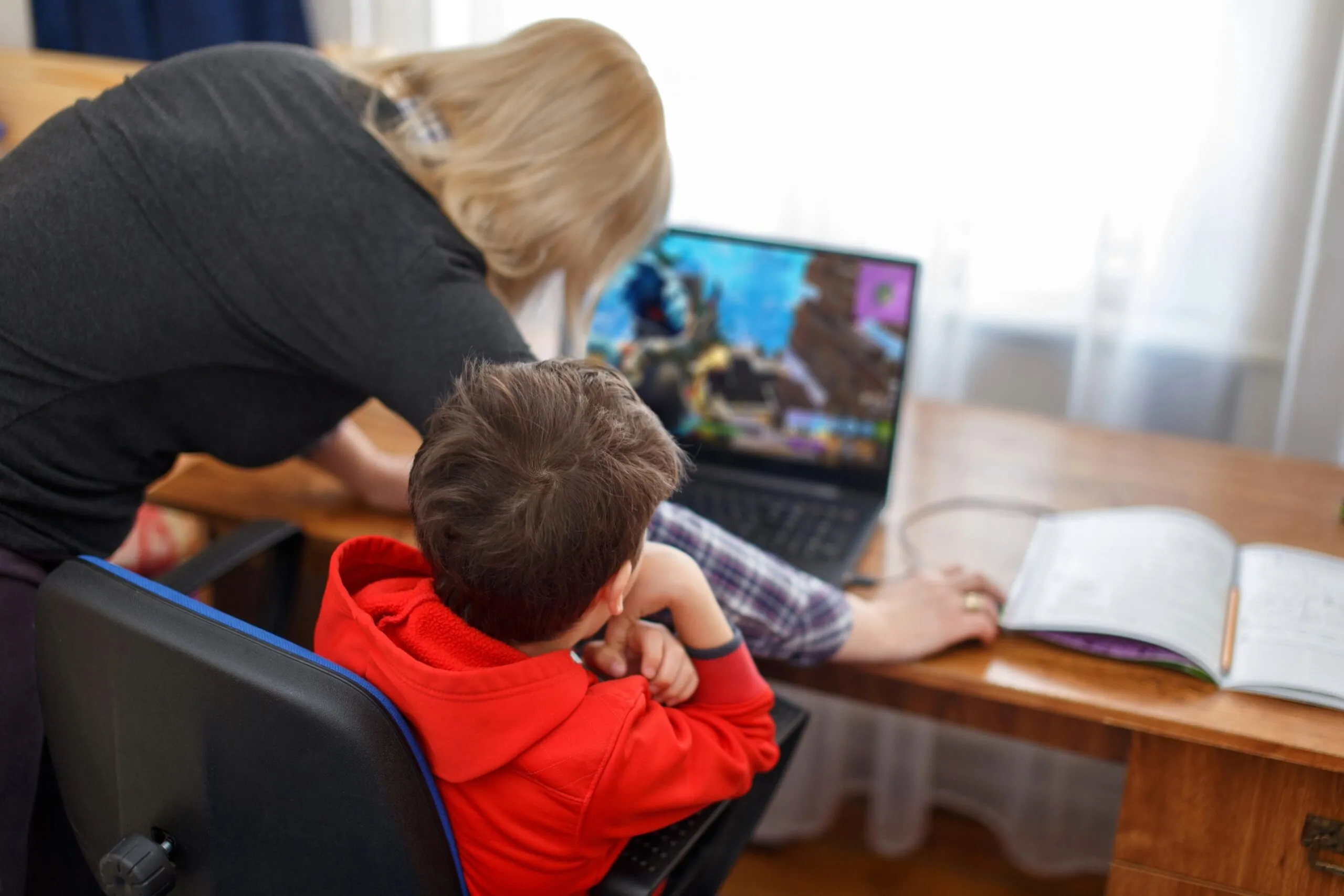


Resources for Parents: Protecting Children on Roblox
At Rafferty Domnick Cunningham & Yaffa, we know families have questions — not only about the lawsuits against Roblox, but also about protecting children on Roblox and keeping them safe in digital spaces right now. This page is our practical resource for parents: the warning signs of grooming, the safety settings that actually matter, the steps to take in the first hours after discovering a problem, and where to turn for legal help. It sits within our Roblox litigation practice, alongside deeper pages on sextortion and online predators and understanding the Roblox MDL.
Knowledge is the first line of defense. Roblox is a creative platform that millions of children use daily — but it is also a space where predators have found ways to exploit young users. We have seen too many cases where a simple online interaction turned into something dangerous. While our legal team fights for justice in the courts, we also want parents to have the tools they need to protect their children today, before anything goes wrong — and a clear plan for the moment something does.
Have Questions About Roblox Child Safety?
Call us or request a case review by our experts.

Warning Signs to Watch For
Parents are often the first to notice when something is not right. Some red flags include: new “friends” your child will not talk about; requests to move conversations off Roblox to Discord, Snapchat, WhatsApp, or another app; unexplained Robux purchases or gifts; secrecy around playtime, like quickly switching screens or hiding chats; and mood changes such as withdrawal, anxiety, or sudden anger after playing. If you see these signs, it is important to step in early and open a conversation.
Understand how the signs work together. Grooming is a sequence, not a single event: a predator establishes contact inside a game, builds trust through attention and in-game gifts, isolates the child by moving communication somewhere private, and only then escalates. That sequence means the early signs — an unknown “friend,” a gift of Robux, a request to switch apps — are not minor. They are the stages at which intervention is easiest and harm is still preventable.
It also means your response should be calibrated. A child who is being groomed has usually been told that telling a parent will end the friendship, bring punishment, or expose something shameful. Announcing that your child “did something wrong” confirms the script the predator wrote. The far more effective message is the opposite: you are not in trouble, this is a known pattern, adults who do this are the ones at fault, and your job now is simply to show me what happened.
How to Use Roblox’s Safety Settings
Roblox offers tools for parental oversight, but many families do not know how to use them effectively. The key steps: restrict who can contact your child by limiting who can send messages, join games, or send friend requests; enable a parental PIN to lock down privacy and security settings with a code only you know; regularly review your child’s friends list and the groups they join; use Roblox’s chat filters and restrictions; and check purchase history, since Robux transactions may reveal predator influence — gifts and payments are a common grooming currency.
Two settings deserve emphasis because families most often miss them. First, account age: protections on Roblox are age-tiered, so an account registered with a false, older birthdate quietly disables safeguards designed for your child’s real age. Register truthfully, and treat an account your child created alone as one to rebuild with you. Second, the PIN: restrictions a child can reverse are not restrictions. Set the PIN, keep it to yourself, and re-check the settings after major platform updates, which can reset or relocate controls.
Finally, audit on a schedule rather than once. Friends lists change weekly in an active child’s gaming life. A five-minute monthly review — friends, groups, messages from accounts you do not recognize, purchase history — catches drift while it is still small, and normalizes the idea that a parent looking at the account is routine rather than an accusation.
How Could Roblox Child Safety Affect Your Legal Options?
Call us or request a case review by our experts.
Practical Tips for Parents
Technology alone is not enough. Open communication is the control that works when every setting fails, so consider these practices. Talk early and often: start conversations about online risks before problems arise, and keep them ordinary rather than alarming. Encourage openness: let your child know they will not be punished for telling you if something feels wrong — and honor that promise when they test it. Set boundaries together: rules about friend requests, online chats, and screen time that your child helped shape are rules they can explain and mostly follow.
Stay involved in the most literal way: play Roblox with your child. It is one of the best ways to understand what they are experiencing — which games they enter, who talks to them, how strangers behave in the spaces they spend time in. A parent who has seen the platform firsthand recognizes the warning signs faster and asks better questions than one relying on a child’s summary.
Use external tools as a second layer, not a substitute: parental-control and monitoring tools that watch chats across multiple platforms can flag contact patterns no single app’s settings will show you, particularly once conversations move to a second app. And write your family’s rules down where everyone can see them — devices charge outside bedrooms overnight, no moving conversations to new apps without telling a parent, any adult contact gets reported the same day. Simple, visible, and agreed in advance beats comprehensive and improvised.
The First 24 Hours After You Find Something
If you discover grooming messages, an unknown adult in contact with your child, or any sign of exploitation, the first day matters more than any other — because evidence is perishable and accounts vanish. Work through the sequence calmly. First, your child’s safety: if there is any suggestion of an in-person meeting, images being demanded, or threats, contact local law enforcement immediately. Nothing else on this list outranks that call.
Second, preserve: screenshot the conversations, the other account’s username and profile, friends-list entries, and any Robux transactions, with dates visible where you can capture them. Do not delete the app, the account, or the messages, and do not message the other account to confront it — that is the fastest way to trigger deletion of the evidence. Third, report: use Roblox’s in-platform reporting tools, and file a report with the National Center for Missing & Exploited Children’s CyberTipline, which routes exploitation reports to law enforcement.
Fourth, write down your own timeline while it is fresh: when you found the messages, what your child said, what you observed in the weeks before. Fifth, get advice: a confidential conversation with counsel experienced in these cases will tell you what else to preserve, what deadlines may apply, and how the criminal and civil tracks fit together. Families who take these five steps in the first day give both tracks their strongest start.
Where to Turn if Something Happens
If you believe your child has been targeted, the routes are: document everything — screenshots, chats, and transaction records; report through Roblox using the in-platform tools; contact law enforcement if your child is in danger or images have been shared; and seek legal guidance from an attorney experienced in child exploitation cases, who can explain your options and help protect your child’s rights. Each route does something the others cannot — the platform report can remove the account, law enforcement can pursue the predator, and a civil claim can hold the platform itself accountable and fund your child’s recovery.
You do not have to choose among them, and you do not have to sequence them perfectly. Families often ask whether reporting to police will interfere with a lawsuit, or whether a lawsuit means reliving everything publicly. The honest answers: the tracks are designed to run in parallel, and children’s identities in civil filings are protected through initials and court procedures, which we will walk through with you before anything is filed.
At RDCY, we understand how difficult these situations are. Our attorneys are available for confidential consultations to support families and explore legal remedies — including how families’ cases proceed within the Roblox litigation and what it could change for online safety more broadly.
Compassionate Support and Legal Advocacy
No parent should face this battle alone. While you do everything possible to protect your child at home, Rafferty Domnick Cunningham & Yaffa is committed to holding Roblox accountable for the systemic failures that made individual vigilance necessary in the first place. Parents should not have to function as a platform’s unpaid safety department — auditing settings, decoding grooming patterns, and racing a predator’s delete key — on a service marketed to children.
Together, we can fight to create safer digital spaces and secure justice for families already harmed. If your child has been exploited or targeted on Roblox, contact us for a free, confidential case review. We will stand with you every step of the way — through the evidence questions, the reporting decisions, and the litigation itself — and we will give you straight answers about what your family’s case can and cannot do, starting with the first conversation.
Related Roblox Resources
- Roblox Litigation
- Online Safety and Accountability
- How Predators Exploit Roblox’s Features
- Safety Failures and Predators
- From Roblox to Discord: The Exploitation Pipeline
- Sextortion and Online Predators
- Platform Design Defects
- Understanding the Roblox MDL
- Roblox Lawsuits and the Future of Online Child Safety
- Roblox MDL By The Numbers
Professional Recognition


Recognition applies to the named attorneys and selection years. See the linked profiles for details.
Frequently Asked Questions About Protecting Children on Roblox
Answers to common questions from parents about grooming warning signs, Roblox safety settings, preserving evidence, and the legal options available when a child has been targeted. This is general information, not legal advice about a specific case.
What are the warning signs that a predator is contacting my child on Roblox?
The pattern is usually gradual rather than dramatic: a new “friend” your child is vague or secretive about; requests to move the conversation off Roblox to Discord, Snapchat, WhatsApp, or texting; unexplained Robux purchases or gifts arriving from another account; secrecy around playtime, such as quickly switching screens or deleting chats; and mood changes — withdrawal, anxiety, or sudden anger — after playing. Any one sign can have an innocent explanation, and parents should treat that honestly rather than panic.
What matters is the combination, and the direction of travel. Grooming is designed to look like friendship, which is why the National Center for Missing & Exploited Children urges parents to treat unexplained secrecy plus an unknown contact as a reason to act, not a phase to outwait. Trust what you are seeing, start the conversation early, and preserve what you find before accounts or messages disappear.
Sources: National Center for Missing & Exploited Children: CyberTipline; U.S. District Court, N.D. Cal.: Multi-District Litigation Cases.
How do I restrict who can contact my child on Roblox?
Start in account settings, signed in as your child, and work through four controls: restrict who can send messages and chat, who can send friend requests and game invitations, and who can see the account’s inventory and activity. Set a parental PIN so your child — or anyone with access to the account — cannot quietly change the restrictions back, and enable account restrictions for younger children, which limit them to curated content and disable direct communication features.
Then audit rather than assume: review the friends list and joined groups together, check purchase history for Robux transactions you do not recognize, and repeat the review after updates, because platforms change defaults. Pediatric guidance on children’s media use makes the same point from the health side — settings work when they are part of an ongoing family practice, not a one-time installation.
Sources: HealthyChildren.org (American Academy of Pediatrics): Media and Children; Children’s Online Privacy Protection Rule, 16 CFR Part 312 (eCFR).
What should I do if I find grooming messages on my child’s account?
Protect your child first and preserve evidence second — but understand that the second step is urgent, because accounts get deleted and messages disappear. Take screenshots of the conversations, usernames, and any requests to move off-platform; note dates and times; and do not confront the other account, which can trigger deletion. Report the account through Roblox’s in-platform tools and file a report with the NCMEC CyberTipline, which forwards exploitation reports to law enforcement.
If your child may be in immediate danger, or an in-person meeting has been proposed, contact local law enforcement right away. Then speak with an attorney experienced in child exploitation cases. The messages you preserved are the foundation of both a criminal report and a civil claim, and early legal guidance protects them — and your child — through both processes.
Sources: National Center for Missing & Exploited Children: CyberTipline; U.S. District Court, N.D. Cal.: Multi-District Litigation Cases.
Should I delete my child’s account or messages if I suspect exploitation?
No — not before the evidence is preserved. Deleting the account, the messages, or the app can permanently destroy the record that law enforcement and civil counsel need: the contact history, the grooming pattern, the Robux transactions, and the timeline. The instinct to erase it all and move on is completely understandable, and it is the one step that cannot be undone.
Instead, secure the account: change the password, enable every restriction, and take the device out of your child’s hands if contact is ongoing, while keeping the data intact. Screenshot what you can, export what the platform allows, and let a lawyer or investigator image the rest. You can close the account later, on advice, once the evidence is safely in professional hands.
Sources: National Center for Missing & Exploited Children: CyberTipline; Roblox MDL No. 3166, Pretrial Order No. 1 (GovInfo).
What is sextortion, and what should we do if it happens to our child?
Sextortion is blackmail: a predator persuades or pressures a child into producing an intimate image, then threatens to distribute it unless the child sends more images, money, or complies with other demands. It escalates fast, it is designed to terrify the child into silence, and it is a crime — the person at fault is the predator, never the child who was manipulated.
The response steps are consistent across child-safety guidance: stop responding, do not pay, do not delete anything, and report immediately — to the NCMEC CyberTipline and to law enforcement. Tell your child directly that they are not in trouble and that adults are handling it now. Then get legal counsel involved: sextortion is among the patterns alleged in the Roblox MDL, and families in this situation may have civil claims in addition to the criminal report.
Sources: National Center for Missing & Exploited Children: CyberTipline; Roblox MDL No. 3166, Pretrial Order No. 1 (GovInfo).
Why is moving the conversation to Discord or another app so dangerous?
Because it removes the child from the one environment that has any moderation at all. Roblox’s chat filters, reporting tools, and account records — imperfect as families allege them to be — at least exist. Private messaging apps offer encrypted or ephemeral communication, no shared record, and direct access to a child’s phone at all hours. Predators know this, which is why the move off-platform is usually the first objective of grooming, and why it appears again and again in the exploitation cases now consolidated in the MDL.
Teach your child that the request itself is the red flag: a legitimate friend has no reason to insist on secrecy or a different app. And if it has already happened, preserve both sides of the trail — the Roblox contact that started it and whatever can be recovered from the second platform — because that pipeline is exactly what these cases are about.
Sources: Roblox MDL No. 3166, Pretrial Order No. 1 (GovInfo); National Center for Missing & Exploited Children: CyberTipline.
What parental controls should we set up first?
In priority order: a parental PIN locking privacy settings; contact restrictions limiting messages, chats, and friend requests to the narrowest option your child’s age allows; account restrictions for younger children; purchase visibility, so Robux spending is reviewed rather than discovered; and a recurring friends-list and group audit on the calendar. Add device-level controls as a second layer — the platform settings govern Roblox, while device and app-store controls govern everything around it.
Federal children’s privacy rules reflect the same layered logic: for children under 13, platforms are supposed to obtain verifiable parental consent before collecting personal information, which is one more reason to register accounts truthfully with your own involvement rather than letting a child set up an account with a false birthdate that disables every child protection by default.
Sources: Children’s Online Privacy Protection Rule, 16 CFR Part 312 (eCFR); HealthyChildren.org (American Academy of Pediatrics): Media and Children.
Can Roblox be held legally responsible if my child was harmed?
That is the central question of the litigation now pending as MDL No. 3166 in the Northern District of California. Families allege that the company was negligent in its design and operation of a child-directed platform, failed to warn parents about foreseeable risks, and misrepresented the platform’s safety — claims aimed at the company’s own choices about messaging access, age assurance, and response to known grooming patterns.
Roblox disputes these claims and is expected to raise defenses including Section 230, the federal law that generally shields platforms from liability for user-generated content. Whether design-based claims fall outside that shield is contested and will be decided through the MDL process. An individual family’s position depends on its own facts — which is why a case review, not a headline, is the right way to assess responsibility in your child’s situation.
Sources: 47 U.S. Code § 230, Cornell Legal Information Institute; U.S. District Court, N.D. Cal.: Multi-District Litigation Cases.
What can a lawsuit provide for a family whose child was exploited?
A civil claim seeks compensation for the harm the exploitation caused: therapy and trauma treatment, past and future; the costs families absorb in protecting and supporting a child through recovery; and damages for the child’s pain, suffering, and lasting psychological injury, which in these cases can be profound and long-term. Where the facts support it, claims can also reach the failures that allowed the harm — the ignored reports, the design choices, the absent safeguards.
Families also tell us the non-monetary dimension matters: being heard, forcing acknowledgment, and contributing to the pressure that changes platform practices. In the MDL structure, each family’s case proceeds on its own facts while the common questions — design, knowledge, warnings — are litigated once, together, with the full weight of the combined evidence.
Sources: U.S. District Court, N.D. Cal.: Multi-District Litigation Cases; Roblox MDL No. 3166, Pretrial Order No. 1 (GovInfo).
How much does a case review cost, and will our family’s information stay confidential?
The case review at Rafferty Domnick Cunningham & Yaffa is free and confidential, with no obligation to file a claim. You can describe what happened at your own pace, ask what participation in the litigation would involve, and take the time your family needs before deciding anything. Children’s identities in these cases are protected through the court process, and we will explain exactly how anonymity is handled before any filing occurs.
If you are not ready for a legal conversation, the safety steps still come first: preserve the evidence, report through the platform, and file a CyberTipline report with the National Center for Missing & Exploited Children. Those steps protect your child today and keep every legal option open for when you are ready.
Sources: National Center for Missing & Exploited Children: CyberTipline; U.S. District Court, N.D. Cal.: Multi-District Litigation Cases.
Related Articles
- The Push to Consolidate Roblox Exploitation Cases
- The Most Important Part of Meta’s $17.1 Billion Settlement Isn’t the Money
Need Help With a Case Involving Roblox Child Safety?
Call us or request a case review by our experts.


